
























The Human Cost of Hospitality

Housekeeping in Malaysia is no longer just a manpower issue. Since Covid-19, it has become the intersection of labour shortages, changing employee expectations, rising guest expectations, technology, sustainability and commercial pressure. In an exclusive conversation with Clean India Journal, Ava Tan, President 2026-27, Malaysia Association of Housekeepers (MAHIR), shares why retention is the real crisis, why technology is a partner and not a replacement, and why hospitality cannot be measured by occupancy and online ranking alone.
The biggest change in the last two to three years is the pressure on the people who remained after pandemic. Many employees were retrenched or moved to other industries during this period. When business returned, many did not come back. Some chose regular hours, some joined the gig economy, some took lower-paying but less stressful jobs.

People do not leave an industry only because of salary. Sometimes they leave because they are tired.
Yet operations returned to full speed. A guest checks out at noon, the next expects a perfect luxury room at 2 pm. Housekeeping gets two hours. The guest rightly expects perfection, and should not need to know whether there are 20 or 40 room attendants on duty.
When Low Rates Cost More
In major cities, hotels compete by lowering rates — the easiest way to capture share. But somebody pays for that lower rate. Often it comes back to operations: Reduce payroll, reduce manpower, reduce training, reduce supplies, increase productivity, and then expect five-star service. That mathematics eventually does not work.
“The real worry is when hospitality starts becoming viewed primarily as a revenue-generating building, rather than a service business operated by people who are passionate about taking care of people”— Ava Tan President 2026-27, MAHIR
Hotels should compete through value, service and experience, not price alone.
Reviews Are Intelligence, Not Luxury
Online reputation is enormously influential, but running a hotel according to ranking has its own risks. In luxury, the hotel serves heads of state, royalty, diplomats and celebrities for whom discretion is part of service. They may never write a review. They simply return. Sometimes the greatest compliment a luxury hotel receives will never appear online.
Staff should not be pressurised to collect positive reviews.
Retention Crisis
Housekeeping remains physically demanding. Malaysia’s minimum wage is RM1,700, but pay alone does not answer the question. Malaysia depends on foreign workers for certain roles, while facing quotas and levies. The remaining staff feel sandwiched between productivity demands and guest expectations.
Technology helps but has not solved the shortage.
The solution is to make housekeeping easier to enter, more attractive to stay in, and more productive to work in.
Five suggestions are:
- Professionalise it as a career with a clear path from attendant to director
- Build the pipeline with hospitality schools through real mentorship, not just using interns to fill gaps
- Create flexible models like part-time pools and return-to-work programmes
- Redesign the job to remove wasted effort; and treat retention as seriously as recruitment.
- If 10 people resign and we recruit 10 new people, we have not solved the manpower problem. We have merely replaced it.
Sustainability Is Behaviour
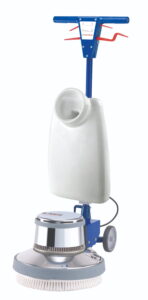
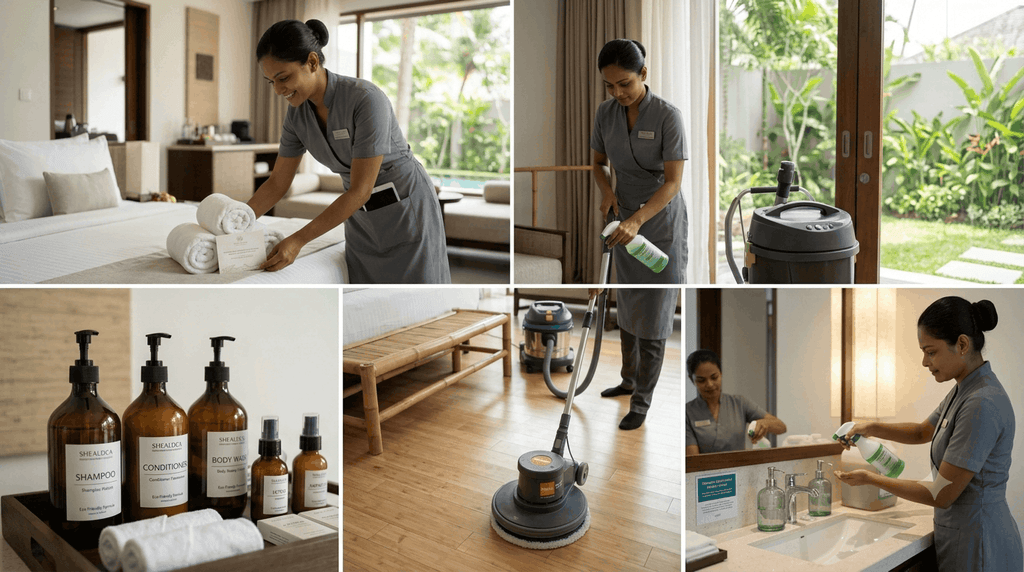
Sustainability must go beyond amenities. Housekeeping consumes chemicals, water, electricity and linen. Practical examples matter, like TASKI Twister diamond pads that use water and mechanical action to reduce chemical dependence.
Purchasing should ask not just “how much does this machine cost?” but “how much will this machine consume in five years — electricity, water, chemical, maintenance?” The cheapest machine to buy is not necessarily the cheapest to operate. This matters in Malaysia where approximately 92% of Peninsular Malaysia’s 2025 electricity mix came from coal and natural gas. Every kilowatt-hour avoided has an environmental impact.
Real sustainability is behaviour. Putting up a ‘Go Green’ poster does not change anybody. If I explain that doubling the chemical does not make the room twice as clean — it simply increases cost and environmental impact — I am beginning to change understanding.
Productivity Without Quality
Five years ago, housekeeping was often managed by a fixed number. Today, that no longer works. A checkout is different from a stayover, a suite from a standard room, a family of four from a single business traveller. Measurement must become smarter. Productivity without quality is simply producing mistakes faster.
Future of Housekeeping
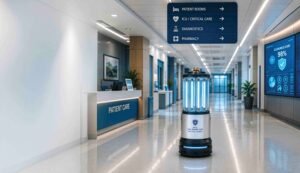
Looking ahead, housekeeping will be more data-driven and automated. Developments like the full-scenario robot-serviced hotel being developed in Shenzhen for early 2027 opening are worth watching though.
A hotel is not merely a building containing rooms that generate revenue. Beautiful hotels can be built anywhere. Luxury furniture can be purchased. Technology can be installed. Robots may eventually clean the rooms. But hospitality still comes from the feeling we create for another human being.