


















From Labour To Performance Asset
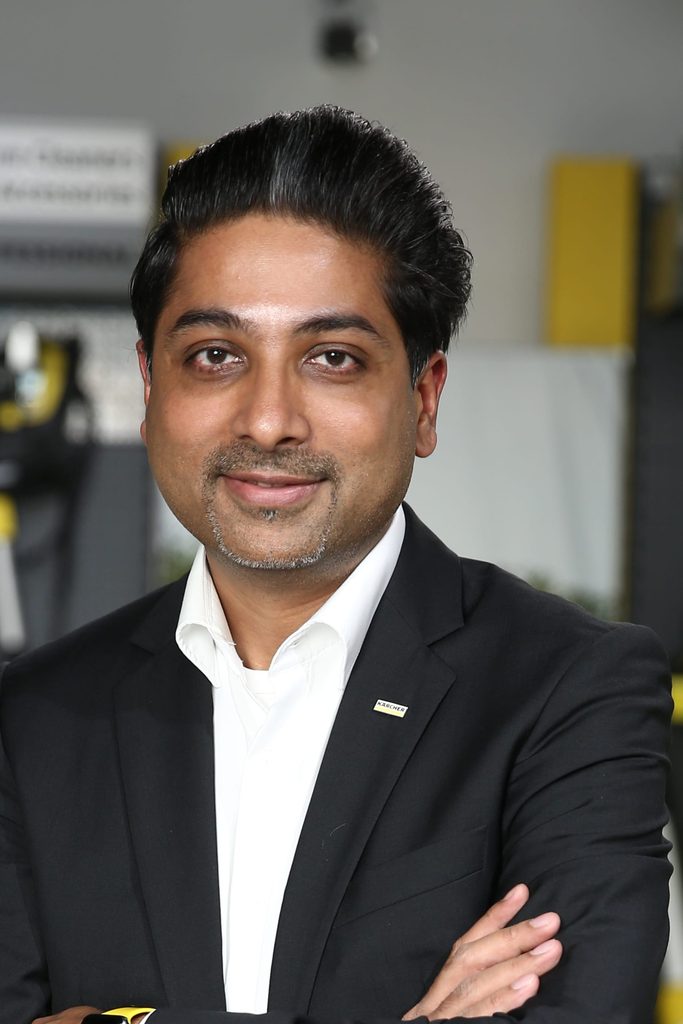
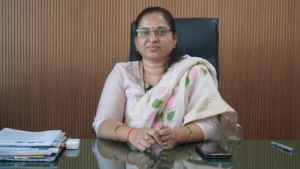
What was once a back-of-house, labour-intensive function is now a strategic facility asset. Prashanth Srirangam, Senior Director, Kärcher India, traces India’s 20-year shift from manual processes to technology-enabled, outcome-driven cleaning — and why the next leap is about integration, not just machines.
Over the past 15-20 years, the Indian cleaning industry has undergone a fundamental transformation. What was once largely viewed as labour-intensive, dependent on manual processes and basic tools, has evolved into a structured, professional and increasingly technology-enabled sector.

Today, professional cleaning is recognized as an important contributor to facility productivity, hygiene, safety, employee wellbeing and asset preservation. The growth of organized infrastructure, heightened awareness of hygiene, evolving standards, and increasing ESG and sustainability commitments have collectively elevated its importance.
It is no longer viewed simply as an operational expense; it is increasingly seen as an essential component of facility performance, employee wellbeing, customer experience and responsible business operations.
At the same time, the conversation is shifting from the cost of cleaning to the value of cleaning. Customers are asking how to achieve a defined outcome while optimizing labour, water, energy, chemicals, equipment utilization and downtime.
Mobility Gamechanger
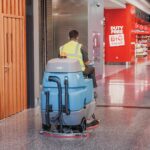
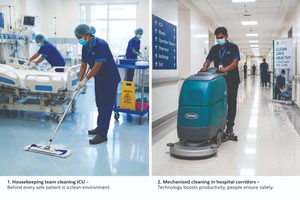
The adoption of advanced lithium-ion battery technology in cordless professional equipment has significantly enhanced mobility and flexibility. In high-footfall environments such as airports, metro stations, hospitals and commercial facilities, battery-powered machines eliminate cable-related constraints and safety hazards. More importantly, battery technology has enabled equipment to become more flexible and application-oriented, allowing operators to deploy machines where they are needed without compromising productivity.
Connected Operations
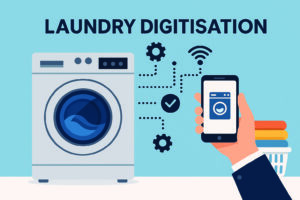
One of the most important shifts taking place is the move from connected machines to connected cleaning operations. IoT-enabled equipment provides visibility into machine utilization, operating hours, location, battery status, maintenance requirements and performance. The next phase will be increasingly data-driven. The integration of IoT, AI and predictive analytics will enable facility operators to move from reactive equipment management towards more intelligent, proactive and performance-oriented operations through smart fleet management.
Automation Update
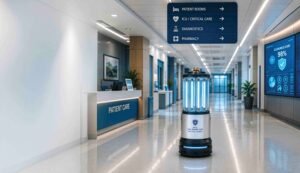
Autonomous cleaning is emerging as an important response to the increasing scale of facilities, productivity expectations and labour availability challenges. The objective is not simply to replace people with machines. Automation allows cleaning teams to focus their time and expertise on more complex, high-value activities such as detailed cleaning, high-touch areas, quality control, supervision and exception management. Equipment design itself has evolved to place greater emphasis on operator safety, ergonomics and ease of use, with intuitive controls and improved handling to minimize fatigue and injuries.
“The adoption of advanced lithium-ion battery technology in cordless professional equipment has significantly enhanced mobility and flexibility in cleaning operations”— Prashanth Srirangam Senior Director, Kärcher India
The Future Is Cobotic
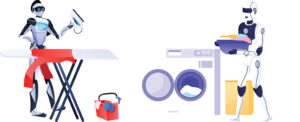
The future of cleaning will be defined by collaboration between people and technology rather than by one replacing the other. This human-machine collaboration can make operations more productive, consistent and sustainable while allowing organizations to make better use of resources.
The key will be designing workflows where robotics and human teams complement each other rather than operate as separate systems. This is where cobotics creates real value — machines handle repetitive tasks while people manage exceptions, quality and areas where flexibility is required.
From Mechanization To Productivity
The next evolution is not simply about replacing manual cleaning with machines. It is about improving overall productivity. The right combination of machines, accessories, cleaning agents, processes, training, digital tools and service can help customers address outcomes systematically. This is where the industry is moving from an equipment-centric approach towards a solution-oriented approach — looking at the complete cleaning process rather than at an individual machine in isolation.
CIJ Bridged Knowledge & Adoption
Clean India Journal has played an important role in the professionalization of India’s cleaning and hygiene ecosystem, says Prashanth Srirangam. By bringing international best practices, emerging technologies, hygiene standards and industry knowledge to Indian stakeholders, it has helped facility managers, service providers, manufacturers and institutions understand changing expectations.
Through its publications, exhibitions, awards and knowledge initiatives, the Journal has contributed to changing perceptions — from a predominantly manual service to a professional discipline driven by technology, training, processes, safety and measurable performance.
Kärcher has maintained a long-standing association with leading platforms such as Clean India Show, with highlights including connecting the Indian industry to global developments through Interclean Amsterdam and Pulire Verona.
Ask the expert
Have a question about this article? Put it to the people in it. We pass your details on and they come back to you directly.