



























Case Study: Raheja Corp’s Mindspace Minding its Waste
Mumbai has a massive garbage problem: its landfills are overflowing, its rivers are choked with trash, and as it continues to grow as a business centre, its garbage problem grows side by side. Major waste producers like manufacturing units, large institutions and business parks have the power to self-check and control their waste outflow; K Raheja Corp has taken the lead in this mission.
Scope and Vision
 K Raheja Corp is one of India’s leading real estate developers, with a sizeable part of its portfolio consisting of commercial spaces in the form of business parks. Early on, it recognised the need to incorporate green design and technology in its projects, to minimise the impact of construction and the activities of its corporate occupants on the environment. It is committed to ensuring that all its commercial projects are LEED (Leadership in Energy and Environmental Design) and IGBC (Indian Green Building Council) certified, which includes implementing efficient design, eco-friendly operations and reduced dependence on conventional sources of energy. Since it signed a memorandum of understanding with the CIIGreen Building Council to develop green buildings back in 2007, it has developed 4.75 crore square feet of green buildings across South and West India.
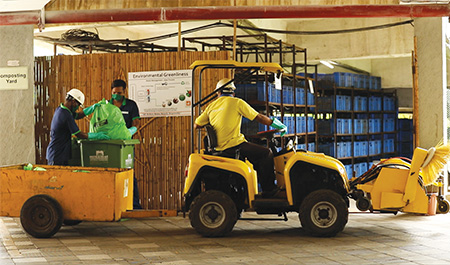
Its business parks, which are well-known as Mindspace and Commerzone, are vast, gated business communities which offer the finest possible infrastructure and services to their corporate occupants. Alongside such high standards for offices, each Mindspace park also boasts of its own end-to-end waste management system, where all waste generated inside the park is segregated on-site, and almost all of it is recycled, or appropriately processed before disposal, thus ensuring that commerce and the environment can coexist.

Wet Waste Management
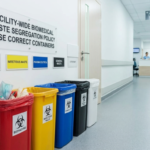
 Each building at Mindspace properties has its own accessible and dedicated garbage room, for the collection and storage of waste. The room is divided into sections for wet and dry waste, introducing segregation at the source itself. Representatives of the corporate occupants of the buildings bring already segregated waste – labelled with appropriate name-tags, to this room, and deposit it in the correct section.
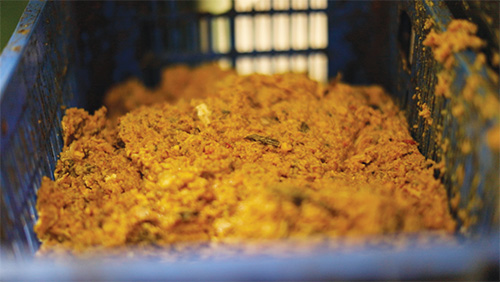
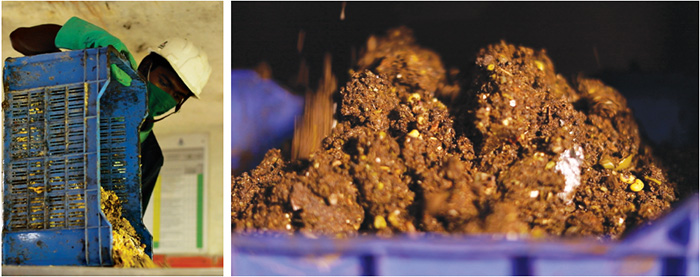
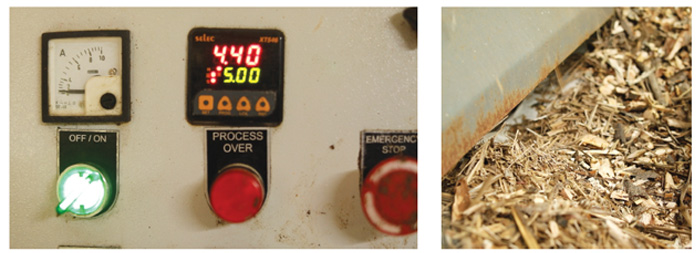
The facility management staff collects wet waste in biodegradable bags, checking the name tags to make sure it is the correct type of waste. These bags are then sent to an Organic Waste Converter, which biomechanically processes this wet waste to a fine, odourless, homogenous, dehydrated mixture. A microbial culture is then inoculated in this product, which converts it to a nutrient-rich compost that is used as an organic manure for landscaping at the site itself.
Waste collected and deposited by the client is checked before being sent for composting; if there is an error in segregation, the name-tags help identify the client, and photos and videos of the error are sent to the client to prevent future errors. Regular workshops are also conducted to help clients understand the minutiae of waste segregation and the methods of waste disposal.
Across Mumbai, the amount of waste generated by Raheja business parks varies according to the size of the park. On average, 200 kg of compost is produced every day.
Vermicomposting of Garden Waste
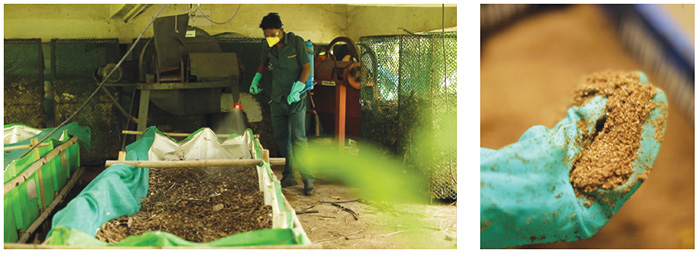
While compost is used to fertilise the garden tracts that beautify the parks, maintenance of these green patches generates waste as well. This horticulture waste is collected, shredded and filled in HDPE beds, which are then sprinkled with cowdung slurry or EM (Effective Micro-organisms) solution for pre-composting. This mixture is then fed to a specific species of earthworms, for vermicomposting, which further enriches the mixture. After 90 days, this nutrient-rich substance is ploughed back into landscaping and urban farming, among a large variety of end-users.
Dry Waste Processing
Business parks also produce a massive amount of dry waste in the form of paper and plastics. Mindspace properties send their dry waste to the recycling plants of vendors approved by the Maharashtra Pollution Control Board. Almost all waste generated is thus recycled and reused, allowing very little inert waste to be sent to local landfills.
Water Recycling
Efficient use of water comprises an important part of any green building. Waste generated at Raheja’s commercial properties is sent to a sewerage treatment plant, which uses physical, chemical and biological processes to remove contaminants, making it environmentally safe. This purified water is then reused for flushing, gardening and in air-conditioners, reducing dependence on the municipal water supply by 20-30%.
Outreach
Raheja Corp’s model waste management can and should be emulated by others. At other developers’ properties in Airoli (where there are Mindspace parks), it is the Navi Mumbai Municipal Corporation’s (NMMC) responsibility to collect and dispose of waste, and educate waste producers about the benefits of waste segregation. But recently, the tables were turned when the Raheja group invited officials of the NMMC to visit their Airoli campus, and observe the waste management facility and its processes. The municipal authorities were impressed with the self-contained waste recycling system, and wished to implement it across their area of jurisdiction.
A poet once wrote that man (and mankind) should leave behind footprints in the sands of time; but the way Mumbai is developing, we are leaving only trash on the sands of our beaches. Raheja Corp’s initiative to mitigate this outflow of garbage is commendable, and will go a long way in making Mumbai a business centre with an environmental conscience.
Ask the expert
Have a question about this article? Put it to the people in it. We pass your details on and they come back to you directly.