































Biomedical Waste Challenge COMPLIANCE GAPS PERSIST

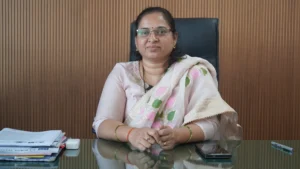
Dr V R Yamunadevi, Senior Medical Superintendent – Cluster 1, Senior Consultant Infection Control and Head of Central Sterile Supply Department (CSSD) at Apollo Hospitals, Chennai, and SHEA International Ambassador (2021), speaks to Clean India Journal on the compliance gaps, behavioural roots and digital shifts shaping biomedical waste management in Indian healthcare
India’s Bio-Medical Waste Management Rules, 2016 have improved segregation, collection and disposal across healthcare facilities, yet compliance gaps persist. Dr Yamunadevi, who audits waste practices across hospital departments, feels that most failures are behavioural, not technical.

Weakest Link
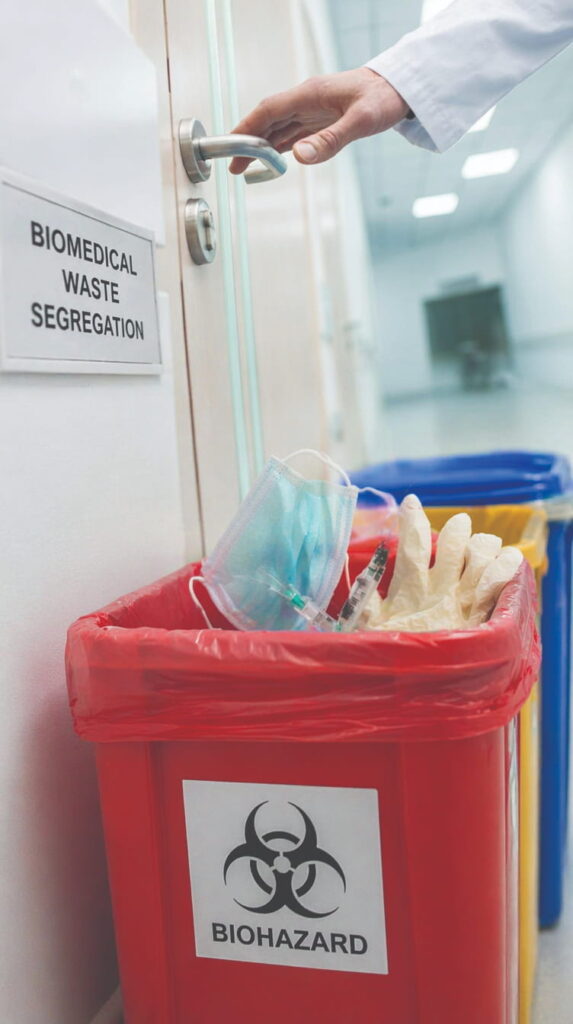
Yamunadevi identifies improper segregation at the point of generation as the most persistent compliance gap, despite WHO estimates that only 15% of healthcare waste requires specialised treatment. “Documentation gaps in barcode tracking, waste manifests and internal audits weaken accountability and hinder root-cause analysis. Disposal of sharp objects remains a distinct occupational hazard, exposing staff to blood-borne pathogens,” she said.
“Compliance,” Yamunadevi adds, “is markedly better in ICUs and laboratories than in operation theatres and emergency departments.” This she feels is because of supervision and training frequency rather than knowledge gaps alone.
“Waste reduction, advanced autoclaving and circular-economy recovery is the sustainable path forward, alongside digital traceability”— Dr V R Yamunadevi Senior Medical Superintendent – Cluster 1, Senior Consultant Infection Control and Head of Central Sterile Supply Department (CSSD) at Apollo Hospitals, Chennai
Misuse Persists
Yellow bag misuse, the misclassification of general and recyclable waste as infectious waste, inflates volumes by 20 to 40% in hospital audits, driving up incineration costs unnecessarily. “It is a behavioural rather than technical failure as time pressure, complacency and frequent staff rotation is usually the reason cited. The solution is secured bag storage with daily counts, paired with simulation-based training and direct observation audits.”
Digital Shift
Incineration remains essential for anatomical waste but faces emissions concerns and growing capacity constraints at treatment facilities. “Waste reduction, advanced autoclaving and circular-economy recovery is the sustainable path forward, alongside digital traceability, including barcode tracking, RFID tagging and AI-integrated dashboards, as the next frontier for accountability,” said Yamunadevi.
Recommendations
Her recommendations centre on treating segregation accuracy, yellow bag misuse and sharps compliance as key performance indicators, running continuous audits, and building genuine competency rather than one-off awareness. “India’s regulatory framework is strong, execution remains the gap,” said Yamunadevi.