









 CIJConnect Bot-enabled WhatsApp today at 4:00 PM.
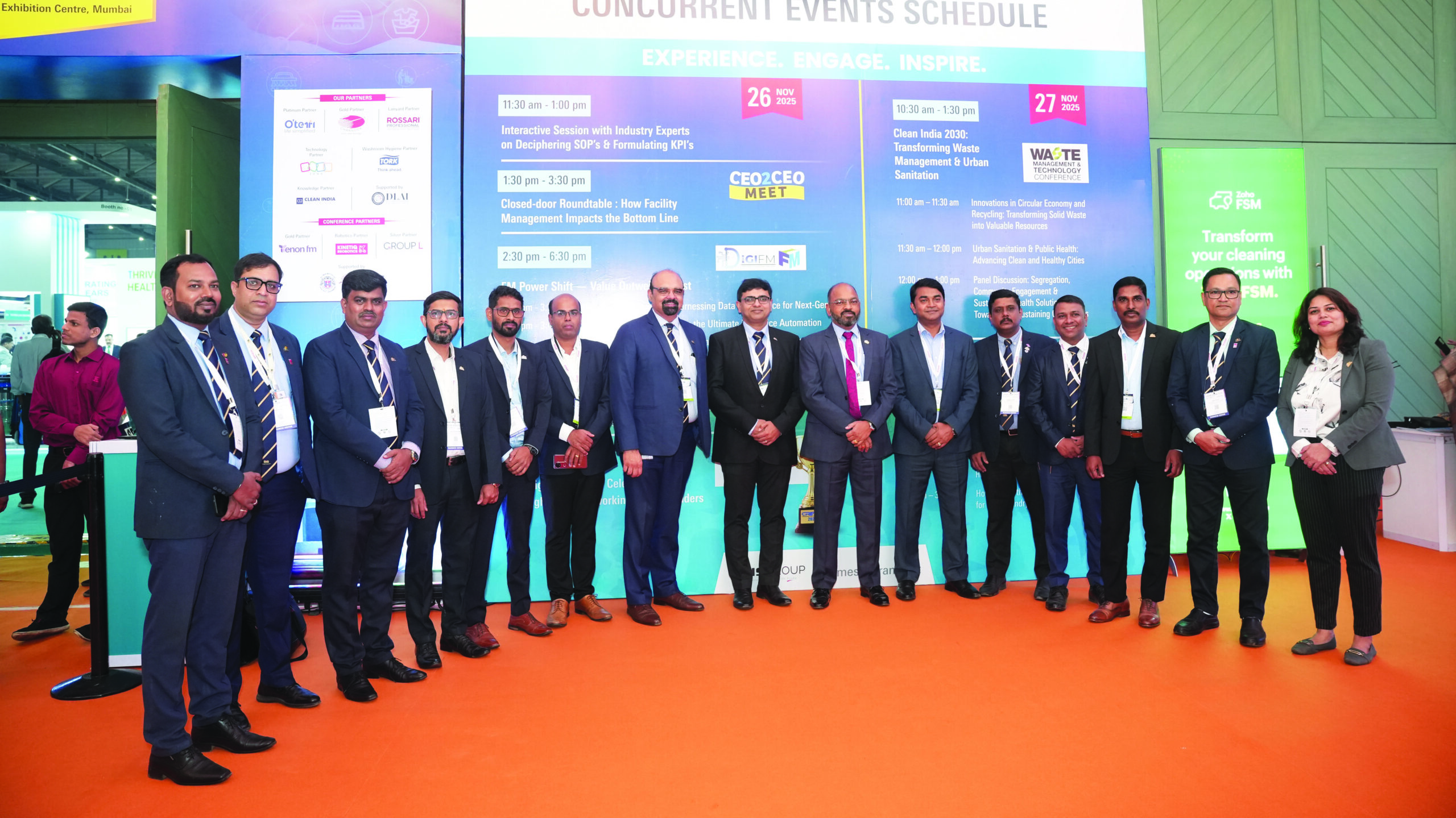
Laundry’s Software Spin
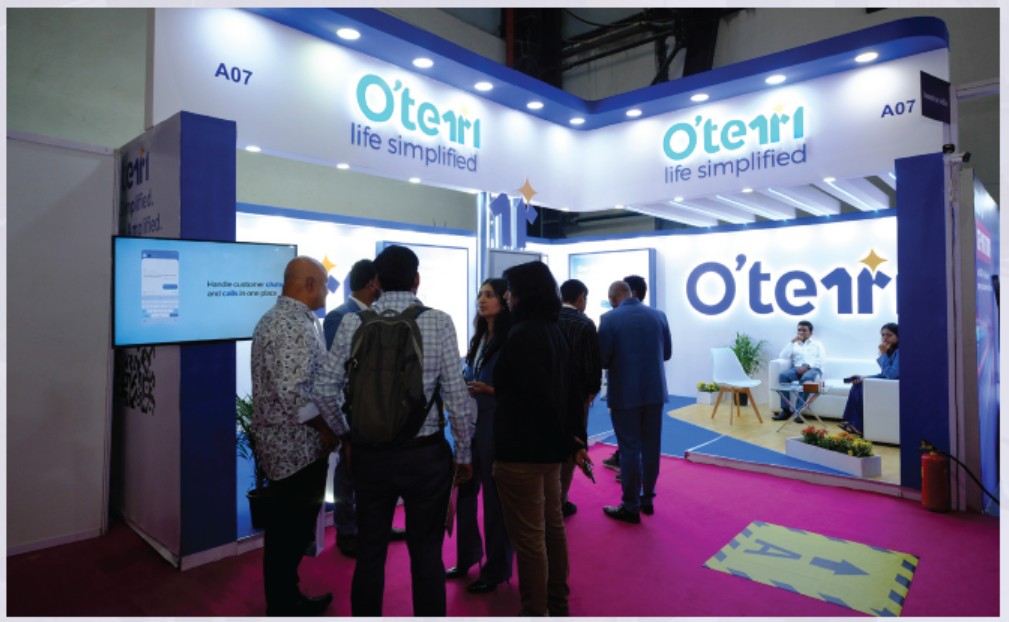
In a sector long dominated by handwritten receipts, manual sorting and frequent mix-ups, a newly begun platform called O’terri (MKS Oterri Pvt Ltd) is attempting to bring structure, traceability and intelligent automation to India’s largely unorganised laundry landscape.

According to the company officials, the idea began with a personal experience involving a garment mix-up with a high-end dress, which highlighted how little transparency existed across the industry. The app’s development formally began in 2023, with the system undergoing build-outs in 2024 and its refined interface beginning public introduction in 2025. The current exhibition marks only the third time Oterri has been showcased in a public setting.
The stall at the exhibition also reflected O’terri’s philosophy: Completely paperless, with all registrations, demos and sign-ups conducted digitally.
O’terri functions as a digital laundry aggregator, already bringing together a community of nearly 250 channel partners on a single platform. At its core is an app-driven system that replaces paper receipts with digital order IDs, complete itemised lists, and upfront pricing.
One of the platform’s most distinctive features is its digital wardrobe. “Customers can photograph each garment, building a visual catalogue that logs brand, colour, garment type, and even the number of times it has gone for service. For more casual users, the app allows simple icon-based selection for placing normal orders, but the advanced wardrobe is aimed at those who value a detailed, trackable record,” the company officials said.
The digital wardrobe also enables wardrobe sharing — a feature the company says reflects everyday Indian habits of lending clothes among family members. The process allows the lender and the borrower to set expectations through digital records and return timelines, reducing the risk of items being misplaced or forgotten.
On the vendor side, O’terri offers an AI-enabled dashboard that learns with use, providing analytics on business patterns. “Laundry owners receive insights such as repeat ratios, best customers, and alerts if a regular customer suddenly reduces orders. In addition, the vendor app documents intake conditions: When garments arrive with stains or defects, staff can photograph them at the counter and send the images through the system, creating a timestamped digital record that avoids disputes and clarifies whether extra treatment or charges are required,” officials added.
Lite and Smart
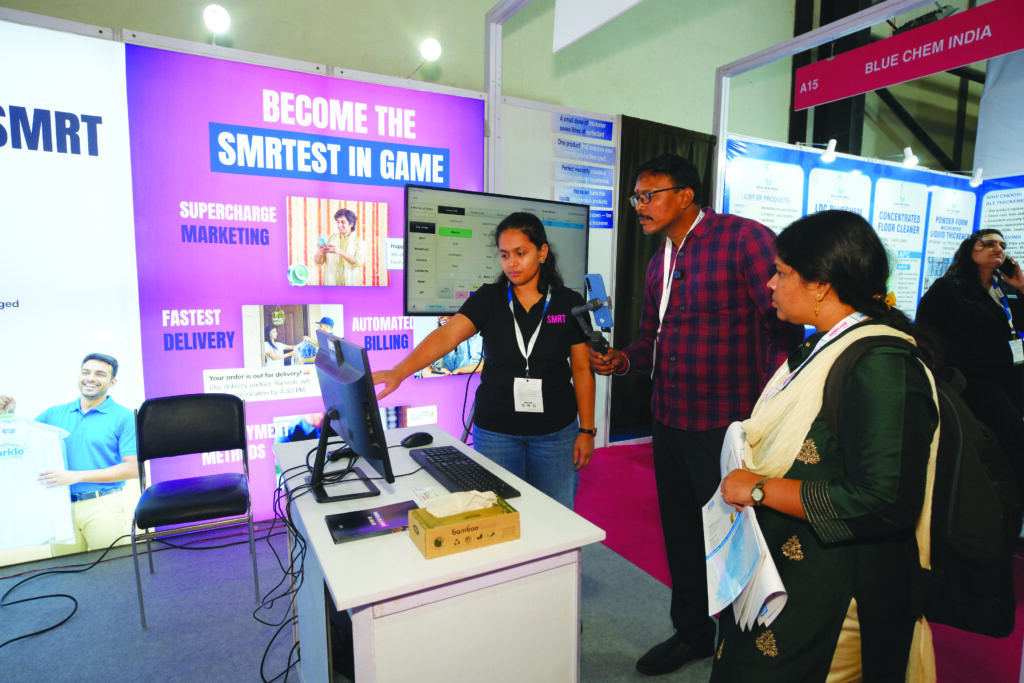
SMRT Systems (SMRT Systems Inc.) has become one of the fastest-growing Point of Sale (POS) providers across the US, Europe and Australia. After researching the Indian market for five years, the company realised that local businesses needed something more affordable, and deeply intuitive for a user base that depends heavily on WhatsApp, UPI payments and offline flexibility.
“Our software Smart Lite is their answer to that gap — a streamlined, modernised version of their older POS engine, with a redesigned interface and every essential workflow built around the practical realities of Indian dry cleaners, laundromats and hotel laundry units. It works fully offline when required and syncs to the cloud once connectivity returns, delivers order creation and payment links,” said Prakhar Lohiya, director of product innovation.
For walk-ins, the experience is designed to be as frictionless as possible — place an order, receive an instant WhatsApp update with the delivery timeline, and pay via UPI, credit card or a link. “For route-based customers, subscription billing is automated and makes pickups and deliveries significantly easier to manage. Behind the counter, the system maps each step of the Indian dry-cleaning workflow — from sorting to assembly — in a way that mirrors what operators already do manually, only with greater accuracy and far less repetition,” explained Lohiya.
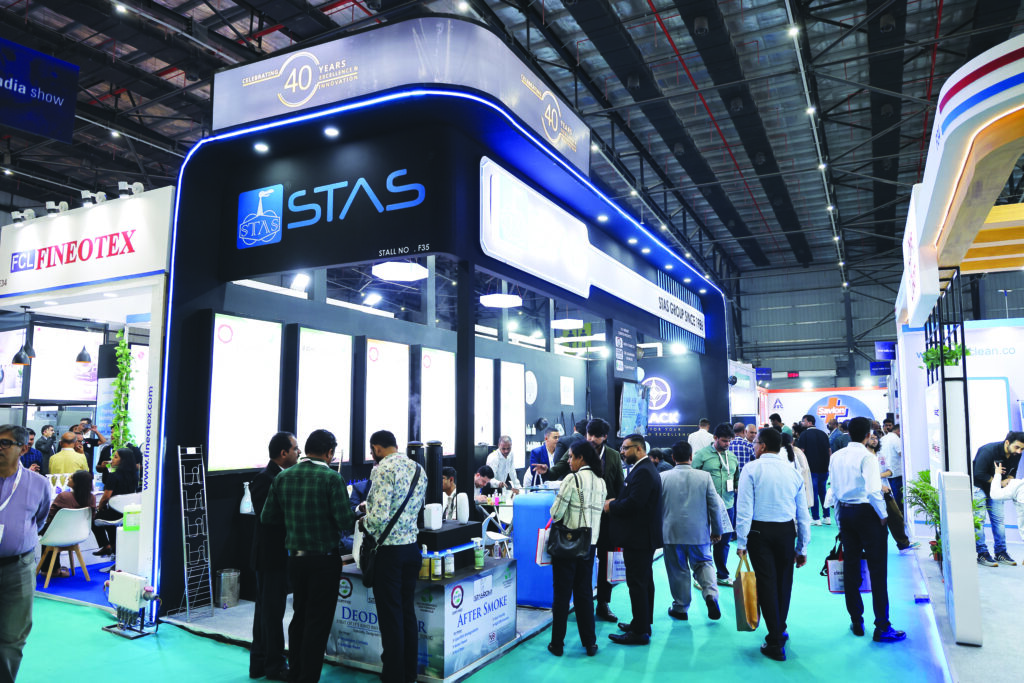
One of the most intriguing features the company brought to India is a thumb-sized tag widely used in the US and Europe. “Once attached discreetly to a garment, it survives nearly a hundred wash cycles without detaching. Each tag essentially acts as a permanent digital identity: The moment it is scanned, the system pulls up everything associated with that piece — its colour, brand, past service history, earlier stains or damage notes, and the customer it belongs to. The feature promises a complete shift in efficiency, ensuring garments are never mixed up and regular customers aren’t re-entered manually each time they walk in,” said Lohiya.
Smart Light’s official debut at Clean India 2025 drew a steady crowd, including early adopters who had first encountered its systems at global shows in Germany, France and Orlando. “Many visited the booth specifically to see how the India-adapted version compared to its international counterpart. Not a single visitor left feeling the software lacked what they needed — a response they described as both encouraging and affirming of their five-year research effort,” the officials said.
NextGen Automation
Fahosel (Favone Laundromat Pvt. Ltd), a leading supplier of commercial and industrial laundry solutions in India, showcased its newest offering Schulthess machines, featuring next-generation laundry automation experience. “These machines allow dosing of up to 13 chemicals depending on program requirements, a flexibility which is unmatched in the Indian market,” said director Saabina Siraj.
Adding that the timing was just right, she said, “Over the past decade, we have observed the Indian laundry sector shift dramatically, especially across Tier-2 and Tier-3 cities where awareness of professional laundry, dry cleaning, fabric-care rules, and outsourcing of household laundry has grown rapidly. Younger entrepreneurs are entering the field, customers are more informed, and the once-unorganised billion-dollar landscape is steadily formalising.”
What’s In A Name
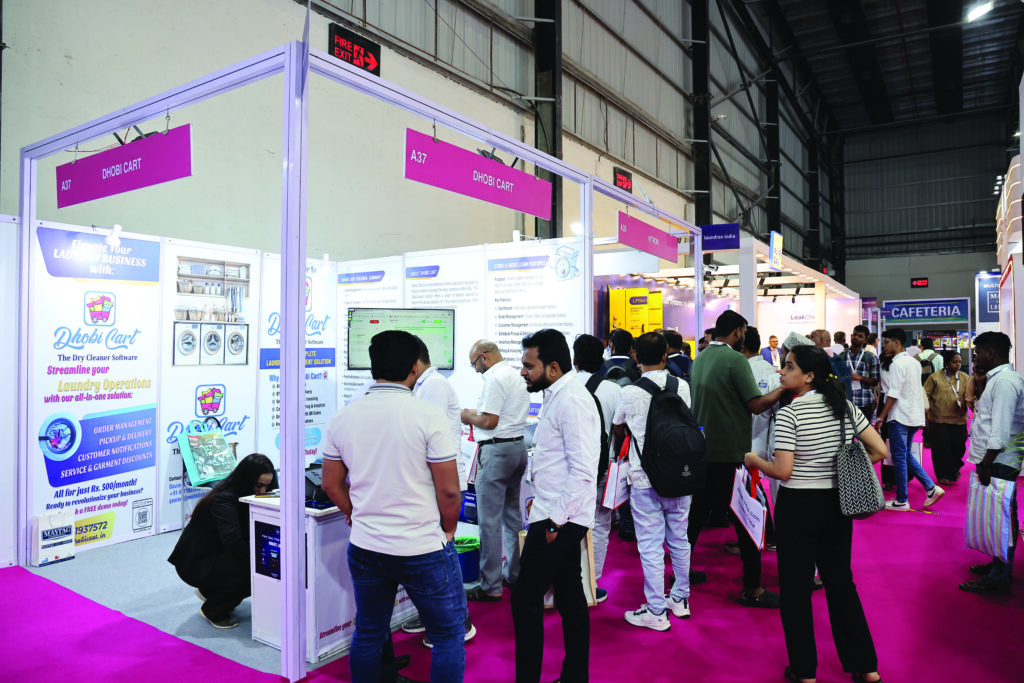
This confidence in a sector on the cusp of formalisation wasn’t Fahosel’s alone. At Dhobi Cart (One India Technologies Pvt. Ltd)’s stall, founder Gaurav Jain voiced a similar belief. “We have attempted to streamline one of the industry’s oldest pain points — the everyday operational chaos inside dry-cleaning and laundry businesses. Positioned as a software designed specifically for laundries and dry cleaners, Dhobi Cart manages the entire workflow from billing to delivery, allowing users to create orders, generate invoices, print tags, coordinate riders, and oversee delivery cycles within a single system,” he said.
Dhobi Cart’s stall drew visitors from across India — a reach Jain credited to the company’s pan-India digital presence and advertising. “While the software is meant for end-users such as laundries and dry cleaners, even chemical manufacturers stopped by, exploring potential collaborations to integrate product recommendations into the platform’s delivery chain. Yet nearly 90% of the footfall came from businesses looking to adopt our software for their laundry operations,” he added.