









 CIJConnect Bot-enabled WhatsApp today at 4:00 PM.
Every day, hospitals perform thousands of surgeries, diagnostic procedures, and life-saving interventions. Patients place their trust in doctors, nurses, and the healthcare system, expecting that when they need care, everything will work exactly as it should. While clinical expertise remains at the heart of healthcare, there is another silent contributor that often goes unnoticed — the reliability of medical equipment and hospital infrastructure, enumerates Tapani Ghosh, Facility Director, Narayana Superspeciality Hospital, in talks with Clean India Journal.
A few months ago, while reflecting on emergency preparedness in hospitals, I realized how little attention is given to the systems that make modern healthcare possible. Imagine a patient arriving in the emergency department with a massive heart attack. Within minutes, the cardiology team activates the Cath Lab. The imaging system starts instantly, monitors function accurately, and every critical device performs flawlessly. The procedure is completed successfully, and another life is saved.

The patient and family naturally thank the doctors, nurses, and the clinical team. Very few recognise the invisible contribution of biomedical engineers, facility professionals, and maintenance teams who ensured that the Cath Lab
was ready long before the emergency occurred.
This is where predictive maintenance becomes one of the most powerful yet least visible contributors to patient safety.
For decades, hospitals have followed two primary maintenance strategies. First is reactive maintenance, where equipment is repaired only after it fails and second is preventive maintenance, where equipment is serviced at predetermined intervals. However, healthcare today is very different from what it was even a decade ago.
Instead of asking “When should we service this equipment?”, hospitals begin asking “What is the equipment telling us today?” That shift — from assumptions to real-time evidence — is transforming healthcare engineering. From Data to Decisions
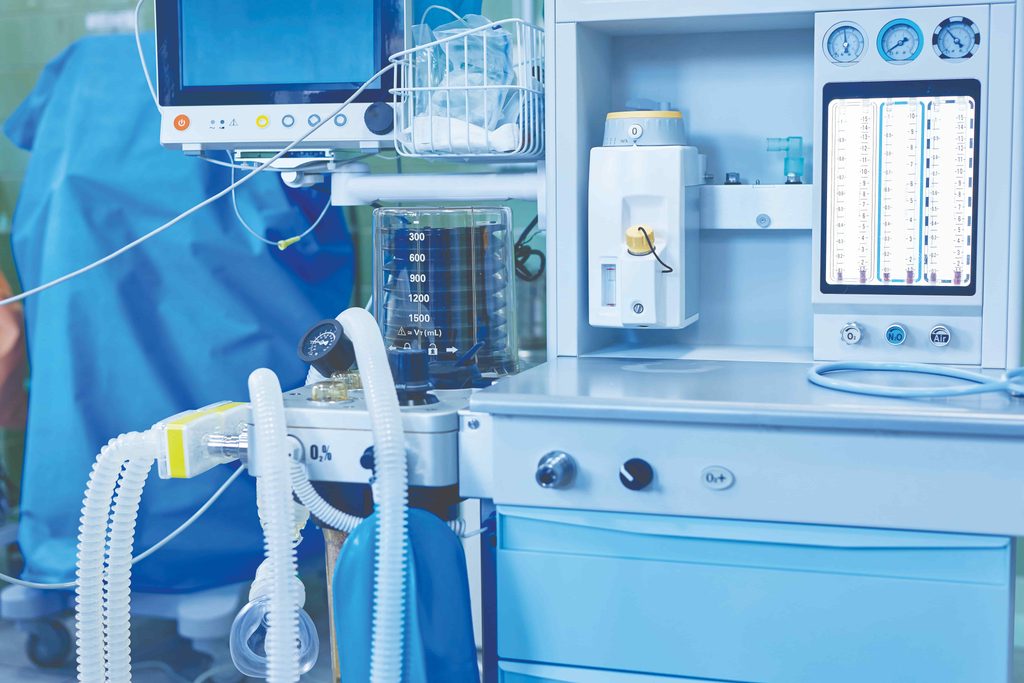
Modern medical devices generate enormous amounts of operational data. Individually, these those data may appear insignificant. Together, however, they tell a story. Using Internet of Things (IoT) connectivity, Artificial Intelligence (AI), and predictive analytics, hospitals can continuously monitor equipment performance and identify subtle changes that often remain invisible during routine inspections. Instead of waiting for an alarm indicating failure, engineering teams receive early warnings that allow them to intervene before patient care is affected.
The objective is remarkably simple: Prevent equipment failure before anyone notices it.
Practical Example
Consider one of the busiest MRI scanners in a hospital. During routine monitoring, biomedical engineers notice that the cooling system has gradually started consuming more electrical power than usual. The scanner continues operating normally. Radiologists report no issues, and patients experience no interruption.
Under conventional maintenance practices, there would be little reason to investigate. However, AI compares this trend with thousands of previous operating cycles and recognises a pattern that has historically preceded compressor failure. Rather than waiting for an unexpected breakdown, engineers schedule maintenance after clinical hours and replace the deteriorating component.
The following morning, appointments continue exactly as planned.
No patients are rescheduled. No clinicians experience delays. No emergency repairs are required. Most importantly, no patient ever realises that a major equipment failure was prevented. That is perhaps the greatest achievement of predictive maintenance.
Beyond Medical Equipment
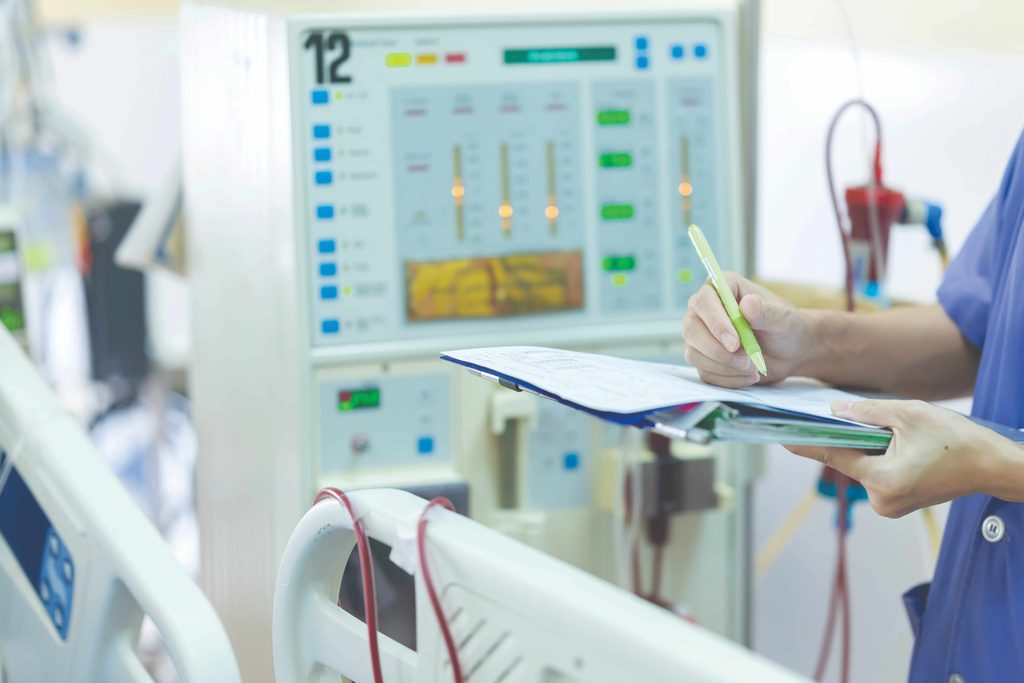
Predictive maintenance is equally valuable beyond diagnostic and therapeutic equipment. Hospitals depend on an extensive network of engineering systems that quietly support patient care every hour of every day. Heating, Ventilation and Air Conditioning (HVAC) systems maintain sterile environments inside operation theatres. Medical gas pipelines ensure uninterrupted oxygen delivery to critical care areas. Uninterruptible Power Supply (UPS) systems and diesel generators protect intensive care units during power failures. Water treatment plants support dialysis services. Elevators transport critically ill patients between departments.
These systems rarely receive recognition until they stop working.
Yet their reliability is fundamental to safe healthcare delivery. Continuous monitoring of motors, compressors, batteries, pumps, filters, airflow, pressure, and electrical parameters allows facility teams to identify deteriorating performance before failures occur. Replacing a component during planned maintenance is far less disruptive — and far less expensive — than recovering from an unexpected outage during clinical operations.
Patient Safety at the Centre
Predictive maintenance is often discussed as an engineering initiative. In reality, it is a patient safety initiative. Every avoided equipment failure represents one fewer cancelled surgery. One fewer delayed diagnosis. One fewer interruption in
emergency care.
For patients, reliability creates confidence. For clinicians, it creates trust. For hospitals, it creates resilience. In healthcare, technology is not merely supporting clinical care — it has become an integral part of it.
Predictive maintenance enables hospitals to move beyond repairing equipment. It allows them to build an environment where technology quietly supports clinical excellence without interruption.
Technology Alone Is Not the Answer
While Artificial Intelligence and predictive analytics are driving this transformation, technology by itself cannot guarantee success. The real value of predictive maintenance lies in combining digital intelligence with human expertise.
The role of the biomedical engineer is evolving rapidly. Their responsibility is no longer limited to repairing equipment after a failure; it is about ensuring that failures never occur in the first place.
AI further enhances this capability by analysing multiple variables simultaneously. It is important to understand that AI does not replace engineering judgement. It strengthens decision-making by highlighting risks that may not be visible during routine inspections. The final decision still rests with experienced professionals who understand the clinical importance of each asset.