























Two Decades of Quiet Transformation

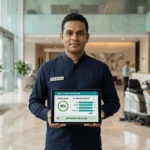
Jayanta Guha, COO, Support Services, Compass Group India, on how cleaning in India moved from what looked clean to what is provably hygienic, and why people remain the defining factor
Cleaning in India was a manpower business 20 years ago. It was judged by what looked clean, priced on headcount, and treated as a support task that sat well outside the boardroom. Equipment was largely imported, training was inconsistent, and the notion of measuring hygiene rather than simply observing it barely existed.

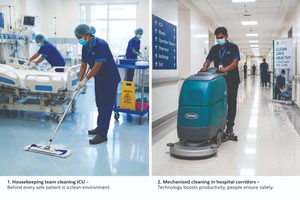
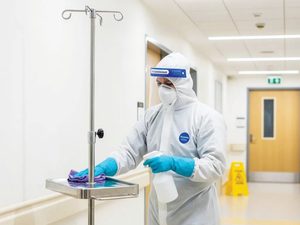
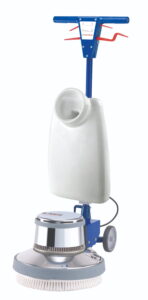
Professional cleaning today is a serious, technology-led discipline. But the more important shift is not scale, it is definition. We have moved from delivering cleaning as an activity to delivering hygiene as an outcome, backed by mechanised equipment, sustainable chemicals, robotics and digital monitoring. Cleaning has moved from the back corridor to the centre of the business conversation.
Activity To Assurance
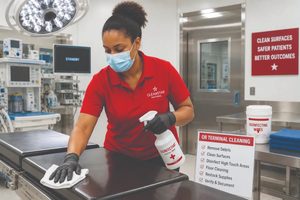
If there is one change that has redefined customer expectations, it is the move from activity to assurance. Customers no longer ask whether the floor was cleaned. They ask whether it is measurably hygienic, sustainably delivered, and consistently repeatable across every shift and every site.
Two forces reshaped these expectations. First, the pandemic permanently reset the hygiene baseline, and it never came back down. What began as a crisis protocol became a permanent standard for health, safety and business continuity.
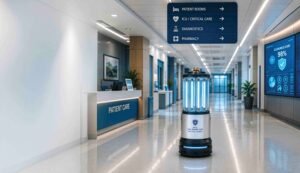
Second, technology moved from novelty to expectation. Robotic scrubbers, sensor-based monitoring and green chemicals that once impressed a client are now simply assumed.
And underneath all of it sits the industry’s hardest, most persistent challenge: frontline labour. Availability and retention, not ambition, are what separate operators who can hold a standard from those who cannot.
“Two forces reset expectations: The Covid-19 pandemic raised the hygiene baseline permanently, while technology shifted from novelty to baseline assumption”— Jayanta Guha COO, Support Services, Compass Group India
Convergence The Future
What will define the next decade — AI, robotics, sustainability or automation? It’s not one of them alone, but how well they converge, and by the one factor everyone forgets to list: People.
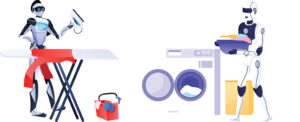
AI is shifting maintenance from reactive to predictive. Robotics and automation are taking on repetitive work and, more importantly, addressing the labour challenge head on by freeing people for higher-value roles. Sustainability has moved from a talking point to a commercial driver.
But every building eventually teaches the same lesson, and it is one you only learn on the ground. A dashboard can tell you a machine is running within limits. It takes an experienced hand to hear that something is wrong before the data does. Technology reads patterns. People read context.
The organisations that win the next decade, will be the ones that pair machine intelligence with human judgment, not the ones that bet on either alone.
Human Factor
If there is one thing experience teaches in this business, it is humility about how much still comes down to people. The equipment has transformed, the science has advanced, and the expectations have risen. Yet the difference between a good operation and a great one still rests on trained, motivated professionals who take pride in unseen work.
As cities grow smarter and workplaces more demanding, the real task is not simply to clean better. It is to build healthier, safer and more sustainable environments, and to give the people who deliver that work the recognition the profession has finally earned.
CIJ: Platform That Held Up A Mirror
Every industry that matures needs a platform that documents its journey and holds up a mirror to it. For professional cleaning in India, Clean India Journal has been that platform, says Jayanta Guha.
“Over two decades it has tracked the shift from manual labour to mechanisation, brought global best practice within reach of Indian operators, and given manufacturers, service providers and facility leaders a common place to exchange ideas.”
Its real contribution, he notes, has been to connect cleaning to larger themes of public health, sustainability and national missions, and in doing so, to help lift it from a task to a recognised profession.
On memorable association with CIJ, Guha points not to a single moment but to consistency. “What stands out is consistency rather than any single moment. Over the years, CIJ has been less a magazine one reads and more a meeting point for the industry, whether through its editorial coverage or the conversations it convenes across the ecosystem.”
The ability to bring competitors, partners and clients into the same room and turn that into meaningful dialogue, is its most enduring contribution — and a large part of why the industry feels more connected and more professional today than it did two decades ago.