

































Integrated Facility Management: How Technology Is Transforming FM
Integrated facility management is evolving from a support service into a strategic business function. Ankur Sachdev, CEO, Tenon FM Pvt. Ltd, explains the forces reshaping India’s facility management industry.
Twenty years ago, a seemingly simple question prompted us to rethink our business: “Do you provide cleaning services?” It made us pause and ask ourselves whether cleaning was truly the business we were in, or whether there was a much larger role to play.

The distinction lies in what integrated facility management enables businesses to achieve. Cleaning is a visible, recurring activity; integrated facility management (IFM), by contrast, encompasses the broader responsibility of maintaining a workplace so that organisations can focus on their core business. Facility management is about taking care of the workplace environment, allowing organisations to concentrate on their core business while we manage the rest.
Housekeeping and Beyond: The Scope of Integrated Facility Management
That responsibility extends well beyond housekeeping. It includes building maintenance, engineering services, utilities such as chillers and HVAC systems, electrical infrastructure, workplace upkeep and the overall employee experience. From the moment someone enters a building to the time they leave, the quality of the environment influences how people work and how visitors perceive an organisation.
Tenon’s own transformation reflects this evolution. From its roots as a housekeeping company, it has developed into an integrated facility management provider, expanding its role from maintaining premises to managing the broader workplace environment.
Better Upkeep: Understanding the Value of Facility Management
Facility management has traditionally been viewed through the lens of cost. Organisations account for real estate, employment and other operational expenses, yet the cost of maintaining facilities often receives insufficient strategic attention. This perception needs to change. Facility upkeep is not simply an expense incurred to keep premises clean; it is an investment in the environment in which businesses operate.
Consider two office buildings. In one, the premises are clean, the temperature is comfortable, visitors receive assistance and employees can navigate the workplace without difficulty. In another, dirt, inadequate assistance and confusing access create frustration. The difference is immediately apparent, but the systems and services responsible for creating the better experience are often less visible. This difference is driven by effective facility management.
This is where the industry must demonstrate the relationship between expenditure and outcomes. The relevant question is not simply how much a client spends, but what that spending achieves. The challenge is to connect the cost of operations with measurable service outcomes and demonstrate how effective facility management contributes to a better workplace experience.
Evolving Commercial Models in Facility Management
The commercial model must evolve accordingly. Clients increasingly expect service providers to deliver agreed outcomes while keeping service charges under pressure. When wages and statutory costs rise but service-level expectations remain unchanged, providers face a difficult balancing act.
The answer lies in greater transparency, clearly defined service-level agreements and a better understanding of the actual cost of delivering quality services. This will help clients and service providers align expectations, manage costs and ensure consistent service delivery.
A more outcome-oriented approach can also encourage clients to evaluate facility management beyond the immediate cost of services, recognising the importance of operational efficiency, service quality and long-term value.
Technology and People: Finding the Right Balance
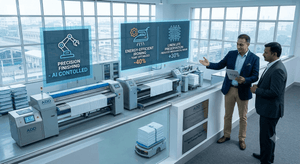
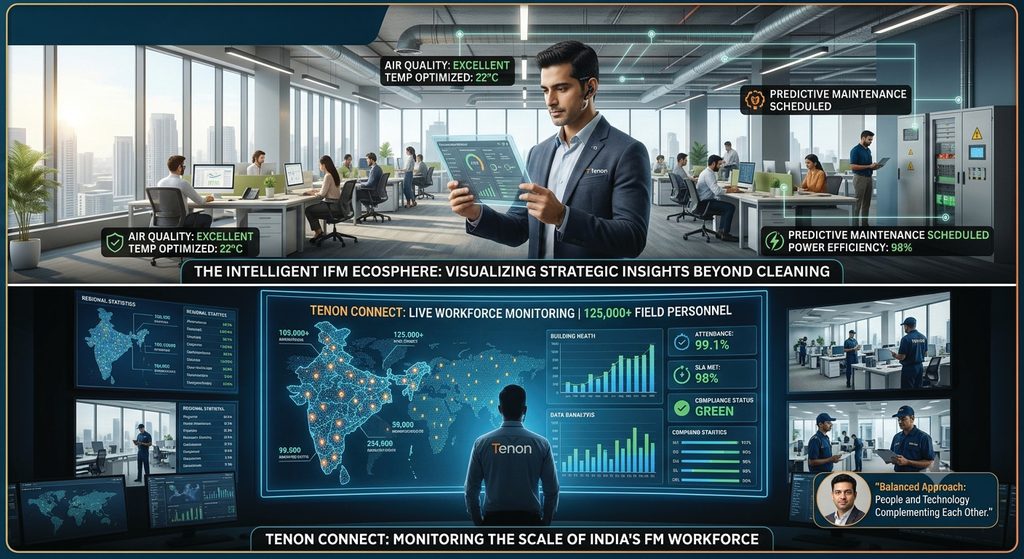
Automation, robotics and AI are reshaping service industries, and facility management is no exception. However, technology should not be viewed as a straightforward substitute for human labour. The sector remains people-intensive, and many tasks require judgement, responsiveness and an understanding of human needs. A machine may perform a repetitive cleaning task, but service quality also depends on how people respond to problems, support occupants and maintain standards.
Technology can improve efficiency and consistency, but its effectiveness ultimately depends on how well it supports the people responsible for delivering services.
“There should be a balanced approach in which people and technology complement each other.”— Ankur Sachdev, CEO, Tenon FM Pvt. Ltd
India’s Unique Facility Management Challenges
India presents a particular challenge. Compared with mature markets, where labour shortages and high employment costs have accelerated automation, India has a substantial workforce whose livelihoods depend on labour-intensive services. A technology strategy that focuses exclusively on reducing headcount risks overlooking the social and operational realities of the Indian market.
There needs to be a balanced approach in which people and technology complement each other. Automation should improve productivity, consistency and accountability, while employees remain central to service delivery. The growth of e-commerce and delivery platforms has created alternative employment opportunities, intensifying the pressure on traditional service sectors to attract and retain personnel.
For FM companies, the task is therefore twofold: improve operational efficiency while ensuring that the quality of service does not suffer. Technology can help bridge that gap, but only when it is deployed against clearly defined operational needs.
Digital Facility Management: The Advantage of Real-Time Monitoring
The value of technology extends beyond robotics. Its greatest contribution may lie in the visibility and control it brings to a geographically dispersed workforce and a complex network of services.
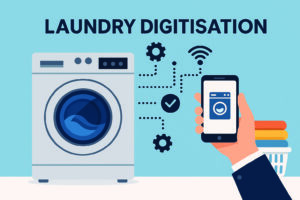
Tenon Connect, the company’s digital platform, is used to monitor a workforce of around 1.25 lakh people. A real-time dashboard enables the organisation to assess deployment, attendance, staffing requirements and operational accountability.
Such information is important not only for productivity but also for statutory compliance and workforce management. Technology can provide a consistent record of operations, allowing supervisors to identify gaps and intervene before they affect service delivery.
Robotics is another part of this transformation. However, technology adoption must be assessed against a realistic return on investment (ROI). Digitalisation should be driven by a defined operational objective, supported by governance and measured over an appropriate period.
The focus should be on identifying where technology can create meaningful improvements in operational efficiency, service quality and accountability.
Building a Sustainable Future for India’s FM Industry
India’s facility management industry must also confront structural workforce challenges. Seasonal migration, festivals and agricultural cycles can cause sudden fluctuations in labour availability, particularly when workers travel back to their home regions. Wage pressures add another layer of complexity.
These challenges are encouraging the industry to rethink traditional operating and commercial models. There will be a gradual shift towards service-oriented contracts, in which payment is linked more closely to defined deliverables and performance.
Such models can help create greater clarity around expectations, responsibilities and service outcomes while encouraging a stronger focus on performance.
Greater Client Involvement in Facility Management Planning
Clients should involve FM providers more closely in budgeting and operational planning. Service partners understand the practical requirements of maintaining buildings and can help organisations determine realistic costs, identify efficiencies and allocate resources more effectively.
Early involvement can also help organisations make informed decisions about workplace requirements, maintenance priorities and the resources needed to deliver consistent service quality.
The future is not about choosing between people and machines. It is about establishing the right combination of both, backed by measurable outcomes and strong governance.
Clean India Journal Drives Meaningful Industry Transformation
We appreciate Clean India Journal for engaging industry stakeholders through thought-provoking questions that challenge conventional practices. Its role in bringing together industry perspectives on manpower, technology and the evolving facility management landscape is particularly noteworthy.
By encouraging meaningful conversations and actionable insights, the publication continues to contribute to the industry’s growth and transformation.