









 CIJConnect Bot-enabled WhatsApp today at 4:00 PM.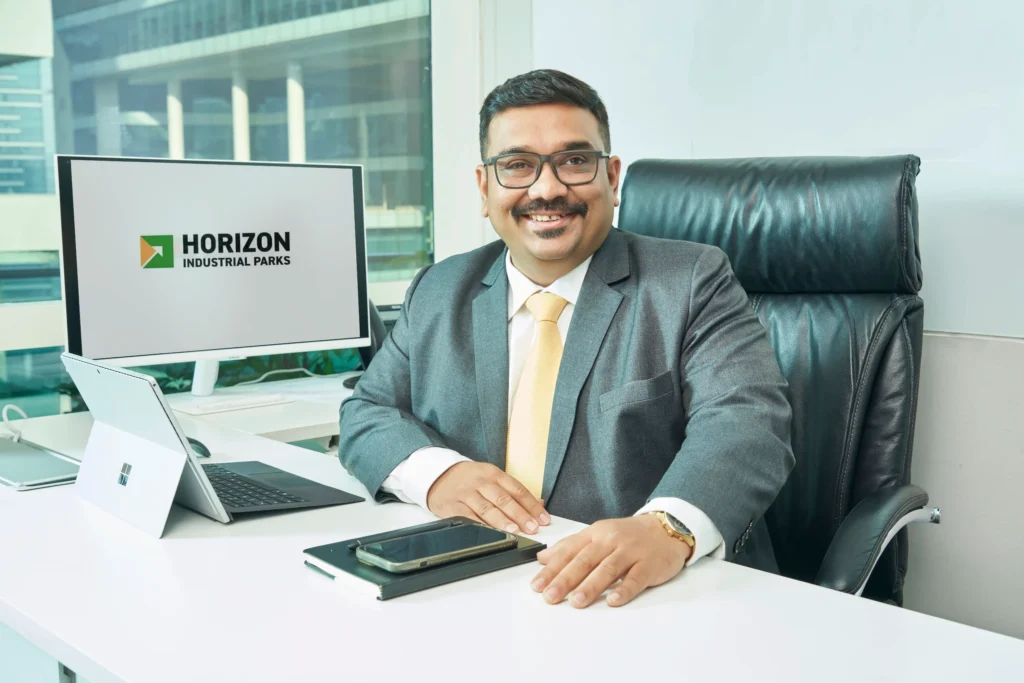
As warehousing scales rapidly, operational consistency becomes critical. Nikhil Navalkar, Head – Operations at Horizon Industrial Parks Ltd, explores how Horizon Industrial Parks Ltd is leveraging automation and robotics to transform infrastructure management, improve efficiency, and enable preventive, data-driven decision-making.
“A couple of years ago, I took over as Head-Operations (FM) at Horizon Industrial Parks Ltd (HIPL), the warehousing platform in India for Blackstone Group. It took me nearly three months to visit all our warehousing (both Industrial & Logistical) parks and appreciate the size of the parks, all the facets involved in the operations and the way the teams were monitoring the operational parameters. In the meanwhile, the organisation was growing from strength to strength, and the number of parks were increasing by leaps and bounds across all regions.

While this fast progress presented a great opportunity to scale up the operations commensurately, it also presented amongst others the challenge of governing multiple parks uniformly and consistently. Warehousing parks usually operate complex and mission-critical infrastructure, including but not limited to water systems, power distribution, fire safety, STP and DG operations that traditionally depend on manual checks, physical inspections, and reactive responses.
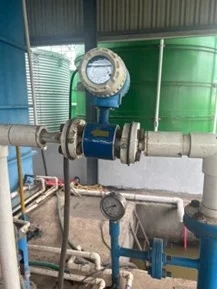
The key challenges observed were:
• Data capturing by the on-ground teams led to random manual errors
• Fragmented data in traditional formats across systems
• Issue identification became more reactive
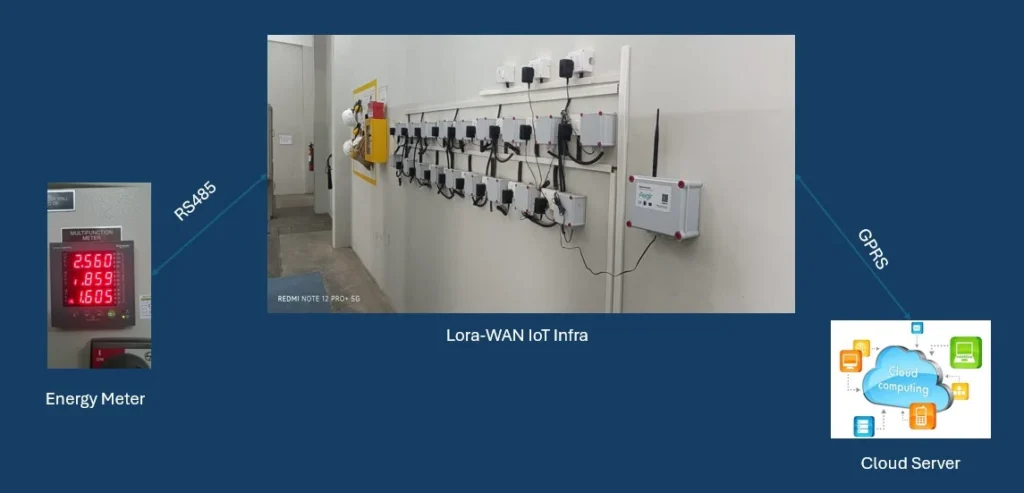
To overcome these challenges, HIPL took up the initiative of implementing technology automation with smart metering at all our Parks across the nation.
The real impact of digitisation lies in how it changes decision-making. With continuous data visibility, teams no longer rely on periodic reports but act on live operational signals. This enables quicker interventions, better prioritisation of resources, and a shift towards managing exceptions rather than executing routine tasks.
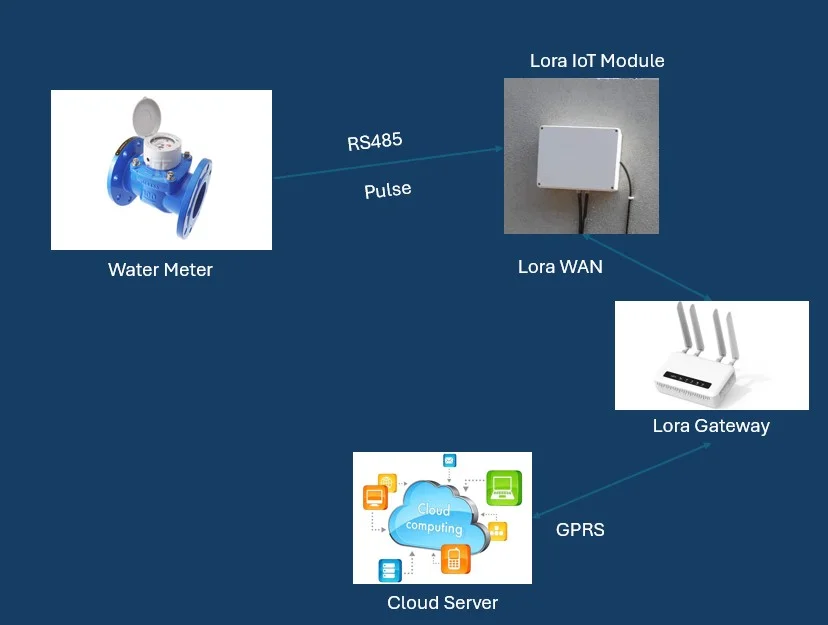
The technology ensures that with continuous monitoring of the critical parameters and infrastructure, the dependency on manual checking and physical follow-up is drastically reduced and moves from reactive to preventive response. Thus, the team can give more time for supervising critical operations, improving customer-centric engagement and faster decision-making. Thus, this collaborative model has focused on augmenting human effort with technology and intelligent systems.
This represented a fundamental change:
• From task execution → To active monitoring
• From manual reporting → To system-driven insights
• From firefighting → To preventive management
At a portfolio level, inconsistency is the biggest operational risk. Without standardised systems, even well-managed individual sites can collectively underperform. Automation, therefore, is less about efficiency gains and more about ensuring predictability and control
across distributed assets.
Once the challenge of governing multiple parks uniformly and consistently was addressed we then moved to bind together all stakeholders in our park environment on a common platform. HIPL took the initiative to customise and develop a fully system-driven Property Management software including a White labelled App. This App covers all major aspects which are essential for the routine day-to-day operations at our parks, including Helpdesk, Service Request Management, Visitors Management, Communications, Amenities booking, Asset Management, Compliances, Attendance, Invoicing and Inventory Management.
“Automation and robotics are transforming warehousing operations by enabling smarter monitoring, improving safety, reducing manual dependency, and driving efficient, data-led decision-making.”— Nikhil Navalkar
With implementation of this Property Management App at our parks, following are the major advantages:
• Every ticket follows identification, status updates, root cause tagging, and effectiveness verification always ensures audit readiness.
• Registered vehicle and staff movement via number-plate recognition eliminates time consuming manual entry and ensures hassle free vehicle movement in and out of the park.
• Critical updates, notices or emergency alerts can be broadcast park-wide or targeted to specific groups instantly.
• Tenants can view live slot availability of amenities and book instantly via mobile app.
• Planned Preventive Maintenance schedules with automated reminders ensures proactive asset care.
• Automated alerts for low stock levels help prevent downtime.
• Digital payment gateways ensure automated revenue tracking and remove manual cash handling at site or email trails.
Solar infrastructure has exposed a clear gap between asset adoption and asset maintenance. While installations have scaled rapidly, cleaning practices remain outdated. Robotic solutions address this mismatch by bringing consistency, safety, and measurable performance to a function that directly impacts energy output.
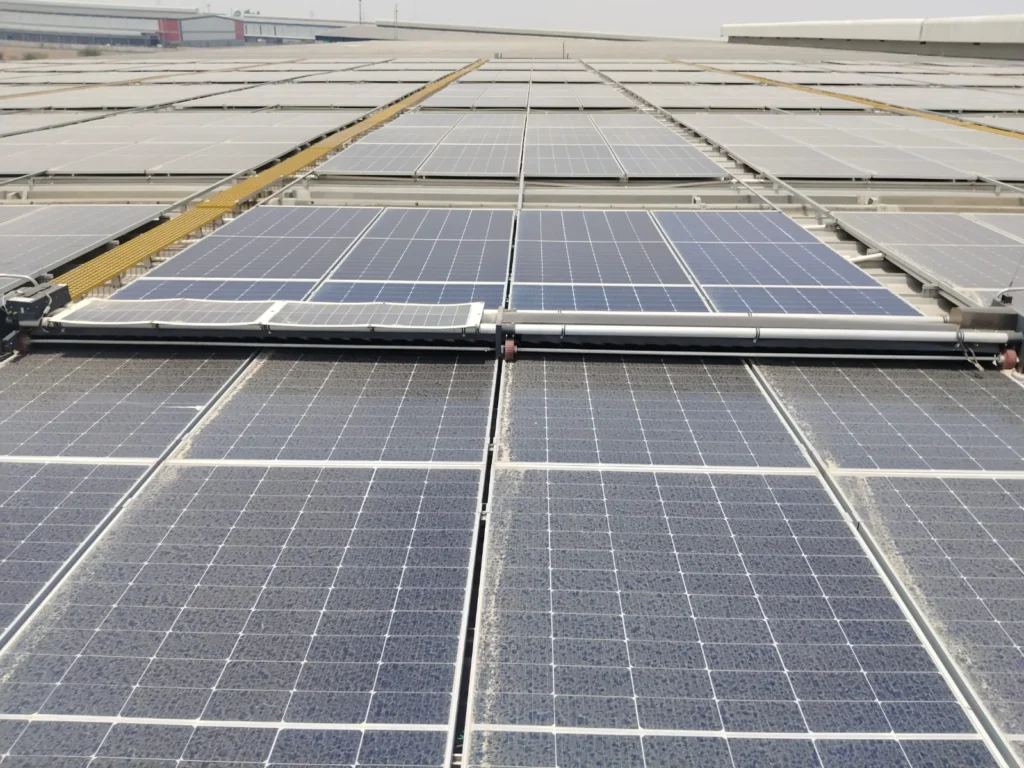
The advantages of using robotic cleaning in comparison to manual cleaning methods are as follows:
• Increased Energy Efficiency
• Reduced Water Consumption
• Lower Operating and Labor Costs
• Improved Safety
• Reduced Panel wear and tear
• Reduced risk of damage to surrounding infrastructure
The integrated automation and robotic systems at HIPL demonstrate how thoughtfully deployed technology can reduce manual dependency, strengthen operational control, and elevate the role of on-ground teams creating safer, more efficient, and better-governed warehousing parks.
Unlike many industry implementations that stop at dashboard visibility, the initiative adopted by HIPL have ensured the following governance capabilities for the leadership
• Standardised reporting across parks
• Identification of outliers and inconsistencies
• Improved portfolio-level decision-making
As warehousing evolves into a highly integrated, technology-led ecosystem, operational models must keep pace. The next phase of growth will favour organisations that can combine scale with standardisation, using automation not just to optimise processes, but to build resilient and future-ready infrastructure systems.”