
































India Is Building at Scale. But Who’s Thinking About the Upkeep?

India’s infrastructure-led growth is creating a ripple effect that is steadily reshaping the cleaning ecosystem. While the Union Budget stops short of direct policy triggers, the scale of new assets — from airports to industrial hubs — is set to drive long-term demand for maintenance, mechanisation and automation. The opportunity is clear but gradual, shaped by cost, skills and adoption realities. Clean India Journal’s Manka Behl spoke to industry experts on how the sector is evolving alongside this shift.
The country’s Union Budget, presented earlier in the year by Finance Minister Nirmala Sitharaman doubles down on a familiar ambition — build bigger, build faster, and build across sectors. From high-speed rail corridors and logistics networks to industrial clusters and urban expansion — the blueprint for growth is firmly anchored in infrastructure.

But as cranes rise and concrete spreads, a quieter, less visible layer of this growth story is beginning to come into focus: What happens after the build is complete?
For India’s cleaning ecosystem, the Budget does not offer direct policy triggers. Yet it sets in motion a chain reaction. Every airport terminal, warehouse, hospital, metro station or industrial hub being planned today becomes, eventually, a space that must be cleaned, maintained and managed — not occasionally, but continuously.
The result is a sector that sits just outside the spotlight of policy, but increasingly at the centre of execution.
Industry voices suggest that the opportunity is real, expanding and inevitable — but also gradual, uneven and shaped by on-ground realities of cost, scale, skills and adoption.
Think Upkeep

As infrastructure creation accelerates, a key theme emerging from the industry is the need to align construction with long-term upkeep. “India’s strong push toward infrastructure creation through record capital expenditure is undoubtedly a positive step for economic growth. However, while we are building world-class transport networks, logistics hubs, airports, industrial parks, and urban infrastructure at an unprecedented pace, the conversation around long-term maintenance of hygiene and cleanliness at these locations is still evolving,” says Vedant Matta, Director-Sales of Charnock Equipments Pvt Ltd.
Vedant points out that globally, infrastructure planning integrates mechanised cleaning, facility management and predictive maintenance at the design stage. “In India, however, maintenance technologies are often introduced only after the asset becomes operational,” he says.
This, he notes, can lead to inefficiencies, higher costs and faster deterioration of public infrastructure. “As the country expands its asset base, there is a growing need to embed modern cleaning technologies, smart facility management systems, and data-driven maintenance planning into infrastructure projects from the outset. This will not only extend the lifespan of assets but also ensure hygiene, safety, and sustainability in high-footfall environments such as airports, metro stations, hospitals, and public buildings,” adds Vedant.
As the country expands its asset base, there is a growing need to embed modern cleaning technologies, smart facility management systems, and data-driven maintenance planning into infrastructure projects from the outset.”
— Vedant Matta

According to Sahil Jain, Managing Director of columbus Cleaning Machines Pvt Ltd, the cleaning industry will not see an immediate spike, with most benefits expected to accrue over the long term. “The government’s focus on infrastructure development, civic spending and smart cities is expected to create opportunities over time. However, cleaning is not something which has come into direct focus as infrastructure projects will not generate immediate demand. But once they get commissioned, that will obviously add something to the industry segment,” says Jain.
In the near term, increased public capital expenditure could provide indirect support. “When they increase the public capital expenditure, it basically also acts as an impetus to the private sector infrastructure development,”
adds Sahil.
According to him, this expansion is expected to create demand for cleaning services and systems. “If you have more warehouses, you will obviously need scanning machines, cleaning manpower, cleaning systems in place,” he adds.
“The government’s focus on infrastructure development, civic spending and smart cities is expected to create opportunities over time. However, cleaning is not something which has come into direct focus as infrastructure projects will not generate immediate demand. But once they get commissioned, that will obviously add something to the industry segment”
— Sahil Jain
Big Change
As infrastructure scales up, the cleaning ecosystem is being pushed to evolve alongside it.
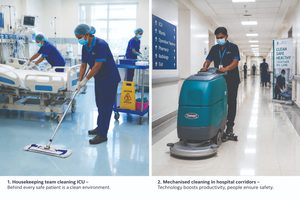
Vedant highlights that India’s cleaning ecosystem has historically been labour-intensive, largely because labour availability made manual cleaning economically viable. However, the scale and complexity of infrastructure being created today — large airports, metro systems, industrial corridors, logistics parks, and mega manufacturing facilities — are fundamentally changing operational requirements.

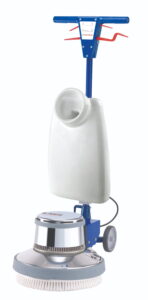
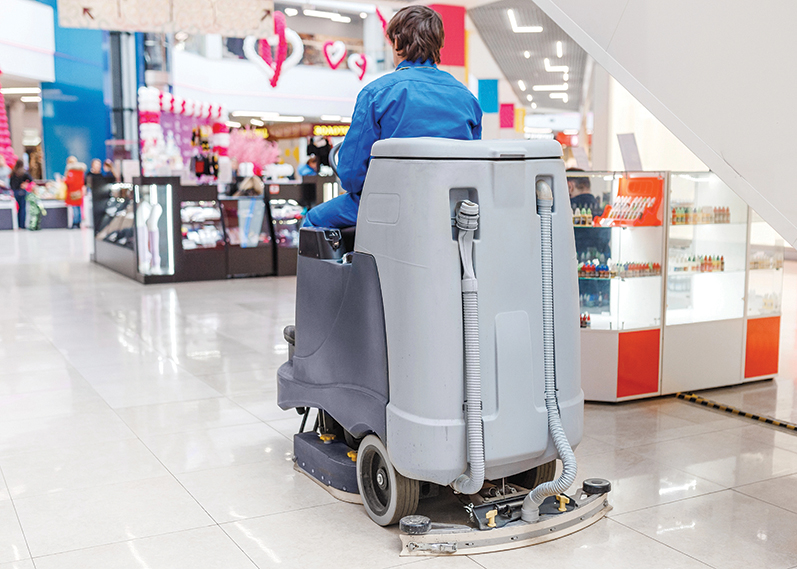
“The Union Budget’s continued focus on infrastructure expansion and rising capital expenditure is reinforcing the creation of large, high-footfall public and industrial assets that demand far more efficient and standardised maintenance practices. In such environments, manual cleaning alone is no longer sufficient. Facility operators increasingly require mechanised cleaning equipment, automation, and productivity-driven solutions to maintain large areas efficiently while meeting higher standards of hygiene and safety,” says Vedant.
The Budget positions robotics and AI as “core productivity drivers”. According to Anil Sathe, Chief Growth Officer at Kinetiq RRobotics, adoption on the ground is evolving in phases. “The mid-market is still evaluating, but the shift from ‘cost’ to ‘capability’ has clearly begun. There is a marginal shift in the outlook towards robots as productivity and efficient tools. However, large enterprises in India have already moved from discussion mode to piloting robots to measuring productivity and efficiency gains,” says Anil.
He adds that with millennials in decision-making roles gradually handing over to Gen Z, “we will witness a paradigm shift in the use of AI and robotics in the coming years and this will be very fast”.
On India’s ambition to become an automation execution hub, Anil believes that the country is “on the cusp,” with talent and adaptability already in place. However, he emphasises that policy support, infrastructure consistency and hardware localisation will be critical to scaling that vision.
However, Anil emphasises that the ecosystem will need to adapt, with greater focus on application-level and technician-focused training to support large-scale deployment and maintenance of robotics. “We have the necessary skill set available in the country, and with proper government funding and initiatives, this can be realised into the workforce seamlessly,” he says while underlining the need to align training with real-world operational requirements.
India is on the cusp and a boost due from government policy and initiatives would be a major step in the right direction. India has the talent and adaptability to become an automation execution hub.”
— Anil Sathe
Opening Avenues
As infrastructure expands and policy direction supports technology adoption, the shift toward mechanised
and robotic solutions is becoming more visible — though it remains closely tied to economics and real-world viability.
Vedant notes that while the budget may not directly legislate mechanisation, its broader policy direction — supporting infrastructure growth, manufacturing and technology adoption — “creates the right ecosystem for this transition”. “As the scale of assets increases, the economics naturally begin to favour machine-assisted cleaning systems that improve productivity, reduce dependence on large labour pools, and ensure consistent quality,” he says.
For Charnock Equipments Pvt. Ltd., Vedant describes this as a “significant inflection point”, adding that it will accelerate the adoption of mechanised cleaning across sectors.
At the same time, Anil highlights that adoption — especially in robotics — is evolving alongside funding access and business models. “MSMEs will adopt and will see a shift towards automated solutions as more local and government funding and initiatives are made accessible to the robotics sector. The market will evolve through Capex-led investments, but the real trigger will come from flexible models such as pay-as-you-use (PAYU) and Robotics-as-a-Service (RaaS),” he explains.
However, the transition is still strongly influenced by return on investment. While AI is already widely used in computing and design, Anil points out that robotic cleaning solutions still lag due to ROI constraints. “Once the price differential between mechanised and robotic solutions breaches approximately 40%, we will witness a shift towards robotic cleaning solutions. For wider adoption, robots need to deliver a clear 12–18-month payback. When the monthly cost aligns with 1.5–2 manpower equivalents, the decision becomes much easier,” adds Anil.
Early signals of this shift are already visible. “The budget has improved intent and enquiry levels. We are seeing more serious conversations, especially at leadership levels, though conversions still depend on ROI clarity. With infrastructure expanding, this shift towards AI and robotic solutions is beginning to reflect in sales funnels, supported by measurable data from proof-of-concept deployments across sectors,” says Anil.
Adoption is also likely to vary by sector. “Healthcare, food and pharma and education will lead adoption because hygiene is non-negotiable. In these environments, the value of consistency and compliance is immediate and measurable. At the same time, airports are already among the fastest and largest adopters of robotics, driven by large infrastructure players such as Adani, Grandhi Mallikarjuna Rao (GMR) and Gunupati Venkata Krishna Reddy (GVK),” says Anil.
Work In Progress
While the Union Budget continues to emphasise strengthening the country’s manufacturing ecosystem and industrial supply chains, industry voices suggest that the path toward localisation remains gradual and constrained by current market realities.
Vedant notes that the policy direction presents a significant opportunity for the professional cleaning equipment industry. “However, the current consumption volumes of mechanized cleaning machines in India do not justify the costs associated with producing completely indigenous equipment and are acting as a deterrent for Original Equipment Manufacturer (OEMs) like us to operate full scale end to end manufacturing units in India,” he says.
At present, certain high-end machines and critical components are still largely imported, particularly those involving advanced electronics, specialized motors, fleet management and automation technologies.
For now, import dependence remains significant. Matta explains that certain high-end machines and critical components continue to be largely imported, particularly those involving advanced electronics, specialised motors, fleet management and automation technologies.
A similar reality exists in robotics. Shares Anil, “India still lacks the infrastructure and capabilities for mass-scale production of robotics… and we have very few indigenous products in the market.”
However, he highlights that the country has strong software capabilities and skilled manpower, which are currently playing a key role in adapting robotics solutions for the domestic market. “We are on the right track to take a big leap,” he adds.
At the same time, access to policy incentives remains uneven. Sahil points out that manufacturing incentives are largely designed for large-scale industries, particularly sectors such as pharmaceuticals and electronics. “For a country as big as India, the cleaning machines industry is still very small. They give PLIs and incentives to big companies and the others like us where investments are lower generally do not get a lot of incentives from the government,” he says, noting that such benefits are typically linked to investments running into thousands of crores and large-scale employment generation.
Matta, however, sees a long-term shift underway. As domestic demand becomes more predictable, he says, there will be increasing incentives for localisation, supply chain development and technology investment within India. “For us, the opportunity lies in gradually strengthening local manufacturing while combining global technology with Indian engineering and cost efficiencies,” he says,
Over time, he adds, this could help reduce dependence on imports and position India not just as a large consumer market, but also as a competitive manufacturing hub for professional cleaning equipment.
Next Phase
As the Budget continues to emphasise infrastructure, industrial expansion and services, industry experts stress on the combination of policy direction, workforce readiness and operating models that will shape the future of the cleaning and automation ecosystem.
Vedant feels that if one policy direction has the potential to significantly transform the professional cleaning industry, it is the government’s continued emphasis on large-scale infrastructure and industrial development through sustained capital expenditure. He adds that India’s flagship initiative, “Swacch Bharat Abhiyan,” should gradually move towards the use of mechanised cleaning equipment to ensure more efficient and effective maintenance of cleaning standards across the country.
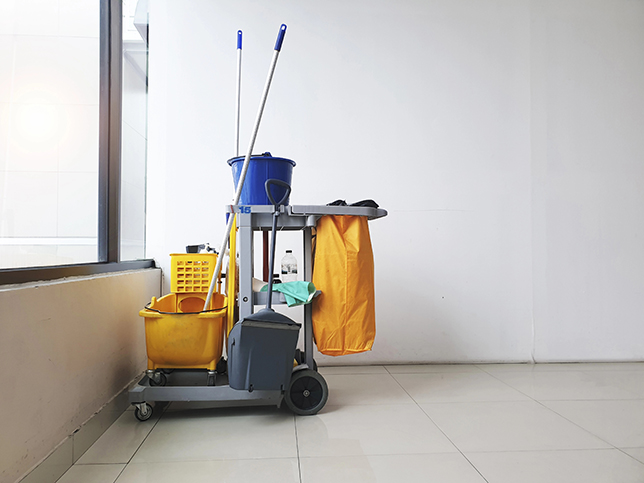
Vedant also highlights the growing importance of economic clusters such as manufacturing zones, logistics parks and integrated commercial hubs. “The development of these clusters will create significant opportunities for automated and industrial cleaning equipment. These environments operate on the synergy of vast built-up areas, high operational intensity and continuous movement of goods and people, all of which require consistent and efficient maintenance,” he says.
Anil emphasises that the next phase of growth will be driven by partnerships rather than standalone product sales. “The future lies in partnerships — especially with integrated facility management and facility management companies — where robotics is embedded into service delivery rather than sold as standalone products,” he says.
Anil added that companies are increasingly adopting a multi-point go-to-market approach, combining direct and indirect sales while working closely with facility management firms, which he described as “a great catalyst in this growth process.”
At the same time, workforce capability remains central to this transition. Matta is of the strong view that training and skill development will be absolutely critical as the industry moves towards mechanisation.
The Budget’s focus on linking education to employment in service sectors is therefore a positive step, creating opportunities for an influx of fresh manpower and structured skill development programmes.
According to Vedant, these can help workers transition from manual roles to machine operators, supervisors and facility management professionals, improving not just efficiency but also safety and long-term career prospects. “Ultimately, the future of the professional cleaning industry in India will depend not only on advanced equipment, but also on a well-trained workforce capable of operating and maintaining these technologies effectively,” he says.