









 CIJConnect Bot-enabled WhatsApp today at 4:00 PM.
In a pharma-support environment, workplace hygiene carries a weight far beyond corporate optics — surfaces that employees touch every day can influence well-being, compliance and, ultimately, product integrity. At ACG Group, a global pharma support company, workplace administrators have learnt that the greatest hygiene risk is rarely visible dirt. “It is the everyday contamination on high-touch common-area surfaces used by hundreds of people,” says Head, Administration/HR–Mahesh Madgavkar.
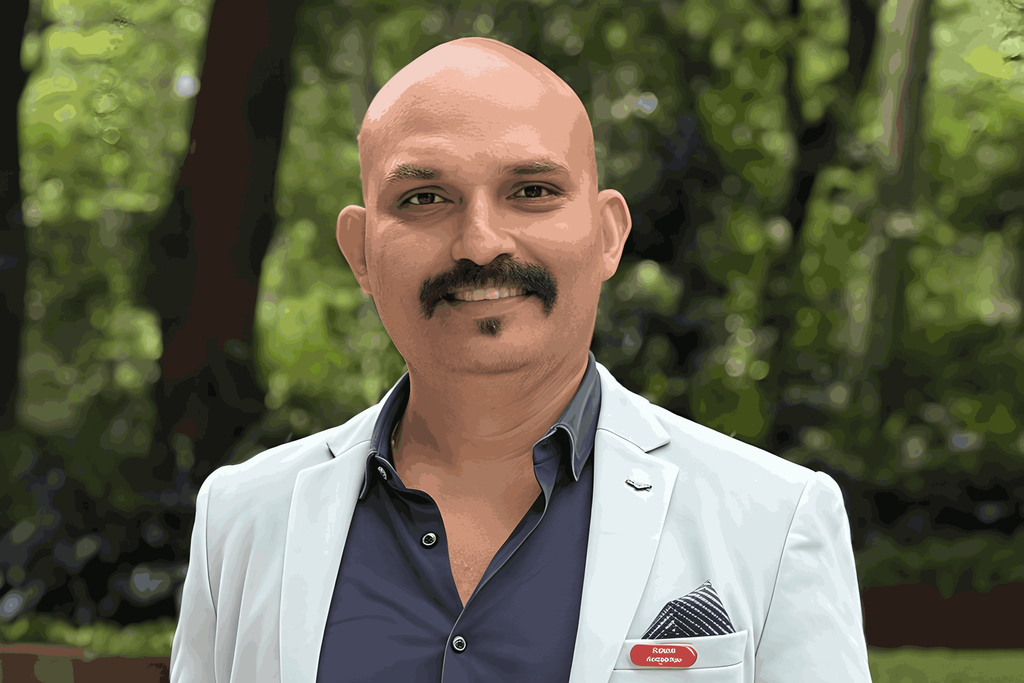
A few years ago, facility teams measured housekeeping performance by visual appearance alone, Mahesh said. Today, that benchmark has changed. Employees now expect workplaces to be hygienic, not merely clean — a shift that has reshaped housekeeping schedules, manpower deployment, material selection and monitoring mechanisms. Instead of asking whether an office has been cleaned, the more relevant question, Mahesh noted, is how many high-touch surfaces have actually been disinfected that day, and whether some can be avoided altogether through sensor-based taps, soap dispensers and hand dryers.

Identifying Surfaces
In a typical office environment, Mahesh pointed to entrance door handles, lift buttons, biometric access readers, reception counters, meeting room door handles, shared keyboards, printer touch panels, pantry and vending machine buttons, water dispenser taps, staircase railings and washroom door handles as the highest-risk surfaces. “Workstations themselves are often lower risk since employees primarily touch their own desks — shared infrastructure carries a far higher probability of cross-contamination.
Critical Cleaning
The one significant exception, Mahesh stated, is the shop floor or manufacturing floor. “Because these areas are either designated clean rooms or epoxy-floored spaces, they follow an entirely separate, validated critical-cleaning protocol rather than standard housekeeping practice — governed by approved cleaning agents, controlled contact times and documented sanitation records. Every other common area, from reception and pantries to meeting rooms, washrooms and corridors, follows the same high-touch disinfection principles as any corporate workplace.”
Frequency Matters
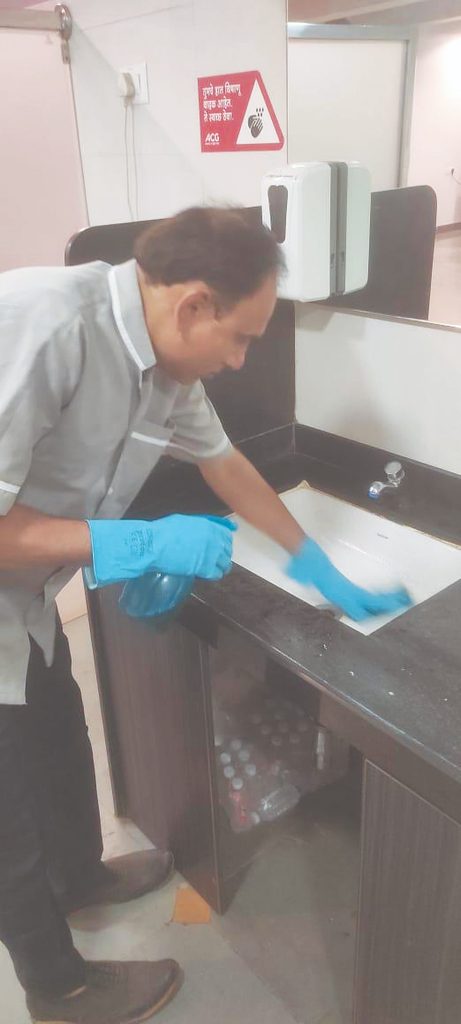
One operational mistake many organisations make, Mahesh said, is scheduling a single comprehensive cleaning at the start or end of the day, by which point thousands of touch points have already been used. “Smaller, repeated disinfection cycles through the day — reception every two hours, lift buttons hourly during peak occupancy, washrooms hourly and meeting rooms after every use — have proved significantly more effective than one intensive session, without any increase in manpower.”
“Simple practices turn hygiene into a shared responsibility rather than a housekeeping function alone” — Mahesh Madgavkar Head, Administration/HR ACG Group
Housekeeping Visibility
A key learning from the pandemic years, Mahesh said, was that employees derive reassurance from visibly seeing well-trained housekeeping staff at work. “For this reason, ACG Group deliberately schedules certain disinfection rounds during business hours rather than confining all cleaning to early mornings or late evenings.”
Choosing Right
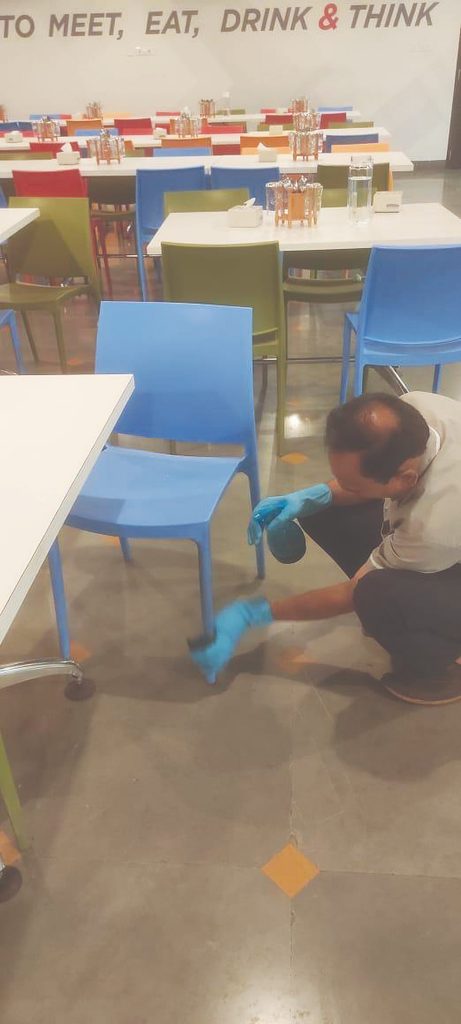
Administrators are frequently pitched premium imported disinfectants with impressive marketing claims, Mahesh said, but consistency matters more than expensive chemicals. “An effective disinfection programme depends on approved disinfectants, correct dilution ratios, adequate contact time and trained housekeeping personnel — even the best disinfectant becomes ineffective if wiped off too soon or prepared at the wrong concentration.”
Shared Responsibility
No amount of housekeeping can compensate for poor workplace habits, Mahesh added. Simple practices — sanitising hands before using shared devices, wiping down meeting tables, and reporting empty dispensers — turn hygiene into a shared responsibility rather than a housekeeping function alone.
Final Thoughts
High-touch surface disinfection, Mahesh concluded, is no longer an emergency response introduced during a pandemic; it is a fundamental, disciplined component of workplace operations. “The objective is not an office that merely looks clean, but one that actively minimises health risk while sustaining employee confidence, business continuity and — in a pharma-support setting — regulatory compliance across every common area and shop floor alike.”