 CIJConnect Bot-enabled WhatsApp








In India’s fast-changing healthcare environment, patient safety and infection prevention remain at the forefront of operational priorities. Yet one mission-critical function continues to be overlooked: healthcare laundry. According to Akash Dharamsey, Managing Director, ADD Laundry Concepts Pvt. Ltd, the quality, safety and traceability of processed linen have a direct and measurable impact on Hospital-Acquired Infections, hygiene compliance and overall clinical outcomes. As hospitals scale and hygiene expectations rise, he stresses that the gaps in laundry infrastructure, technology and workforce competence must be addressed with urgency.
Lack of Standardised Guidelines

Although, post COVID, a lot of work has gone into creating a unified standard, there is lack of enforcement of the national standards for healthcare linen processing. As a result;
- Disinfection protocols vary by hospital
- Thermal and chemical disinfection are inconsistently applied
- Documentation and validation are rare
- Workflow design depends on individual interpretation
This uneven landscape leaves room for hygiene lapses and cross-contamination.
Infrastructure Designed as an Afterthought
Many hospital laundries operate in cramped basements or repurposed service areas with limited;
- Proper soil-to-clean segregation
- Space for sorting, washing and finishing
- Quarantine zones for infected linen
Without dedicated planning, compliance with hygiene best practices becomes difficult.
Low Adoption of Modern Technology
While technologies such as tunnel washing systems, barrier washers, pneumatic conveyors, automated dosing and RFID tracking are globally a standard, our adoption remains minimal due to;
- High capex
- Limited awareness of lifecycle savings
- Short-term budgeting pressures
- Lack of trained operators
This gap widens the divide between required and actual hygiene outcomes.
Infection Control Vulnerabilities
Healthcare laundry often handles infectious linen containing blood, body fluids, and microbial contaminants. Yet challenges persist:
- Mixing of infectious and non-infectious items
- Manual handling without PPE
- Unwashed trolleys and bags
- Inadequate thermal disinfection
These practices increase the risk of Hospital-Acquired Infections within healthcare facilities.
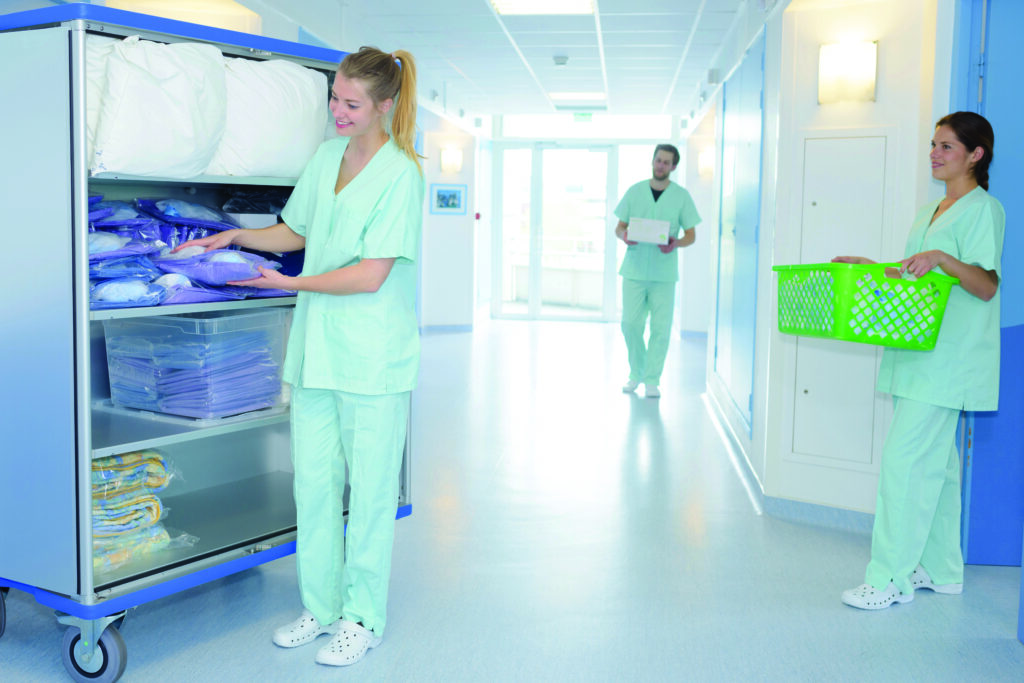
Workforce Skill Shortage
Healthcare laundry requires higher competency levels than a commercial laundry, but it faces:
- High staff turnover
- Limited training programs
- Poor understanding of wash chemistry and disinfection
- Gaps in PPE discipline
A poorly trained team can undermine even the best equipment.
Inefficiencies in Chemicals, Water, and Process Control
Precise control over temperature, pH, detergent concentration, and contact time is essential to validated disinfection. However:
- Many operations rely on manual dosing
- Water hardness varies widely
- Wash formulas are often generic, not medical-specific
- Rewash percentages remain high
These inefficiencies compromise hygiene and increase costs.
Linen Loss and Premature Damage
Hospitals regularly report:
- Missing linen between wards and laundry
- Overloading of washer extractors
- Incorrect finishing temperatures
- High damage and rejection rates
Lack of tracking systems (RFID/barcodes) worsens accountability issues.
Lack of Environmental Compliance
Healthcare laundry wastewater contains chemical residues and microbial load. However:
- Many laundries lack functioning ETP/STP integration
- Wastewater testing is irregular
- Chemical discharge documentation is weak
Environmental non-compliance is becoming a growing regulatory risk.
Challenges with Outsourced Laundry Models
As hospitals increasingly outsource laundry:
- Not all vendors meet healthcare-specific hygiene standards
- Some lack barrier systems and infection handling capability
- Transport hygiene is inconsistent
- Price-driven contracts compromise quality
This exposes hospitals to compliance and infection control risks.
A Call for Modernisation and Alignment
The healthcare laundry sector is at a turning point. With rising patient volumes, the expansion of private healthcare, and greater emphasis on infection control, the need for:
- Standardisation
- Infrastructure planning
- Modern technology adoption
- Skilled workforce development
- End-to-end hygiene accountability has never been greater.
Countries with mature healthcare systems treat laundry as a critical medical process—not a secondary support function. We must strive to move in the same direction.
The Road Ahead
Industry stakeholders, including hospitals, laundry operators, equipment suppliers, chemical companies and policymakers, must collaborate to build a robust, future-ready ecosystem. Investments in an appropriate laundry set-up, automation, validated processes and professional training will be key drivers of transformation.
Healthcare laundry is not just about clean linen. It is about patient safety, infection control and trust. And it is time the sector receives the attention, resources and respect it truly deserves.