































Scaling India’s Horizon in Aviation

The aviation sector in India is currently navigating rapid expansion, positioning India as a force to reckon within the global aerospace landscape. According to the International Air Transport Association (IATA), as of January 2026, India has solidified its status as the third-largest domestic aviation market in the world. This growth is the outcome of a structured multi-billion investment strategy aimed at transforming infrastructure, regional connectivity, and maintenance standards.
Infra & Aesthetic Change
The physical landscape of Indian aviation has undergone a total transformation over the last decade, with operational airports increasing from 74 in 2014 to 164 as of early 2026. While major hubs like Indira Gandhi International (Delhi) and Kempegowda International (Bengaluru) continue massive expansions, the spotlight is shifting toward the unique operational profiles of regional landmarks:

- Bhubaneswar and Varanasi Airports: These airports are central to the current narrative, showcasing how modern infrastructure can handle rising passenger loads while maintaining localized service excellence.
- Lucknow Airport: This hub is setting a benchmark for passenger experience through its sophisticated landscaping, proving that aesthetic appeal is now as vital as functional efficiency.
- Noida and Navi Mumbai: These mega-projects, with Noida designed to be India’s largest, are set to redefine the scale of Indian aviation operations within the next year.
Evolution of Facility Management and Hygiene
With the mushrooming of world-class terminals, the demand for professional facility management (FM) has transitioned from a basic requirement to a critical operational necessity. The Indian FM market is estimated to reach $87.21 billion in 2026, with the “soft services” segment — including professional cleaning — holding a 42.78% revenue share.
Modern terminals are now integrating specialized hygiene and sensory technologies:
- Washroom Hygiene & Liquid Dispensing: New standards include advanced liquid dispensing systems to ensure consistent sanitation and resource management.
- Fragrance Systems: Airports are increasingly utilizing specialized fragrance systems to enhance the ambient environment for travellers.
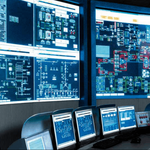
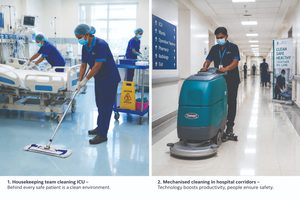
- Robotics in Aviation: Moving beyond manual labour, the shift to predictive cleaning is being led by robotics and IoT-based systems.
- Facade Cleaning: The architectural complexity of new terminals necessitates high-level facade cleaning to maintain the structural and aesthetic integrity of these billion-rupee investments.
Technology & Sustainability
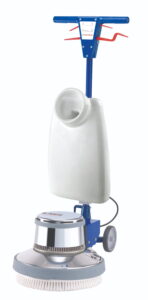
The transition to ‘Airports 4.0’ involves IoT-based systems such as occupancy-based cleaning, where sensors trigger alerts for staff based on actual footfall rather than fixed schedules. This efficiency is paired with a strong focus on sustainability, including the trial of advanced floor scrubbers that recycle water and the move toward biodegradable, green chemicals.
As the Union Budget 2026–27 reinforces a trajectory of self-reliance and domestic manufacturing, the steady expansion of the aviation market ensures a robust pipeline for the hygiene, maintenance, and technological industries.
Ask the expert
Have a question about this article? Put it to the people in it. We pass your details on and they come back to you directly.