



















Pune Gas is ready to serve the laundry market
Laundry operations require two major resources: Water for washing and heat for sanitisation, drying and pressing. While the use of gas (like LPG or Natural Gas) is a well-established practice globally for generating this necessary heat efficiently, its adoption in India’s commercial laundry sector is still evolving.
Internationally, particularly in developed Western and European markets, gas-fired equipment is the standard for large-scale commercial and industrial laundries due to its reliability and superior cost-efficiency compared to electricity. For example, in many parts of the UK and USA, commercial laundries rely heavily on gas-powered equipment where the cost of generating thermal energy from gas is significantly lower, often less than half the cost of using electrical heating elements.


In India, the scenario is slightly different. Many smaller and mid-sized commercial laundries, especially in urban centres, still rely on highly subsidised or conventional fuels, or expensive electricity for their heating processes. As operating costs rise and the demand for faster, high-volume processing increases, there is a growing need for a shift. This shift is leaning towards cleaner, more cost-effective and highly efficient energy sources.
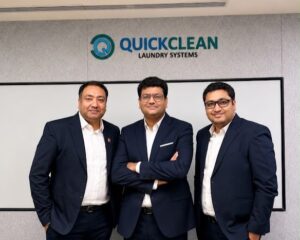
Nirav Bhimani, Chief Marketing Officer, Pune Gas, in this interview with Clean India Journal’s Keerthana Sundar at the Clean India Show 2025, explores this transition and how his company is enabling Indian laundries to adopt smart, safe and efficient gas-based systems.
“Pune Gas acts as an enabler for businesses to transform from older, sometimes polluting fuels to these cleaner, more efficient energy sources, helping them focus purely on their core operations.” — Nirav Bhimani
Q. What is Pune Gas’s specific contribution to the laundry industry?
A. Pune Gas is a pioneer in the gas systems and solutions space; we have 40 years of experience. Essentially, wherever gas or heat is required for production, manufacturing, or processing in the commercial and industrial sectors, Pune Gas plays a crucial role. While LPG has approximately 300 different industrial applications, the focus is on key segments that heavily rely on gas.
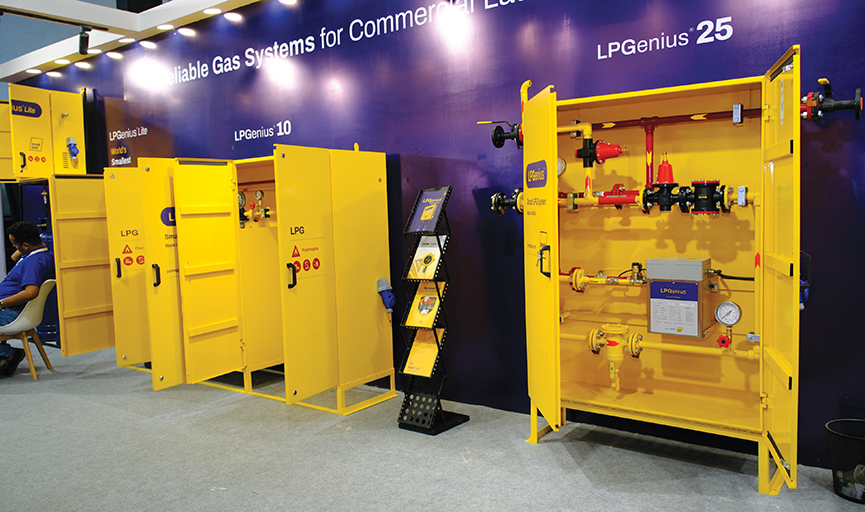
The laundry industry depends on two vital resources: Heat and water. Pune Gas caters to the heat aspect. We provide end-to-end infrastructure to commercial laundries that utilise LPG or piped gas for their operations. This encompasses everything from the washing and sanitisation process to the drying, steaming and pressing stages. The systems we have include LPGenius, our smart LPG system.
Q. What drives commercial laundries to look towards gas over conventional options like electricity?
A. The primary driver is cost-effectiveness. Electricity, especially in metro cities, can be very expensive, often ₹12 per unit upwards. Compared to this, gas is highly calorific and works out to be far cheaper, around ₹4 to ₹5 per unit for the equivalent energy output.
Secondly, our systems are designed for high efficiency, safety and compliance. We use LOT cylinder technology and a world-class dry-type vaporizer, ensuring 100% efficiency and maximum output in a compact, secure system.
Q. Please explain the difference between the conventional VOT system and the LOT (Liquid Off-Take) system?
A. Most laundries using gas rely on the standard commercial cylinder, which is a VOT (Vapour Off-Take) cylinder. In a VOT cylinder, the LPG is in liquid form and must convert to a gaseous state naturally inside the cylinder — a process called natural vaporisation.
However, these 19 kg cylinders can typically only deliver about 0.5 kg of gas per hour to the burners. Commercial operations often need much more — perhaps 1.5 to 2 kg per hour. When the demand exceeds the cylinder’s natural vapour production capacity, the cylinder starts to use its own heat, leading to sweating and freezing. This is a common, dangerous industry practice where people resort to heating the cylinder with hot water buckets or even fire, risking a severe explosion.
Our solution uses a larger 47 kg LOT cylinder. The pipe goes down to the bottom, allowing us to extract the liquid LPG. We then vaporise the liquid outside the cylinder using our smart system. This external vaporisation ensures that every single drop of LPG is used, prevents the waste of 2 to 3 kg of gas often left in VOT cylinders and offers 100% efficiency. It is safer, highly efficient and provides clean, controllable heat because LPG and Natural Gas are cleaner fuels. Pune Gas acts as an enabler for businesses to transform from older, sometimes polluting fuels to these cleaner, more efficient energy sources.
Safety is the highest priority, and all commercial LPG installations must strictly adhere to the standards set by Indian regulatory bodies. Compliance ensures that the entire system, from the cylinder valve and piping to the external vaporizer, is certified for safety, leak resistance and performance in a hazardous environment.
Q. What insights have you gathered on the industry’s reception to gas-based systems?
A. This platform gave us a firsthand feel for how the laundry business operates and how commercial laundry owners perceive their own processes. We needed to understand how open they are to upgrading their systems, as investing in new technology is a capital expense.
We noted that in India, a challenge is often the tendency to use shortcuts for common operational problems, rather than investing in long-term, scientific solutions that eliminate recurring issues. We wanted to see if the laundry industry was ready to adopt systems that help them focus purely on their core business without the niggling worries about inefficient heat sources. I believe we have gained a fair bit of understanding about how gas-based operations are perceived. We have also met with equipment manufacturers and system integrators to understand their challenges on the ground.
Q. What was the profile of the visitors at your stall and were they curious about Pune Gas’s presence in the laundry segment?
A. Yes, we had a very good mix of visitors. We met commercial laundry owners, industry proprietors and many procurement and facility heads. They were from all parts of India — we met a lot of people from the southern and northern states as well as from Maharashtra and Gujarat.
The visitors were from diverse sectors, including healthcare, hospitality and real estate, all of whom have substantial laundry needs. Many came seeking the Clean India platform generally and ended up exploring the Laundrex segment specifically, which was a very well-curated area within the larger show. It was our first time at this show, and it was a surprisingly fruitful experience.