

































Industrial Facility Management: Why Manufacturing Needs Specialised FMManufacturing Demands Specialised FM

Factory floors are not office floors. Industrial facility management requires specialised expertise, particularly in manufacturing environments. Sanjeev Kumar, CEO, Dusters Total Solutions Services Pvt. Ltd (DTSS), explains why facility management in manufacturing — from foundries to metal plants — demands stringent safety, zero-disruption operations and a strong focus on workforce welfare.
Managing facilities in manufacturing environments requires specialised expertise, given the complexity of industrial operations. Facilities such as foundries and metal plants involve high temperatures, dust, hazardous chemicals and heavy machinery, demanding stringent safety protocols and skilled service delivery.

Logistical Challenges in Industrial Facility Management
Large factory campuses pose logistical challenges in movement between units, while maintaining 5S standards, continuous upkeep and zero disruption to production remains essential. Shift changes bring significant workforce movement, requiring effective access management, employee transportation and local manpower planning, particularly for facilities located on industrial outskirts.
An Integrated Facility Management (IFM) partner must actively support the client’s zero-accident ambition through Environment, Health and Safety (EHS) compliance, safe work practices, risk assessments and workforce training.
Organised providers like DTSS also strengthen workforce welfare through statutory compliance, social security coverage for eligible contract workers and support to their families in unfortunate circumstances.
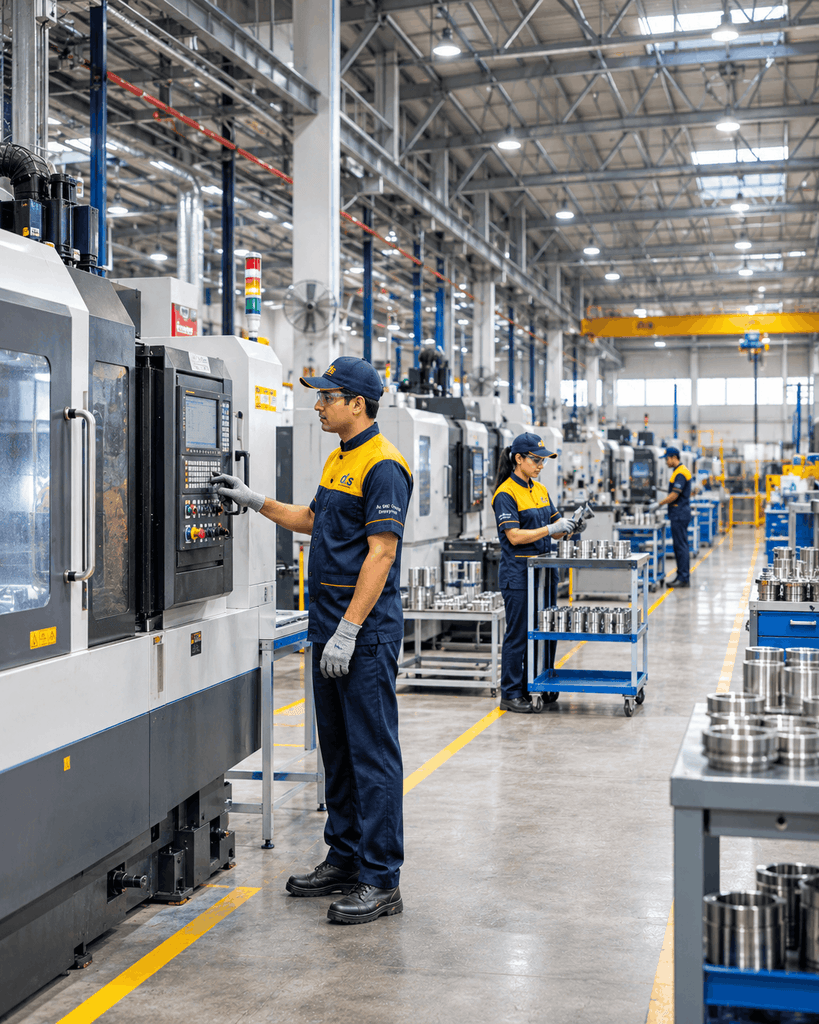
FM Services: Ensuring Uninterrupted Operations
The principle is to plan FM services around production requirements to ensure uninterrupted operations and zero avoidable downtime. Preventive and predictive maintenance is scheduled around production cycles and planned shutdowns, while cleaning and other activities are carefully coordinated to avoid disrupting machinery or workflows.
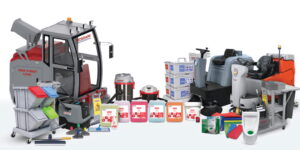
At DTSS, we leverage mechanisation, robotics, trained personnel and digital tools such as iOPS and CMMS to improve service efficiency, plan asset maintenance and identify potential failures before they affect production.
Workforce stability is equally important. We focus on employee training, wellbeing and retention to reduce attrition and maintain service continuity. Recruiting from diverse geographical regions and communities also helps manage workforce availability during regional festivals and local holidays.

Technology Transforming Industrial FM
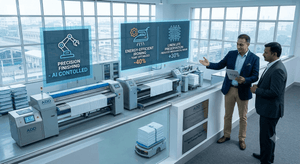
Technology is transforming industrial facility management by improving safety, consistency, productivity and operational visibility. At DTSS, we see robotics, AI and digital tools as enablers of safer, smarter and more reliable service delivery.
Robotics and mechanisation reduce manual workload and human exposure to hazardous environments, helping minimise incidents and compliance risks. They also ensure greater cleaning consistency and free up employees for higher-value activities. IoT-enabled solutions, such as sensor-based toilet cleaning, enable need-based service delivery rather than fixed schedules.
Digital platforms such as iOPS and CMMS support asset maintenance planning and predictive interventions, while real-time updates, digital checklists and reports provide transparent service tracking and verifiable proof of cleaning.
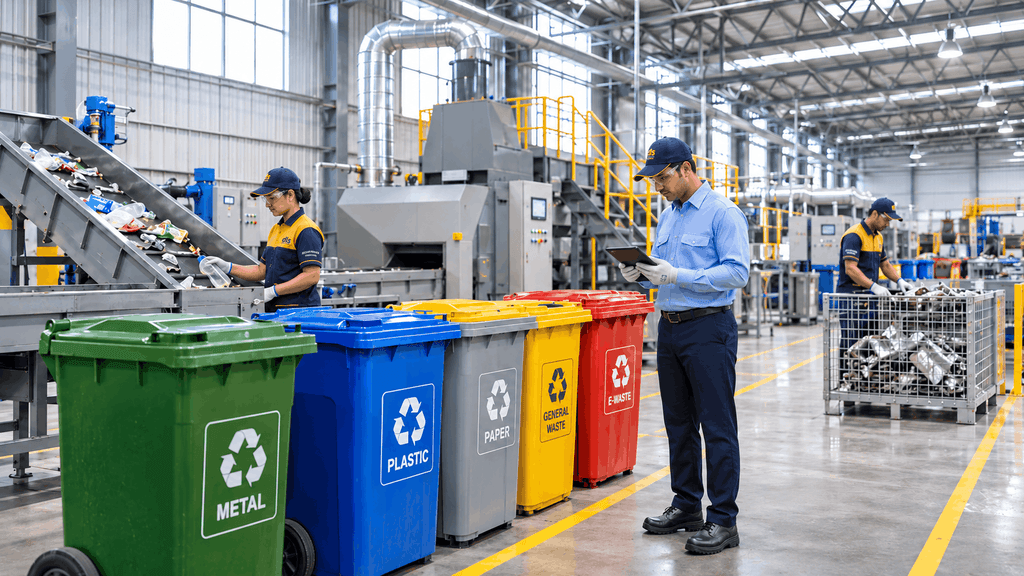
The Evolving Role of Industrial Facility Management
As manufacturing becomes increasingly automated, FM will evolve towards a technology-enabled, outcome-based operating model. Critical activities such as asset maintenance, utilities management, safety and technical troubleshooting will continue to require skilled manpower, while robotics and automation will increasingly handle repetitive and labour-intensive tasks. This will reduce dependency on headcount while improving consistency, safety and productivity.
IFM providers will increasingly focus on predictive interventions, remote monitoring and efficient resource utilisation. They will also play a greater role in ESG and sustainability through energy optimisation, waste reduction and responsible resource management.
This will position FM as a contributor to clients’ environmental performance and sustainability targets, beyond its traditional operational responsibilities.
The focus will shift from manpower deployment to measurable outcomes, operational resilience and manufacturing excellence.
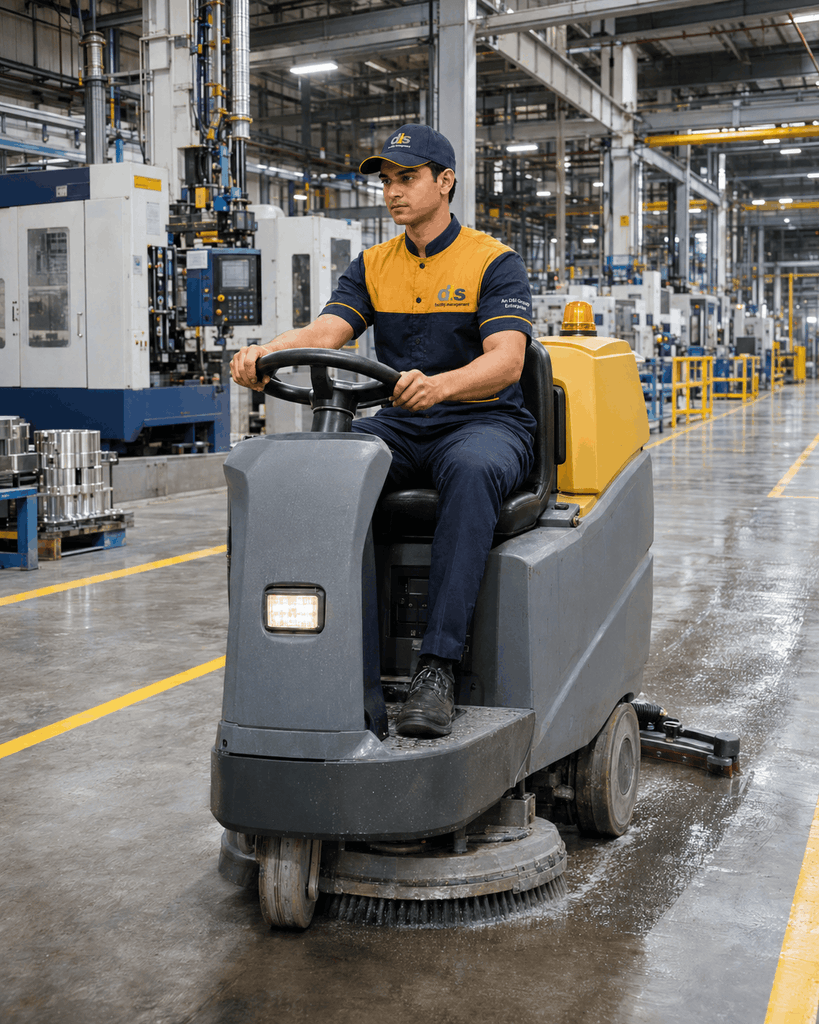
Workforce Development: The Model Adopted by DTSS
The evolving manufacturing landscape demands a workforce equipped with technical expertise, digital literacy and sustainability awareness. At DTSS, we are building an integrated people-and-technology ecosystem to address these needs.
Trainer supports continuous skill development, while our digital onboarding platform enables faster workforce readiness and standardised training. Mitra strengthens employee engagement through grievance management, and MyDTSS supports workforce attendance management.
We also see growing importance in training employees in resource conservation, safe work practices and sustainable operations. By combining structured capability development, employee welfare and digital enablement, DTSS aims to build a skilled, adaptable and productive workforce that supports manufacturing excellence while meeting evolving operational and sustainability requirements.
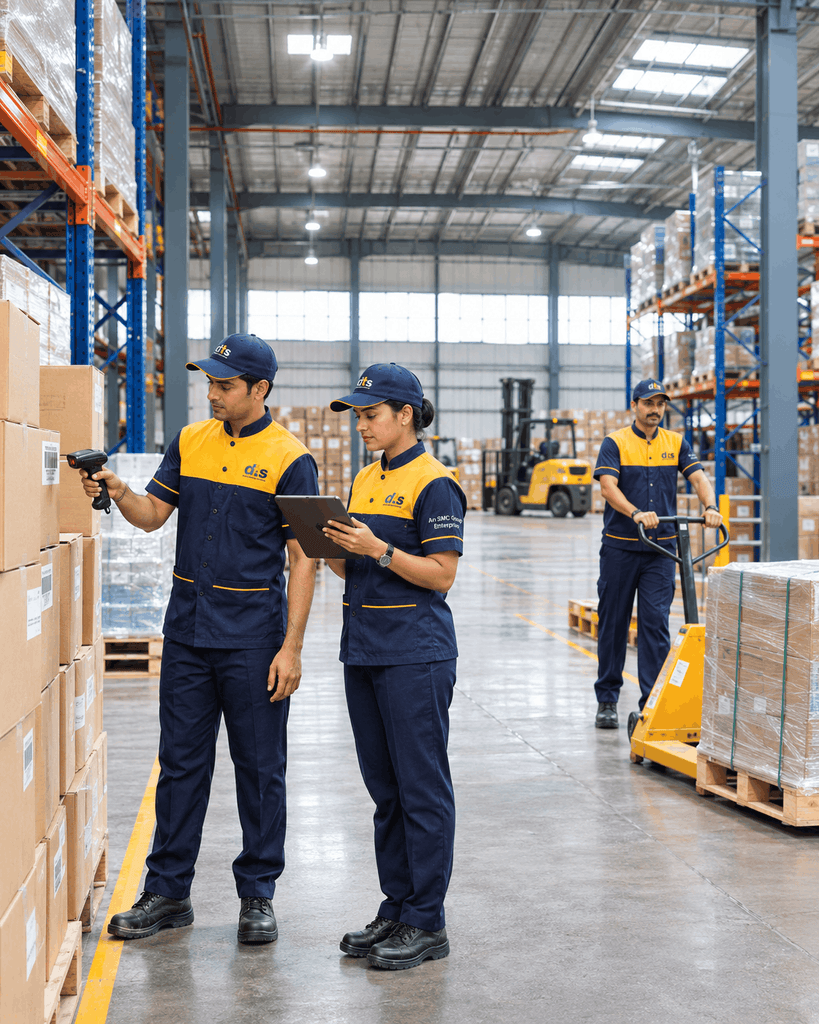
Prioritising KPIs in Manufacturing FM
Manufacturing clients increasingly evaluate FM partners on business outcomes, compliance and problem-solving capabilities, beyond cost and manpower. Key priorities include robust HR/IR practices, statutory compliance, employee welfare, safety performance and turnaround time for resolving issues.
A provider’s pan-India footprint and ability to mobilise skilled manpower in remote industrial locations are equally critical for service continuity. Clients also seek partners with strong engineering capabilities who can diagnose complex operational challenges, improve asset reliability and deliver practical, cost-effective solutions.
Increasingly, energy efficiency, water consumption, waste management and other sustainability indicators can also form part of the performance scorecard.
Ultimately, the expectation is for an integrated industrial FM partner who combines engineering expertise, workforce management and operational reach to deliver measurable improvements in productivity, reliability and efficiency.
The Way Ahead for Industrial Facility Management
Over the next three to five years, industrial FM in India will see significant opportunities through integrated one-stop solutions, technology-enabled facilities and outcome-based contracts.
The role of IFM providers could expand from supporting production environments to contributing to measurable improvements in equipment uptime, operational efficiency and, where contractually agreed, production throughput.
This could enable modular operating models in which manufacturing companies outsource a broader range of non-core activities — from housekeeping and engineering maintenance to critical asset reliability and selected OpEx-led operations — to a single integrated partner.
However, manpower availability, skill gaps and employee retention will remain major challenges.
IFM providers must therefore strengthen employee engagement, welfare, skill development and retention while ensuring compliance with client protocols.
The future belongs to partners who combine engineering expertise, digital technology and skilled manpower to deliver