 CIJConnect Bot-enabled WhatsApp











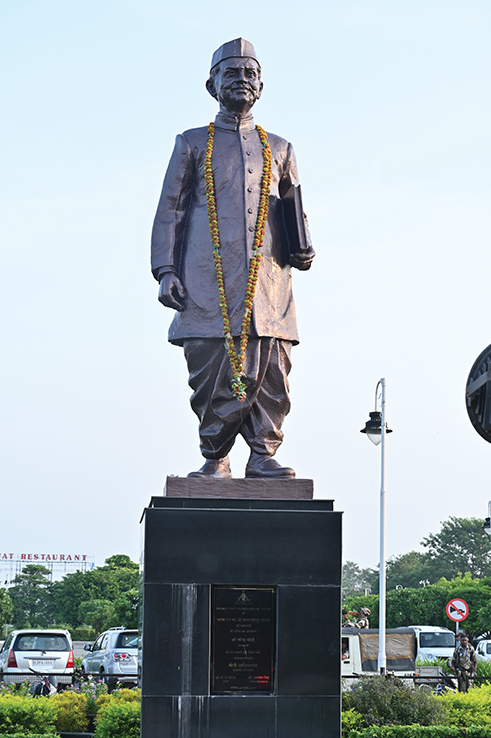
With the central government’s focus on religious tourism, Varanasi is staring at problems unless the airport gets ready to handle more people at the earliest. Expansion plans are going on a war footing, says Airport Director, Puneet Gupta to Clean India Journal’s, Principal Correspondent, Manka Behl.
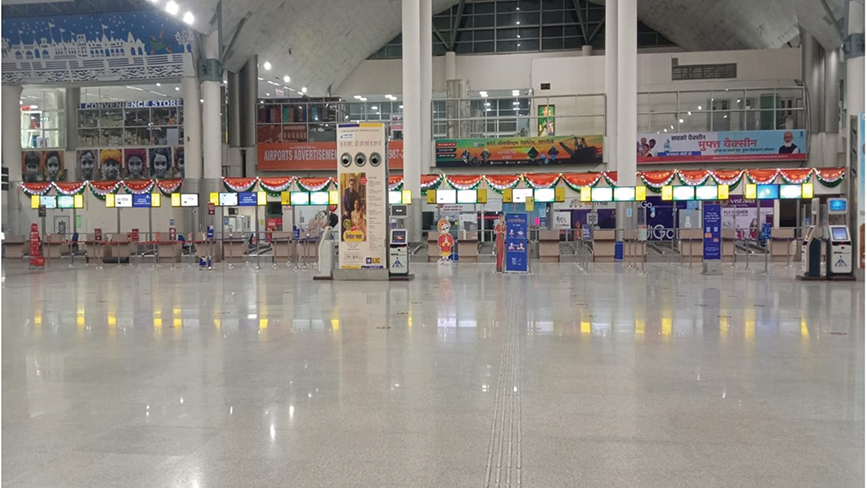
Handling 10,000–12,000 passengers every day, the Lal Bahadur Shastri International Airport at Varanasi is operating at near-full capacity as it readies for one of the most ambitious expansions in North India’s skyline. The airport currently manages around 4 million passengers annually, even as a new terminal and expanded infrastructure are underway to cater to growth.

The government-backed development programme envisages a new terminal building covering 75,000 sqm, designed to handle millions of more passengers, a longer runway, parallel taxi tracks and upgraded aprons — all aimed at lifting capacity close to 10 million passengers per year.
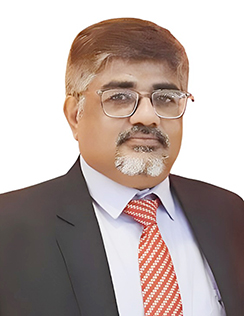
Leading this expansion roadmap on the ground is Puneet Gupta, who has been serving as the Director of Varanasi Airport since August 2023. Steering day-to-day operations even as construction activity accelerates across the site, Gupta is ensuring tight coordination between operations, security, facility management and passenger services. The challenge, he underlines, lies in keeping the airport fully functional and secure even as new terminals, extended runways and supporting infrastructure take shape alongside live operations.
“In a first, the Lucknow–Varanasi highway would pass beneath the active runway. We are also increasing our runway from 2,700 metres to 4,075 metres.” — Puneet Gupta
Passenger Handling
Explaining the scale of operations at Varanasi Airport, Gupta informs that it is a fully functional domestic and international airport with a significant daily passenger load. “Our annual capacity is around 40 lakh passengers. All the domestic airlines are operating here. In the international sector, we have Air India Express and Kathmandu’s Buddha Air,” he adds.
According to him, peak-hour handling is substantial, requiring robust security and operational preparedness. “To manage this, housekeeping and facility management agencies have been engaged at the airport. We check competencies and understand whether they are trained to provide the best services for the money spent,” says Gupta.
Expansion Plans
For Gupta, the most significant aspect of his tenure has been the airport’s rapid transformation, marked by the rollout of a new master plan and accelerated construction. “The existing terminal was built around 10 years back. The airport has reached its existing capacity and work on the new master plan for expansion is underway,” he says.
Under the new master plan, the airport is being developed from its current capacity of around 40 lakhs passengers a year to an estimated handling capacity of 1 crore passengers.
The foundation stone for the expansion was laid in 2024 and construction is progressing rapidly. “We have acquired a 350-acre land for the new terminal building, which will be around 75,000 square metres. It would be a large, multi-level structure with three floors for arrival, departure and concourse areas. This is a very big project,” says Gupta.
A First-of-Its-Kind
The expansion project includes a rare piece of aviation infrastructure – a six-lane tunnel built beneath an active runway. Calling it unprecedented in India, Gupta says that the Lucknow–Varanasi highway would pass beneath the active runway. “This will be the first time a six-lane tunnel will be built below an active runway in India. Obtaining approvals took time due to the complexity and security sensitivity of the project,” he adds.
Another major component of the expansion is the runway extension. “We are increasing our runway from 2,700 metres to 4,075 metres,” says Gupta.
Addressing security concerns, the Director said the project had been delayed mainly because of safety requirements. “This project went into the backburner because of security reasons. A live road below an active runway has very big constraints. Multiple safety features have been built into the design like installing CCTV cameras, making the tunnel blast-proof,” informs Gupta. He is hopeful that the work should get completed by the end of the year.
Managing Footfall
One of the most demanding aspects of running Varanasi airport is managing intense festive footfall at a time when space is limited and the airport remains fully operational. Festival periods bring not only a surge in passengers but also heightened pressure on cleanliness, facilities and manpower, making advance planning and continuous monitoring central to daily operations.
Acknowledged the operational pressures during peak seasons and festivals like ‘Dev Deepavali’, Gupta says, “The traffic volume increases by nearly 20% and there is a pressure on facility management services. Hence the planning begins months in advance. Within the infrastructure that we have, the first thing we do is plan our resources — be it chairs or anything else. Before the peak period, we conduct surveys to ensure everything is working properly. If there is any defect, we repair it first and then prepare.”
Gupta adds that festival seasons place the highest demand on manpower, making deployment and availability critical alongside machines and infrastructure. “Apart from machines, manpower is the most important during festival time. We ensure that during that period all manpower resources are available,” he says.
According to him, festive travel also brings a different kind of passenger mix, adding to operational complexity and requiring constant oversight across teams. “There is a different crowd at that time. So, the real challenge is that our teams remain fully available and keep monitoring continuously. In fact, everyone is on alert — whether it is the security agency or the resources from the facility management unit — all of them remain active, like a peak period,” he adds.
Varanasi Airport has been a leader in digital passenger processing. “We were one of the first pioneers where Digi Yatra was implemented successfully,” Gupta informs.
Expectations-Operations
At a time when the airport is operating at capacity and simultaneously undergoing large-scale expansion, maintaining passenger satisfaction becomes as much an operational challenge as an infrastructure one. Gupta is well-aware that passenger expectations today are higher and more informed, even as airports work within physical and logistical constraints.
He points to the role of stakeholder feedback, facility management agencies and gradual automation in helping bridge the gap between what passengers expect and what can realistically be delivered on the ground. “We take feedbacks from stakeholders’ meetings which are held regularly. We also have an advisory committee, whose suggestions are taken and implemented in policy for long-term benefit,” he says.
While some expectations cannot be met immediately, Gupta believes that long-term planning helps addressing these gaps. “Some things are not possible due to infrastructure now, but in the new terminal, we are planning the latest infrastructure and security systems. Automatic machines for facility management and cleaning are also being planned,” he adds.
Heritage Onus
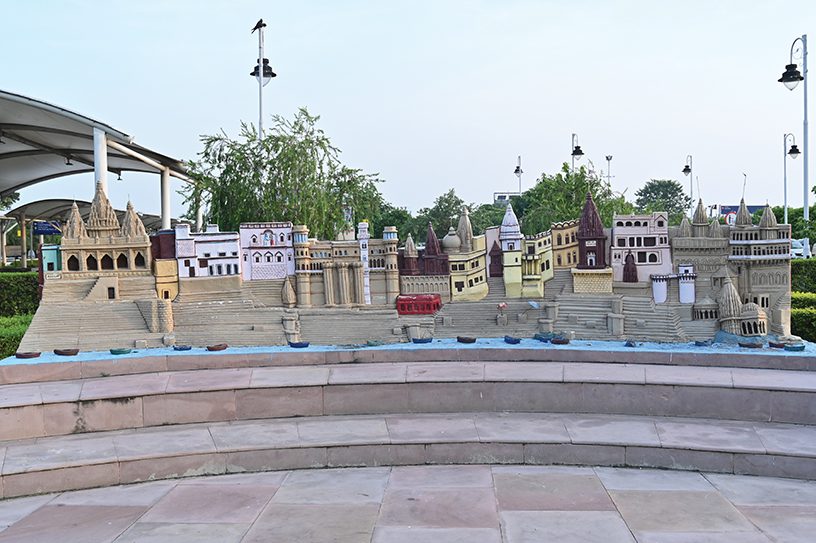
Running an airport in Varanasi brings with it a responsibility that goes beyond infrastructure and passenger numbers. As the Airport Director explains, operations are shaped as much by the city’s religious and cultural identity as by aviation norms. “Unlike other airports I have served, everything at Varanasi airport – right from the design choices, passenger experience and day-to-day functioning consistently — reflects the sentiments associated with the city, its temples and its long spiritual history,” says Gupta.
Gupta underlines that this sensitivity is not treated as an aesthetic afterthought but as a central consideration. “Tourists here come with a special purpose, and religious and cultural sentiments are central to airport management. This means aligning modern operations with the expectations of a place where faith, tradition and movement of people are deeply intertwined,” he says.