





































24×7 Facility Management: Keeping Factories Running Smoothly

24×7 facility management is essential for factories operating round the clock. Amber Chandratre, Sr. Vice-President, Head – Facilities Management and Infrastructure Development, Revent Precision Engineering Limited, explains the multi-level planning required to maintain workplaces through continuous manufacturing operations.
Factories running 24×7 are not unusual. Capacity constraints, productivity pressures, sudden demand spikes, continuous process plants and seasonal operations often lead to round-the-clock manufacturing.

However, running 24×7 offers no relaxation for facility management teams. In fact, it poses greater challenges. Maintaining such workplaces requires multi-level planning — from workplace design and cleaning equipment selection to scheduling, manpower deployment and employee training.
Efficient Design for 24×7 Facility Management
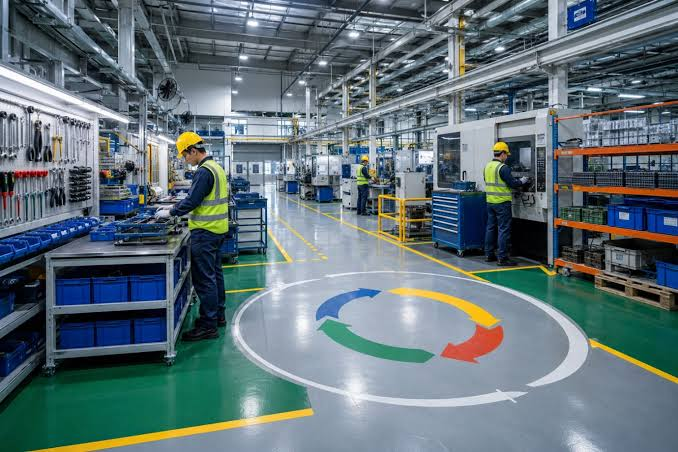
The first principle is to reduce the maintenance load through design. Aisle widths should allow cleaning on one side while operations continue on the other. Maintaining a clean environment is critical, requiring proper filtration of incoming air, adequate exhaust and process designs that minimise packaging and dunnage at the work area.
Entries must have multi-level door mats. Machines should have inbuilt chutes and conveying systems to remove process waste such as chips, coolant and rejects.
By incorporating these considerations into workplace design, factories can reduce cleaning requirements and make maintenance activities easier without affecting production.
Selecting the Right Industrial Cleaning Equipment
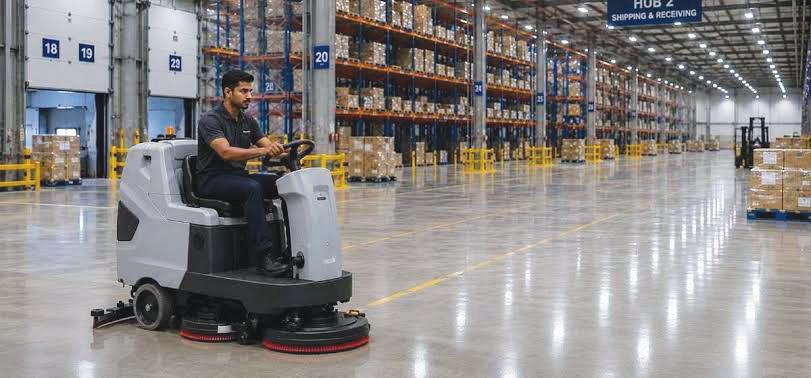
In a 24×7 setup, cleaning windows are short and fragmented. Therefore, slightly higher-capacity cleaning equipment should be planned to complete tasks efficiently within limited timeframes.
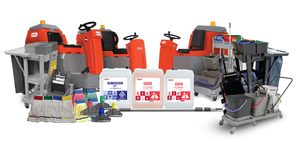
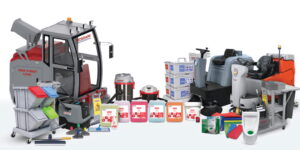
This includes ride-on scrubber-driers, large carpet vacuums to cover more area quickly and backpack vacuums for smaller spaces and corners.
Deep cleaning must also be scheduled intelligently — during lunch or dinner breaks, setup changeovers, low-production or low-footfall periods and planned shutdowns.
The right combination of industrial cleaning equipment and scheduling helps facility management teams maintain cleanliness without interrupting manufacturing activities.
“When a factory runs 24×7, workplace maintenance needs design thinking, not just more manpower.”— Amber Chandratre
Sr. Vice-President, Head – Facilities Management and Infrastructure Development, Revent Precision Engineering Limited
Washroom Maintenance: Exhaust and Automatic Sensors
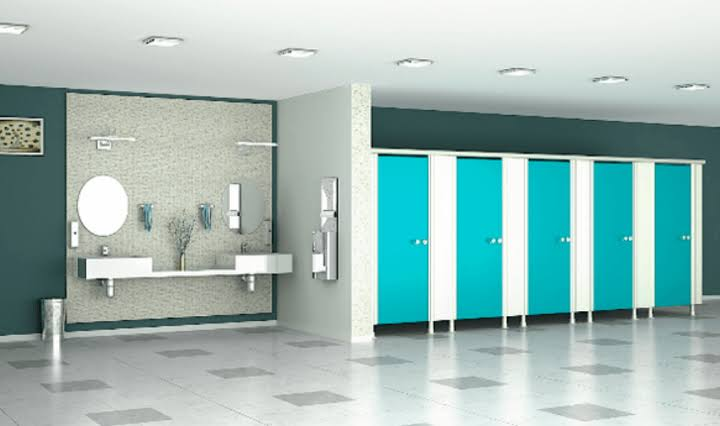
Washrooms are non-negotiable in round-the-clock manufacturing facilities. When one washroom is closed for cleaning, a nearby alternative must be available to employees.
Washrooms need high-performance exhaust systems, automatic sensors, auto-flush facilities and easy-to-clean surfaces that do not show dirt easily. Interchangeable mats that can be swapped in a minute also help maintain hygiene without keeping facilities closed for extended periods.
These arrangements ensure that essential hygiene facilities remain accessible throughout the day and night.
The Human Factor in Round-the-Clock Facility Management
Adequate manpower — in fact, slightly higher deployment than the calculated requirement — is essential for effective 24×7 facility management.
Skilled housekeeping personnel, expert supervision and approximately one-sixth additional manpower to cover staggered weekly offs in round-the-clock operations can make the difference between a workplace that is merely managed and one that is consistently maintained.
Manpower planning must account for shift rotations, weekly offs, cleaning schedules and unexpected workforce shortages to ensure uninterrupted service delivery.
Employee Training for Better Workplace Maintenance
Every employee must be trained in 5S, timely disposal of scrap into designated nearby bins and the correct use of utilities such as bins, mats, hand dryers, flushes, taps and door latches. Simple visual displays work best.
Small tools such as brushes, cloths and scrapers should be provided for immediate machine cleaning. Employees must also be trained never to throw collected dirt on the floor, to identify minor leaks early, contain them and escalate them to the maintenance team before they develop into major spills.
These small, people-driven practices can significantly reduce the facility management workload and help maintain workplace cleanliness throughout every shift.
Ultimately, leadership and occupants must recognise the effort FM teams put in to keep a 24×7 factory clean and maintained. Facility management is not merely a support function — it is a crucial building block for operational success. Give FM teams way when they work in your area and give them the respect they deserve.