




















Thursday, September 10, 2026
 - 
Afrikaans
 - 
af
Albanian
 - 
sq
Amharic
 - 
am
Arabic
 - 
ar
Armenian
 - 
hy
Azerbaijani
 - 
az
Basque
 - 
eu
Belarusian
 - 
be
Bengali
 - 
bn
Bosnian
 - 
bs
Bulgarian
 - 
bg
Catalan
 - 
ca
Cebuano
 - 
ceb
Chichewa
 - 
ny
Chinese (Simplified)
 - 
zh-CN
Chinese (Traditional)
 - 
zh-TW
Corsican
 - 
co
Croatian
 - 
hr
Czech
 - 
cs
Danish
 - 
da
Dutch
 - 
nl
English
 - 
en
Esperanto
 - 
eo
Estonian
 - 
et
Filipino
 - 
tl
Finnish
 - 
fi
French
 - 
fr
Frisian
 - 
fy
Galician
 - 
gl
Georgian
 - 
ka
German
 - 
de
Greek
 - 
el
Gujarati
 - 
gu
Haitian Creole
 - 
ht
Hausa
 - 
ha
Hawaiian
 - 
haw
Hebrew
 - 
iw
Hindi
 - 
hi
Hmong
 - 
hmn
Hungarian
 - 
hu
Icelandic
 - 
is
Igbo
 - 
ig
Indonesian
 - 
id
Irish
 - 
ga
Italian
 - 
it
Japanese
 - 
ja
Javanese
 - 
jw
Kannada
 - 
kn
Kazakh
 - 
kk
Khmer
 - 
km
Korean
 - 
ko
Kurdish (Kurmanji)
 - 
ku
Kyrgyz
 - 
ky
Lao
 - 
lo
Latin
 - 
la
Latvian
 - 
lv
Lithuanian
 - 
lt
Luxembourgish
 - 
lb
Macedonian
 - 
mk
Malagasy
 - 
mg
Malay
 - 
ms
Malayalam
 - 
ml
Maltese
 - 
mt
Maori
 - 
mi
Marathi
 - 
mr
Mongolian
 - 
mn
Myanmar (Burmese)
 - 
my
Nepali
 - 
ne
Norwegian
 - 
no
Pashto
 - 
ps
Persian
 - 
fa
Polish
 - 
pl
Portuguese
 - 
pt
Punjabi
 - 
pa
Romanian
 - 
ro
Russian
 - 
ru
Samoan
 - 
sm
Scots Gaelic
 - 
gd
Serbian
 - 
sr
Sesotho
 - 
st
Shona
 - 
sn
Sindhi
 - 
sd
Sinhala
 - 
si
Slovak
 - 
sk
Slovenian
 - 
sl
Somali
 - 
so
Spanish
 - 
es
Sundanese
 - 
su
Swahili
 - 
sw
Swedish
 - 
sv
Tajik
 - 
tg
Tamil
 - 
ta
Telugu
 - 
te
Thai
 - 
th
Turkish
 - 
tr
Ukrainian
 - 
uk
Urdu
 - 
ur
Uzbek
 - 
uz
Vietnamese
 - 
vi
Welsh
 - 
cy
Xhosa
 - 
xh
Yiddish
 - 
yi
Yoruba
 - 
yo
Zulu
 - 
zu

Rapid fire: The basics of food processing FM

by Clean India Journal Editor
0 comment
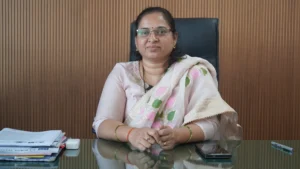
In a brief exchange, Deepvikas Sharma, GM Operations, Good N Rich Foods Pvt Ltd gives us a peek into cleaning and hygiene at his food processing plant in Karnal, Haryana.

What FSSAI standards and procedures do you follow for cleaning and hygiene at your production facility?

We are following CCS (Clear Clean and Sanitation) methodology at our plant.

Clean India Show by Clean India Journal

Practically speaking, what does the CCS methodology include?

Clear: Flush (with water) the material particle from the surface of equipment.

Clean: removal of remaining food particles through cleaning agent.

Sanitation: Using sanitising agent in the last cycle of cleaning.

What are the difficult-to-clean parts of the manufacturing areas?

Drains and ceilings.

How are the upper parts of the walls and the ceilings cleaned?

We use long handled-tools and long stairs to clean the dirt and cobwebs.

What cleaning chemicals can and cannot be used?

We are using food-grade recommended chemicals to clean the facility. We are not using non-food grade recommended chemicals or any flavored chemicals.

How can the lack of effective cleaning affect the quality of your products?

The product can be contaminated due to lack of effective cleaning and may impact taste, flavour, increase microbial counts etc.

You may also like

Subscribe For Download Our Media Kit

Get notified about new articles