




























Sweeping Floors, Building Dreams

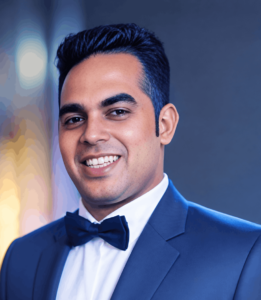
Vinayak Bhise, MD at iSmart Facitech Pvt. Ltd, did not rise above cleaning — he rose through it. From scrubbing staircases at Express Towers to sitting in boardrooms and building digital systems for thousands of workers, his journey is shaped by resilience, responsibility and a deep respect for work at every level.
Cleaning staircases at Express Towers
I started working in 1999, just after my 10th exams. With my younger brother in 9th standard and no one else earning, the responsibility came to me as the eldest in the family. I found a job at Express Towers with the help of my neighbours. I did not even understand what the work meant, but I went because I needed the job.

That is where I met Sanjay Khanvilkar Sir, CMD of former Sanjay Maintenance Services. He told me to work until my results were declared. I agreed immediately. I did not even know what housekeeping meant.
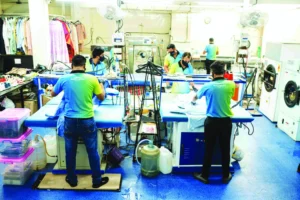
On the first day, I was sent to the 25th floor and told to clean the staircase all the way down. I had never done anything like that before. There was an older man with me, whom we called Chacha. He gave me a hard brush and told me to scrub every step. At that time, cleaning was completely manual. People used to spit anywhere, workers would leave things dirty, and there was very little awareness. We cleaned everything by hand, step by step.
It was hard work, but I never felt ashamed. The day I cleaned that staircase, I understood something — if I can do this, then nothing is difficult. Cleaning a washroom is also not a big issue. It brings in our bread and butter. Even today, if I see garbage on the road, I pick it up and put it in the bin.
Before this job, I had already started working in small ways. In 8th standard, I worked in a bookshop during holidays. Later, my mother and I delivered milk early in the morning, and I would then deliver newspapers to 12 to 15 buildings before going to work. That life has stayed with me. Because of that, even today, I keep a human touch in my work. My number is available, and if any worker has a problem, they message me. I may not be able to speak to everyone, but I make sure their issues are resolved quickly.
Studying at night and supporting the family
I always wanted to study, and even after starting work, I continued my education. I completed my 11th and 12th at a night college in Parel. Subsequently, my responsibilities increased. Around that time, Sanjay Sir had started operating from a small office of about 200 square feet. I would clean the office in the morning and then go to Nariman Point to collect bank details. He had given me a cycle for this. That is how I slowly started learning about banking, operations and responsibility.
Initially, my mother did not know what work I was doing. I did not tell her either. She thought I was working in the “press” at Express Towers. One day, Sanjay Sir asked me how much salary I needed. I went home and asked my mother. She said we needed around ₹1,300 to ₹1,400 to run the house. Sir gave me ₹1,600. When I received my first salary, I told her the truth. She felt bad because I had been a good student, and she said this kind of work was not right for me. But I told her there was no problem with the work I was doing. After that, she supported me.
To manage expenses, we took on another job. After my shift, my mother and I worked as water distributors in our area, keeping count of how much water each house received. Around the same time, my brother had to stop his studies and start working as well. Slowly, things started improving. In 2003, our landlord asked us to vacate the house we had lived in for 15 years. With Sanjay Sir’s support, I was able to take a loan and buy a house in Bhayandar. That was a turning point for us.
My grandmother had told me something when I was young that stayed with me. She said that even if we lived in a slum, we should not let bad habits touch us. I followed that advice. Even when friends invited me to parties, I went with them but never picked up any bad habits. To this day, I do not have any.
Learning business and becoming a director
I did not learn business from books. I learned by observing. Whenever I visited big offices or banks, I would see how things were managed. I read newspapers, listened to interviews and tried to learn from successful people. My biggest learning came from Sanjay Sir. He gave me opportunities, but there were many people like me in the company. Everyone had a chance. It depends on how much you want to grow and how well you understand what your mentor expects from you.
In 2009, I was made a Director. At that time, I did not fully understand what that meant. I started attending board meetings where senior professionals and external directors were present. We used to prepare reports for many days before presenting. In my first meeting, I presented around 12 to 13 slides. I spoke in Hindi, but I never faced any problem. I believe that if your work is strong and you deliver what you commit, language does not matter.
Later, during the transition phase of the company, I gained exposure to structured processes like due diligence while working with global firms. That was a new level of learning for me. During COVID, I faced health issues and had to step back for some time, but that phase gave me time to think about what we could do differently.
An app built for workers
One thing I never forgot was how difficult things are for a worker. When I started, I did not even have ₹100 for travel. Even today, a worker may have to travel long distances just to complete joining formalities or collect a uniform. That is a loss of both time and money. So, we thought about how to solve this, and that is how we built our app.
We focused on making it simple and useful for workers. It supports multiple languages because many workers are not comfortable with English. It allows them to access salary slips, appointment letters and attendance records. We introduced geo-fencing, automated reminders and faster payroll processing. Earlier, payroll could take many days, but now it can be completed in hours.
We also introduced a voice message feature so that workers can communicate in their own language if they are not comfortable typing. We are adding training modules as well, so they can learn about processes, chemicals and standard practices through videos. I strongly believe that the person doing the actual work understands it best, and I have learned a lot from housekeepers over the years.
People are often afraid of technology in the beginning, but it does not take away jobs. In this industry, manpower will always be required. AI cannot pick up a broom, but it can help you use it more efficiently. The idea is to use technology to support and improve people, not replace them.
Continuing to learn and build the brand
Even today, I continue to learn. I am currently completing my BBA and have applied for an LLB because I want to understand contracts and legal aspects better — not to fight cases, but to improve my work and contribute more to the industry.
I do not seek visibility. This is my first interview, and I prefer to work in the background. My goal is to build the brand
further and take it to an international level. I also want to contribute to building a proper training system or institution for this industry.
I started my journey with cleaning, and even today, if I see garbage, I pick it up. That is where I come from, and I am proud of it.