









 CIJConnect Bot-enabled WhatsApp today at 4:00 PM.
When a hospital’s information, engineering and clinical systems finally speak to one another, the building stops being a passive shell and starts behaving like a participant in care. The evidence is not in the technology list — it is in minutes saved at registration, discharges cleared before noon, and reports that reach a patient’s phone before they reach the car park. In conversation with Clean India Journal, Dr Nitesh Kumar, Vice-President & Facility Director, Paras HEC Hospital, Ranchi, describes information technology not as a support function but as a strategic enabler that touches every stage of the patient journey — from appointment booking to post-discharge follow-up. In a tertiary facility handling around 400 outpatients a day, that positioning has reshaped how the estate itself is planned, monitored and held to account.
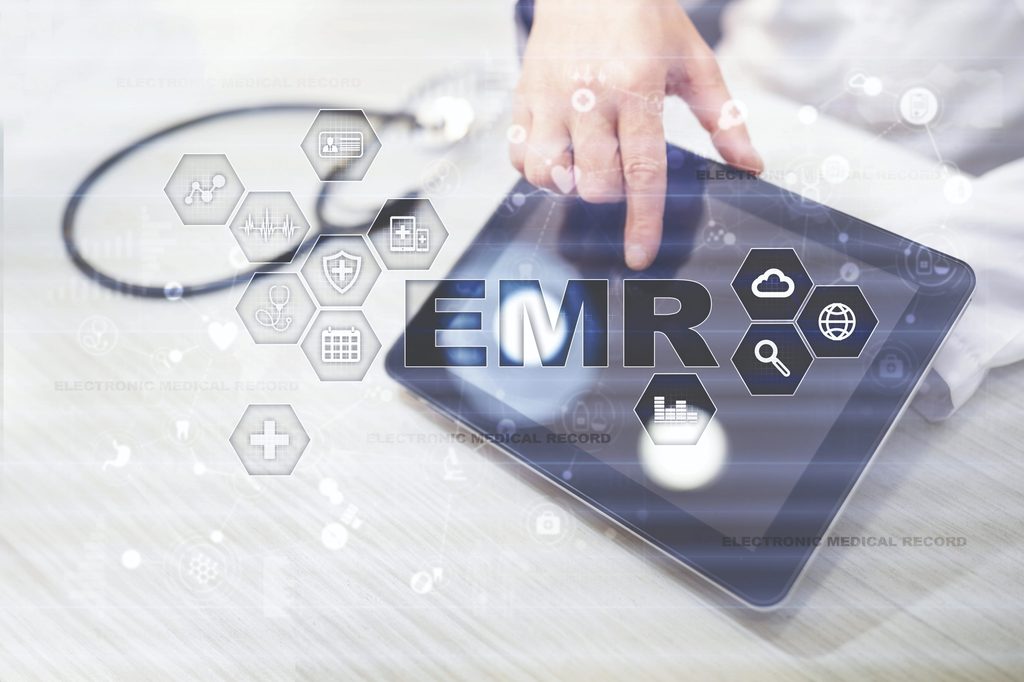
The digital core is a fully integrated Hospital Information System linking outpatient, emergency, inpatient, laboratory, radiology, pharmacy and billing functions to a single electronic medical record (EMR). Outpatient, emergency and inpatient documentation is entirely paperless, and every authorised caregiver works from one source of patient information. That removes the duplication, transcription errors and departmental blind spots that paper-based systems tolerated for decades.

For the facility management team, the implication is considerable. Uptime commitments, network resilience and service-level monitoring are no longer parallel concerns running alongside clinical care — they sit inside it. A delayed imaging server or a dropped connection is a patient-safety event, not an IT ticket.
| What Changed, Measured against Paper | |||
| Area | Before EMR | After EMR | Benefit to the patient |
| Medical records | Patients carried prescriptions, reports and discharge summaries; missing papers delayed treatment | Complete history available digitally at every point of care | Faster consultations, better-informed decisions |
| Emergency care | Allergies, past illnesses and earlier admissions often not readily available | Full clinical history accessible immediately | Faster and safer emergency intervention |
| Prescriptions | Handwritten notes difficult to interpret and track | Digitally documented and stored | Fewer medication errors |
| Diagnostics | Reports collected manually from different departments | Laboratory and imaging results land in the patient record electronically | Quicker treatment initiation |
| Discharge | Manual insurance paperwork stretched waiting time | Real-time claim processing from admission onward | Shorter discharge cycle |
Unbroken Care
Access has been deliberately decoupled from geography. Consultants log in securely from outside the premises to review records, read laboratory and imaging reports, prescribe and continue follow-up, keeping care unbroken through nights and weekends. Patients use a mobile application for registration, appointments and virtual consultation. Of roughly 400 outpatients seen daily, more than 50 arrive pre-registered online and over 15 consult remotely — sparing routine follow-ups the cost and fatigue of travel.
Diagnostics move at the same pace. PACS and an integrated laboratory information system push results straight into the patient record, while reports also reach patients on WhatsApp. Insurance authorisation, historically the longest pole in the discharge tent, is automated: Admission data transfers in real time to a claims platform, compressing approval cycles and the waiting that follows them.
“Technology is not implemented for digitisation alone. It is implemented to improve patient outcomes and patient experience” — Dr Nitesh Kumar Vice-President & Facility Director, Paras HEC Hospital
Turnaround Time
The sharpest facility management lesson lies here. Every critical transaction — registration, billing, laboratory, radiology, insurance processing and discharge — carries a predefined turnaround time that is monitored continuously. A breach is not reviewed at the month-end meeting; it is flagged, escalated and corrected the moment it occurs. That single design decision is what converts data collection into daily operational control, and it is the difference between a dashboard and a discipline.
Quality Loop
Feedback, grievances, incident reports and improvement initiatives are managed on a digital quality platform, shortening resolution cycles and leaving an auditable trail. Automated reminders for follow-up appointments arrive by SMS and WhatsApp, lifting treatment compliance long after the patient has left the premises, and digital receipts and confirmations complete the transparency chain.
The distinguishing factor, then, is not the length of the technology inventory. It is that each element was deployed against a defined patient outcome rather than a digitisation target — and that facility management sat inside that conversation rather than outside it. That, in the end, is what makes a building think.