









 CIJConnect Bot-enabled WhatsApp today at 4:00 PM.
Arijit Guha, Housekeeping HOD, Narayana Hospital, explains why specialised housekeeping training is indispensable for ensuring patient safety in smart hospitals.
When we speak about smart hospitals today, the conversation invariably centres on artificial intelligence, robotic surgeries, connected medical devices and digital health records. While these technologies are transforming healthcare delivery, I believe one equally important element often escapes attention—the hospital environment itself. A hospital may possess the most advanced medical technology, but if its patient areas are not clinically safe, the entire healthcare ecosystem is compromised. Patient safety and infection prevention remain the true foundation of quality healthcare.

As hospitals become increasingly technology-driven, the demands placed on housekeeping teams have changed dramatically. Today’s patient rooms contain sophisticated medical equipment, digital interfaces and sensitive electronic devices that require far more than routine cleaning. Housekeeping is no longer a low-skill manual activity; it has become a specialised clinical support function that directly influences infection prevention, operational efficiency and patient confidence. To bridge the gap between advanced healthcare technology and patient safety, structured and specialised training is essential.
Beyond Appearance
Unlike hotels or commercial buildings, hospitals cannot judge cleanliness by appearance alone. A surface may look spotless and smell fresh while still harbouring dangerous microorganisms capable of causing healthcare-associated infections. Multi-drug resistant organisms such as MRSA and VRE can survive on hospital surfaces for prolonged periods, making every cleaning activity a critical infection prevention measure.
Without proper training, a housekeeping associate may unknowingly use the same cloth to clean multiple patient areas, inadvertently spreading pathogens from one surface to another. Training helps staff understand how infections spread, how disinfectants work and why correct cleaning techniques are as important as the chemicals themselves. Once housekeeping teams understand the science behind their work, cleaning becomes a clinical intervention rather than a routine task.
Technical Skills
The modern patient environment is filled with sensitive electronic equipment that demands specialised handling. Touchscreen monitors, smart beds, telemetry systems and digital medical devices can easily be damaged by incorrect cleaning methods or unsuitable chemicals. Training enables housekeeping staff to clean these assets safely without compromising either hygiene or equipment performance.
We teach our teams never to spray disinfectants directly onto electronic equipment. Instead, cleaning solutions should always be applied to a microfiber cloth before wiping surfaces to prevent liquid from entering delicate electronic components. Staff also learn to work carefully around sensors, monitoring equipment and connected devices, ensuring that cables remain undisturbed and equipment calibration is not affected. As hospitals increasingly deploy technologies such as UV-C disinfection robots and hydrogen peroxide vapour systems, housekeeping professionals also require the technical competence to work safely alongside these automated solutions.
Clinical Protocols
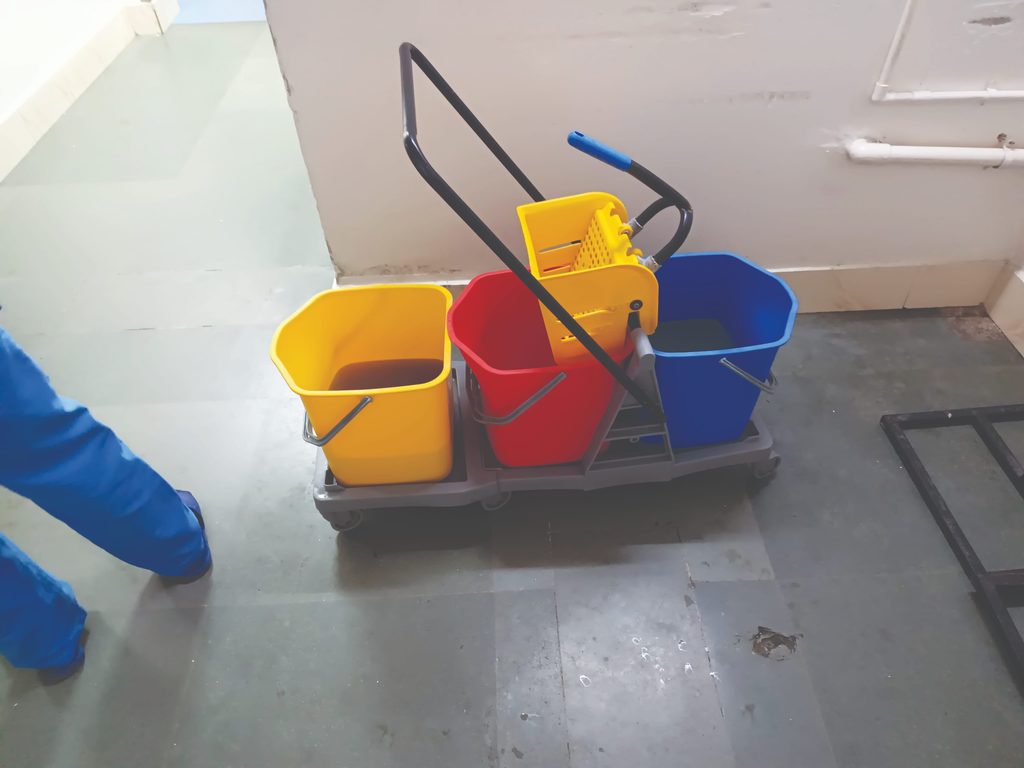
Preventing cross-contamination requires disciplined cleaning practices supported by standardised protocols. Colour-coded microfiber cloths, dedicated cleaning tools and scientifically designed workflows have replaced the outdated practice of using a single mop or cloth across multiple rooms.
Equally important is the correct use of microfiber cloths. We train staff to fold each cloth in a way that provides multiple clean wiping surfaces, ensuring contaminants are not transferred back onto cleaned areas. Every patient bed receives a fresh cloth, while each room is assigned a separate mop head before both are sent for thermal disinfection after use.
Chemical knowledge is another essential aspect of training. Disinfectants require adequate contact time to eliminate pathogens effectively. Whether using quaternary ammonium compounds, sodium hypochlorite or accelerated hydrogen peroxide, staff must understand that wiping a surface dry immediately after application significantly reduces the disinfectant’s effectiveness.
Critical Areas
Cleaning protocols become even more rigorous in high-risk environments such as intensive care units and operation theatres. Operation theatre maintenance involves multiple stages, including pre-operative preparation, between-case cleaning, terminal cleaning and scheduled deep cleaning, each requiring strict adherence to infection control principles.
Housekeeping teams must also be prepared to manage blood and body fluid spills safely. Specialised training ensures every associate understands how to use biohazard spill kits, contain contamination, disinfect affected areas and dispose of hazardous waste without exposing themselves or others to unnecessary risk.
Biomedical waste segregation is equally critical. Every member of the housekeeping team must understand the colour-coded waste management system so that infectious waste, recyclable plastics, sharps and glass are disposed of safely and in compliance with regulatory requirements.
Human Touch
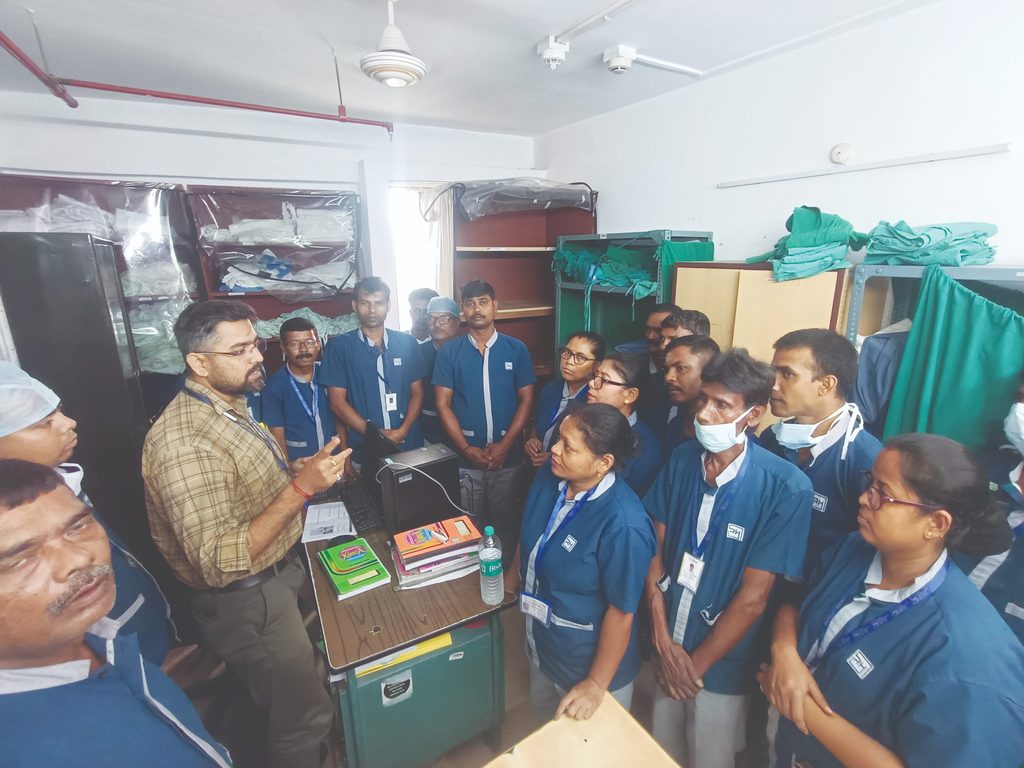
Technical expertise alone does not define an effective housekeeping professional. Housekeeping associates interact frequently with patients and often leave a lasting impression on them. Their professionalism, communication and empathy contribute significantly to the overall patient experience.
I therefore believe communication skills deserve equal importance during training. We encourage staff to greet patients respectfully, introduce themselves, explain the cleaning process, indicate how long it will take and thank patients before leaving. Respecting privacy, maintaining confidentiality and preserving patient dignity are equally important, particularly in critical care environments where trust and reassurance are essential.
Shared Responsibility
A smart hospital is only as effective as its basic standards of hygiene. Investments in sophisticated medical technologies cannot compensate for lapses in environmental cleanliness or infection prevention. Hospital housekeeping should therefore be recognised as a specialised technical profession that demands continuous learning, structured competency development and ongoing skill enhancement.
By investing in comprehensive training covering infection prevention, chemical safety, equipment handling, biomedical waste management and patient communication, hospitals strengthen both clinical outcomes and patient trust. Our housekeeping professionals do far more than clean hospital floors—they create the invisible protective barrier that safeguards patients, healthcare workers and visitors every single day. Specialised training is what enables them to perform that responsibility with confidence, competence and compassion.