
Monday, September 7, 2026
 - 
Afrikaans
 - 
af
Albanian
 - 
sq
Amharic
 - 
am
Arabic
 - 
ar
Armenian
 - 
hy
Azerbaijani
 - 
az
Basque
 - 
eu
Belarusian
 - 
be
Bengali
 - 
bn
Bosnian
 - 
bs
Bulgarian
 - 
bg
Catalan
 - 
ca
Cebuano
 - 
ceb
Chichewa
 - 
ny
Chinese (Simplified)
 - 
zh-CN
Chinese (Traditional)
 - 
zh-TW
Corsican
 - 
co
Croatian
 - 
hr
Czech
 - 
cs
Danish
 - 
da
Dutch
 - 
nl
English
 - 
en
Esperanto
 - 
eo
Estonian
 - 
et
Filipino
 - 
tl
Finnish
 - 
fi
French
 - 
fr
Frisian
 - 
fy
Galician
 - 
gl
Georgian
 - 
ka
German
 - 
de
Greek
 - 
el
Gujarati
 - 
gu
Haitian Creole
 - 
ht
Hausa
 - 
ha
Hawaiian
 - 
haw
Hebrew
 - 
iw
Hindi
 - 
hi
Hmong
 - 
hmn
Hungarian
 - 
hu
Icelandic
 - 
is
Igbo
 - 
ig
Indonesian
 - 
id
Irish
 - 
ga
Italian
 - 
it
Japanese
 - 
ja
Javanese
 - 
jw
Kannada
 - 
kn
Kazakh
 - 
kk
Khmer
 - 
km
Korean
 - 
ko
Kurdish (Kurmanji)
 - 
ku
Kyrgyz
 - 
ky
Lao
 - 
lo
Latin
 - 
la
Latvian
 - 
lv
Lithuanian
 - 
lt
Luxembourgish
 - 
lb
Macedonian
 - 
mk
Malagasy
 - 
mg
Malay
 - 
ms
Malayalam
 - 
ml
Maltese
 - 
mt
Maori
 - 
mi
Marathi
 - 
mr
Mongolian
 - 
mn
Myanmar (Burmese)
 - 
my
Nepali
 - 
ne
Norwegian
 - 
no
Pashto
 - 
ps
Persian
 - 
fa
Polish
 - 
pl
Portuguese
 - 
pt
Punjabi
 - 
pa
Romanian
 - 
ro
Russian
 - 
ru
Samoan
 - 
sm
Scots Gaelic
 - 
gd
Serbian
 - 
sr
Sesotho
 - 
st
Shona
 - 
sn
Sindhi
 - 
sd
Sinhala
 - 
si
Slovak
 - 
sk
Slovenian
 - 
sl
Somali
 - 
so
Spanish
 - 
es
Sundanese
 - 
su
Swahili
 - 
sw
Swedish
 - 
sv
Tajik
 - 
tg
Tamil
 - 
ta
Telugu
 - 
te
Thai
 - 
th
Turkish
 - 
tr
Ukrainian
 - 
uk
Urdu
 - 
ur
Uzbek
 - 
uz
Vietnamese
 - 
vi
Welsh
 - 
cy
Xhosa
 - 
xh
Yiddish
 - 
yi
Yoruba
 - 
yo
Zulu
 - 
zu
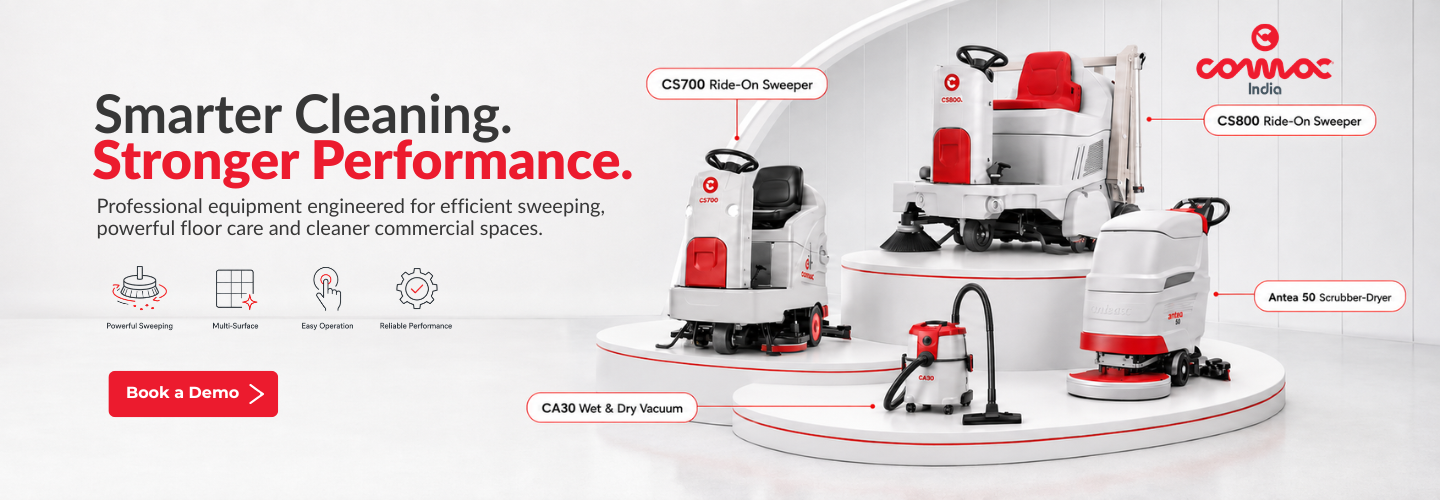
Our Products
Professional Cleaning Machine Range
About Us
Over Five Decades of Cleaning Innovation for Professional Spaces

Comac's history is full of events. There have been glorious moments and tougher moments, but it has always been people at the centre of our journey. Challenges always get bigger in the cleaning market, but Comac has always had the capacity to innovate and rejuvenate itself. This capacity for innovation is what has made it a leading brand in the sector for professional floor cleaning.

We defend and spread a culture of cleanliness, providing solutions that are innovative and reliable and that improve people's quality of life. As a cleaning specialist, Comac has been fulfilling industrial and commercial cleaning equipment needs with its innovative solutions for 50+ years. Backed by a celebrated heritage and technological achievements, Comac, one of the pioneers of the industry in the Europe, are bringing our expertise in the cleaning equipment to India.

Clean India Show by Clean India Journal

Why Comac
Capabilities & Strengths That Set Us Apart

Scrubbing machines

Single Disk machines, Walk Behind Scrubbers, Ride On Scrubbers, Hand held scrubbers

Industrial vacuum cleaners

Single & Three phase vacuum cleaners, ATEX vacuum cleaners, Oil Series

Sweeping machines

Manual Sweepers, Walk behind Sweeper, Ride-on Sweepers and fully integrated Municipal Sweepers

Commercial vacuum cleaner

For Dry and Wet applications, along with specialized models for carpet and upholstery cleaning

High Pressure washers

Cold Water High Pressures Washers, Hot & Cold High Pressure Washers, Engine operated High Pressure washers

End-to-End Support

Nationwide after-sales service, equipment life-cycle support and technical assistance ensure reliable machine performance and stronger customer confidence.

Enquire Now

Please enable JavaScript in your browser to complete this form.
Our Perspectives
Latest Insights

Ready to Upgrade Your Cleaning Operations?

Partner with Comac India for professional and industrial cleaning machines — scrubber dryers, sweepers, vacuums and pressure washers — backed by over 50 years of engineering heritage and nationwide after-sales support.

Request a Free Demo

Subscribe For Download Our Media Kit

Get notified about new articles

COMAC

Commercial Vacuum Cleaner — CA Wet & Dry

Enquire now

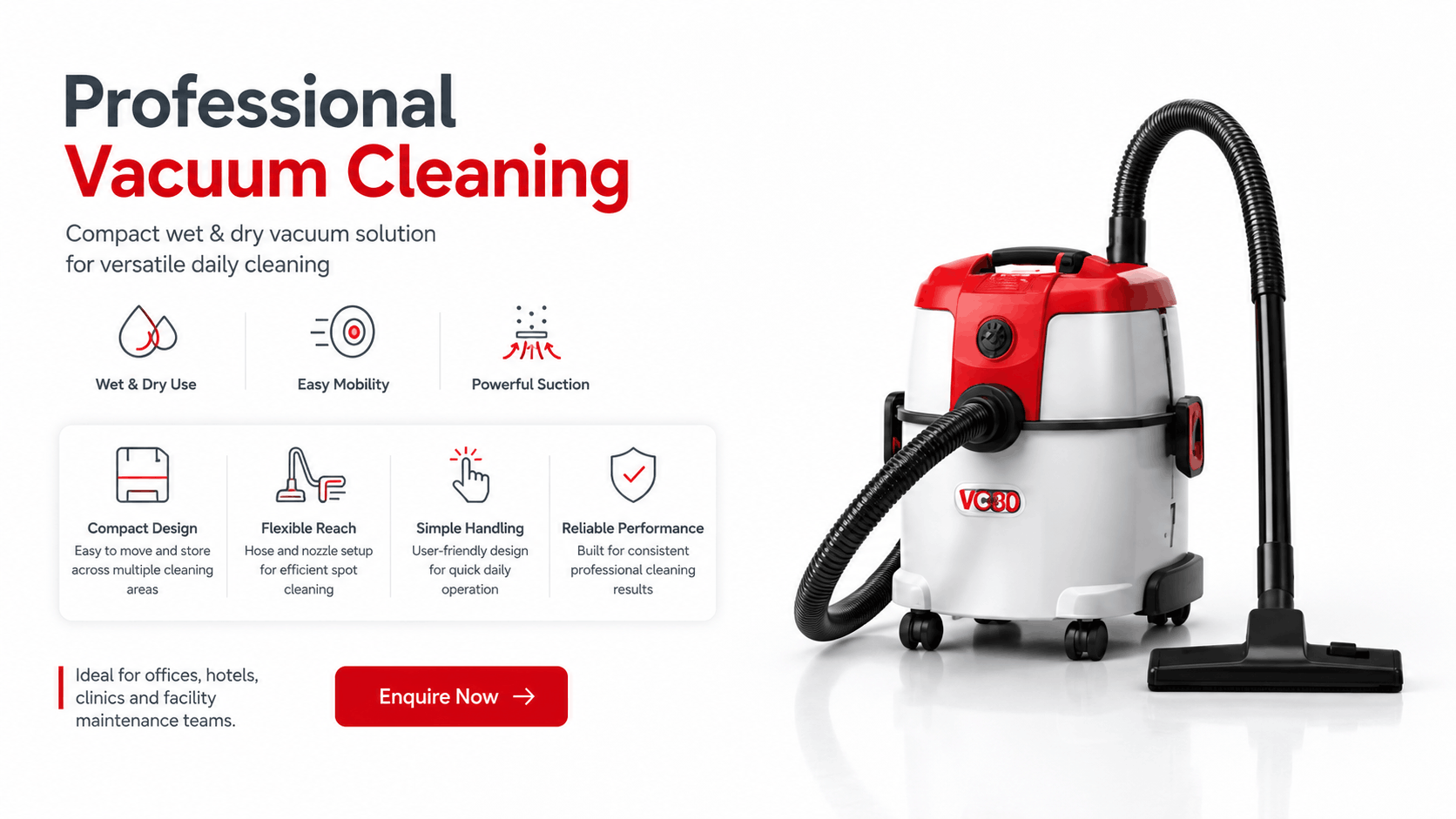
Professional vacuum cleaning — a compact wet and dry solution for versatile daily cleaning.

Professional single-motor wet and dry vacuum cleaners built around a spacious but genuinely practical tank. Tough, easy to handle, and used equally for cleaning medium surfaces or sucking up solid material of various sizes. Tank capacities run from 30 to 80 litres across the range, with a wide accessory set that makes the same machine adaptable to offices, hotels, clinics and facility maintenance work.

Why Choose a Comac CA Wet & Dry Vacuum?

Wet and dry in one machine

A spill and a floor full of dust are the same job for this unit. That is the whole argument for wet and dry — one machine on the trolley instead of two, and no wrong tool at the wrong moment.

30 to 80 litres of tank

Spacious, but designed to stay practical — a tank you can actually manoeuvre and empty rather than one that wins on the specification sheet and loses on the floor.

Easy to move, easy to store

Large wheels for stability and a rear accessory holder that keeps tools with the machine — so the nozzle you need is on the vacuum rather than in a cupboard two floors down.

Product specifications
Product
CA Wet & Dry professional vacuum cleaners
Type
Wet and dry vacuum cleaner, mains powered
Single-motor models
CA30 (30 L), CA60 (60 L), CA80 (80 L)
Maximum power, single motor
1,000 W
Air flow, single motor
52–54 L/sec
Noise level, single motor
70 dB
Cord length
7 m
Tank material
Polyethylene
Filtration
Cloth and sponge filter as standard
Accessories, CA30 / CA60
37 mm attachment set, cloth and sponge filter
Accessories, CA80
40 mm attachment set, drainage hose, accessory holder, dedicated tank-washing opening
Liquid pick-up
Fixed front accessory available for vacuuming liquids across large areas
Mobility
Large wheels for stability; rear-mounted accessory holder
Two-motor models
CA W/D 2 Motors — 77–110 L, 104–108 L/sec air flow, 70–72 dB
Three-motor models
CA W/D 3 Motors — 65 L, 147 L/sec air flow, 73 dB, 3,000 W
Country of origin
Italy
Support
Nationwide after-sales service, equipment life-cycle support and technical assistance
Application areas
  • Offices
  • Hotels
  • Clinics
  • Laboratories
  • Workshops
  • Facility maintenance

Figures across the CA Wet & Dry range as published by Comac and by distributor listings. Comac also supplies industrial vacuum cleaners — single and three phase, ATEX-rated and the Oil Series — for applications beyond commercial cleaning. Contact Comac India for the specification sheet matched to your requirement.

Choosing the right machine
Tank size, motor count and filter — the three decisions that matter

Vacuum specifications tend to get compared on wattage, which is the least useful number of the three that actually decide whether a machine suits your site. What matters is how big the tank is before someone has to empty it, how much air the motors actually move, and whether the filtration matches what you are picking up. Comac's CA range is built to be configured on those axes rather than sold as one answer.

Tank sized to the round, not the room

30 L suits offices, laboratories and small workshops. 60 and 80 L exist because on a larger round, emptying trips cost more time than the vacuuming does. The CA80 also gets a drainage hose and a dedicated tank-washing opening.

Air flow rises with motor count

52–54 L/sec on a single motor, 104–108 on two, 147 on three. Comac positions the triple-motor models for vacuuming dust and liquids in transport, logistics and large-scale retail.

Filters and accessories to match the job

Cloth and sponge filters come as standard, and a wide accessory range makes the same machine customisable — including a fixed front accessory for picking up liquids across large areas.

Ask us anything
Questions about Comac wet & dry vacuums

30 L suits offices, laboratories and small workshops. 60 L and 80 L exist for larger rounds, where emptying trips start costing more time than the vacuuming.

The CA80 also comes with a drainage hose, an accessory holder and a dedicated opening for washing the tank — worth having once you are regularly picking up liquids.

Air flow is what changes: 52–54 L/sec on a single motor, 104–108 L/sec on the two-motor models, and 147 L/sec on three.

Single motor covers most commercial cleaning. Comac positions the triple-motor models specifically for vacuuming dust and liquids in transport, logistics and large-scale retail — where volume and pick-up speed matter more than manoeuvrability.

Yes, that is the point of the range. The same machine cleans medium surfaces of dust and debris, and sucks up solid material of various dimensions and liquids.

For liquids across a large area, ask about the fixed front accessory — it makes the job substantially faster than working with a standard nozzle.

The single-motor models run at 70 dB, with the two and three-motor versions at 70–72 and 73 dB.

70 dB is workable in an occupied office or a hotel corridor. If you have a specific noise limit, confirm the figure for the exact model before ordering.

Cloth and sponge filters are standard across the CA30, CA60 and CA80. The attachment set is 37 mm on the CA30 and CA60, and 40 mm on the CA80.

A wide accessory range is available, which is what lets one machine cover several jobs rather than being specified for only one.

That is a different range. Comac supplies industrial vacuum cleaners in single and three phase, ATEX-rated models for potentially explosive atmospheres, and the Oil Series for metalworking swarf and coolant recovery.

If you are dealing with fine process dust, oil and chips, or a classified area, ask about those rather than specifying a commercial wet and dry unit.

Use the Enquire now button. Tell the team what you are picking up, how large the round is and whether liquids are involved — those three answers narrow the range faster than any specification comparison.

Comac India provides nationwide after-sales service and equipment life-cycle support, with an office in Pune alongside its wider network.

COMAC

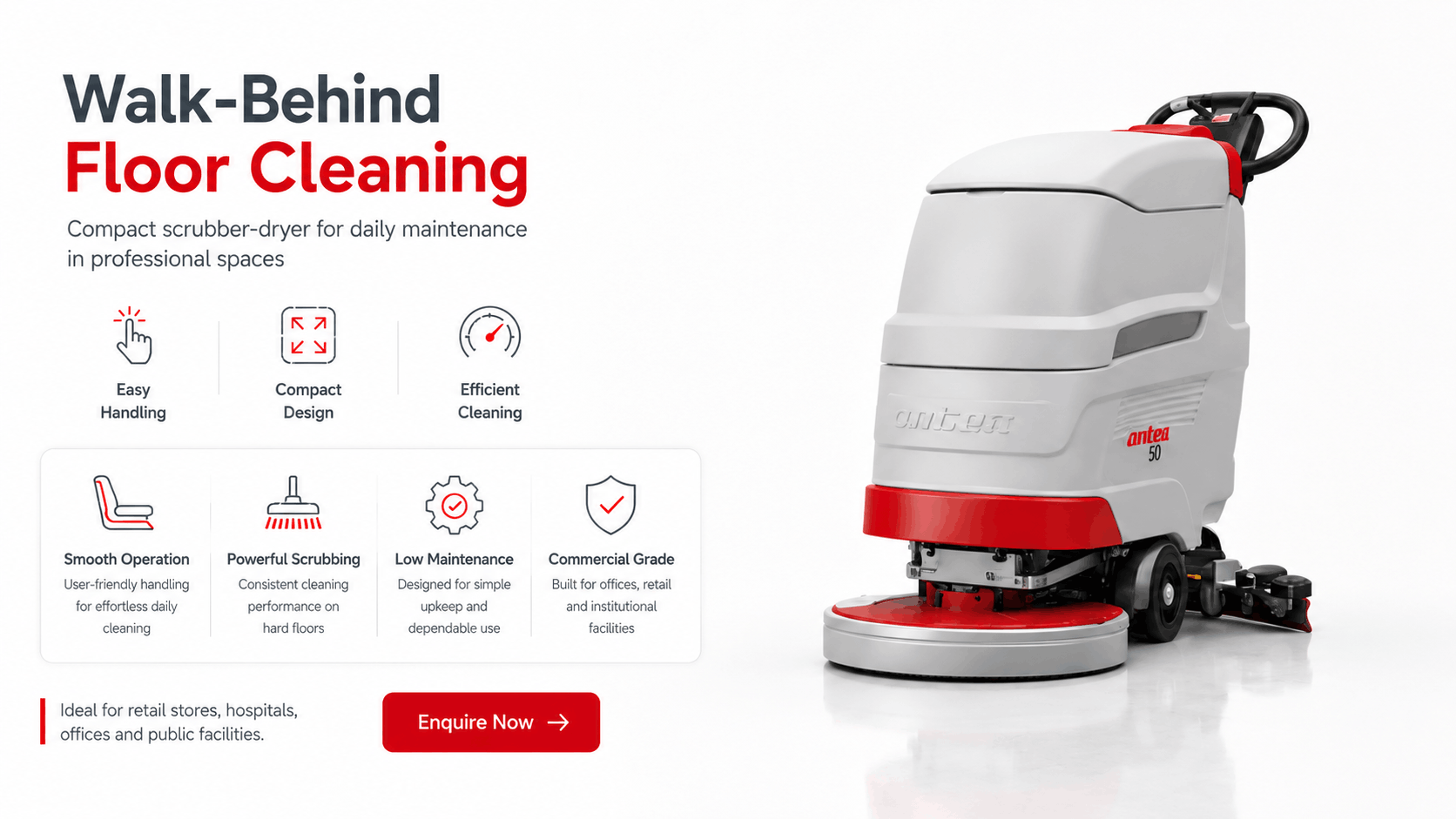
Walk-Behind Scrubber Dryer — Antea 50

Enquire now

Walk-behind floor cleaning — a compact scrubber-dryer for daily maintenance in professional spaces.

Antea is a high-performing, easy-to-use walk-behind scrubbing machine built for both routine maintenance and heavy-duty cleaning of floors up to 2,200 m². A 508 mm disc brush working at 23 kg of pressure, 40 and 60 litre tanks and up to four hours of battery autonomy make it suited to offices, retail stores, hospitals and public facilities. Its pressure die-cast aluminium frame, brush head and squeegee mount are what give it the sturdiness the category usually trades away for compactness.

Why Choose the Comac Antea 50?

Die-cast aluminium, not plastic

The frame, brush head and squeegee mount are pressure die-cast aluminium. In a machine this size those are the three parts that normally fail first, and the ones that decide its working life.

23 kg of brush pressure

Enough downforce for heavy-duty cleaning rather than just maintenance passes — which is what lets one machine cover both the daily routine and the periodic deep clean.

40 L solution, 60 L recovery

The recovery tank is deliberately larger than the solution tank, so the machine runs out of clean water before it fills with dirty — no overflow, no interrupted pass.

Product specifications
Product
Antea 50 walk-behind scrubber dryer
Variant quoted
Antea 50 B (battery, semi-automatic traction)
Working width
508 mm
Squeegee width
700 mm
Area performance
1,250 m²/h
Suitable for floors up to
2,200 m²
Solution tank capacity
40 L
Recovery tank capacity
60 L
Brush
Single disc, 23 kg brush pressure
Power / traction
24 V / semi-automatic
Autonomy
Up to 4 hours
Charging
On-board battery charger
Construction
Pressure die-cast aluminium frame, brush head and squeegee mount
Tank filling
Hose connects directly to any water tap
Other versions
E (mains cable), BT (traction), BTS (scrubbing-sweeping, 2 cylindrical brushes), BTO (orbital)
Available technologies
SSC solution smart control, PM pressure monitoring, CCP corrosion protection, antibacterial and Easy-Clean tanks, lithium battery, Comac Fleet Care
Supplied with
Disc scrubbing brush, pad holder, 24 V maintenance-free battery
Country of origin
Italy
Support
Nationwide after-sales service, equipment life-cycle support and technical assistance
Application areas
  • Offices
  • Retail stores
  • Hospitals
  • Public facilities
  • Hotels & restaurants
  • Production facilities

Figures for the Antea 50 B as published by Comac and by distributor listings. Other Antea versions differ — the BTS scrubbing-sweeping version, for example, is rated at 1,750 m²/h. Contact Comac India for the specification sheet matched to your floors and duty cycle.

Available Antea technologies
Built for the floors most machines this size are not

Compact scrubber dryers usually make their compromises in the same places: plastic where metal should be, a fixed solution flow regardless of speed, and tanks that grow harder to clean the longer you own them. Antea addresses each directly — die-cast aluminium in the structural parts, solution flow tied to working speed, and tank additives that keep the plastic itself easier to keep hygienic. Several of these are options rather than standard fit, so specify what your environment actually needs.

SSC — Solution Smart Control

Connects the solution pump to the drive motor, so flow rises and falls with working speed. Slow down for a corner and the machine stops pouring water onto it — waste falls without the operator thinking about it.

Antibacterial and Easy-Clean tanks

Additives introduced when the tanks are moulded — one keeps bacterial load lower than a standard tank, the other reduces the plastic's porosity so edges stay smooth and easier to clean. Relevant wherever hygiene is audited.

PM monitoring, CCP protection, Fleet Care

Pressure Monitoring tracks brush motor output to hold effectiveness across floor types. CCP treats metal parts against corrosive environments. Comac Fleet Care reports where each machine is working and when it needs service.

Ask us anything
Questions about the Comac Antea 50

Antea 50 comes as E (mains cable), B (battery, no traction), BT (battery with traction), BTS (traction plus scrubbing-sweeping with two cylindrical brushes) and BTO (orbital).

As a rough guide: cable if the area is small and sockets are close; battery if you need to move between rooms; traction if shifts are long or floors slope; BTS if the floor has loose debris as well as soiling, since it sweeps and scrubs in one pass.

The Antea 50 B is rated at 1,250 m²/h, and Comac positions the Antea range for floors up to 2,200 m². The BTS scrubbing-sweeping version is rated higher, at 1,750 m²/h.

Those are theoretical figures. Real coverage in an office or a retail store with fixtures and aisles will be lower — treat them as comparison numbers between machines, not as a shift plan.

Both. Comac specifies Antea for maintenance and heavy-duty cleaning, and 23 kg of brush pressure is what makes the second possible.

That is the practical value of a machine like this: one unit covers the daily pass and the periodic deep clean instead of you hiring something in for the latter.

Up to 4 hours of autonomy on the 24 V battery, with an on-board charger so it plugs into an ordinary socket without extra equipment.

A lithium battery option is available across the Antea range, which drastically reduces charge times and raises performance. Worth pricing if the machine will run more than one shift a day.

Comac lists hospitals, restaurants, hotels and supermarkets among Antea's environments, and offers antibacterial tanks and Easy-Clean tanks — additives moulded into the plastic that lower bacterial load and reduce porosity so the tank is easier to keep clean.

These are options rather than standard on every variant, so specify them explicitly if hygiene is audited on your site.

CCP — Comac Corrosion Protection — is a corrosion-resistant treatment for the metal parts of scrubber dryers working around corrosive agents. Relevant for fish markets, dairies, swimming pools and similar.

Tell the team what the machine will actually be exposed to; the wrong specification in a corrosive environment shortens machine life considerably.

Use the Enquire now button. Floor type and layout decide the outcome more than headline figures do, so a site visit is worth more than a specification comparison.

Comac India provides nationwide after-sales service and equipment life-cycle support, with an office in Pune alongside its wider network.

COMAC

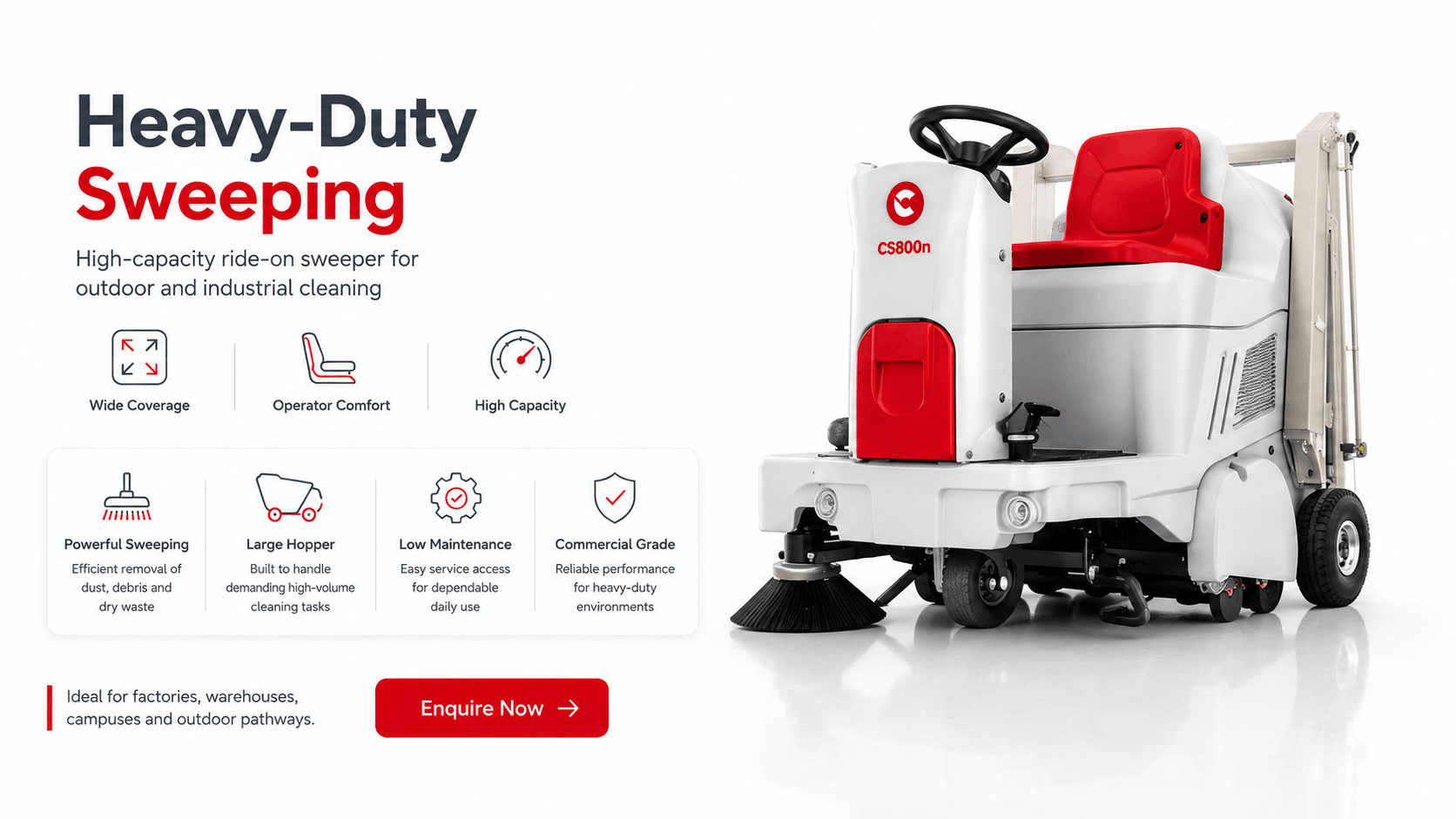
Ride-On Sweeper — CS800

Enquire now

Heavy-duty sweeping — a high-capacity ride-on sweeper for outdoor and industrial cleaning.

Built for removing dust, debris and dry waste across factories, warehouses, campuses and large pathways. The CS800 sweeps 800 mm with its central brush and up to 1,150 mm with two side brushes, at a theoretical productivity of 6,800 m²/h — enough for areas up to 15,000 m². Its 105 litre hopper lifts and dumps automatically, and it is available battery-powered or with a gasoline engine depending on how demanding the environment is.

Why Choose the Comac CS800?

Up to 1,150 mm of sweep

800 mm from the central brush alone, 975 mm with one side brush and 1,150 mm with two — so the machine can be configured to the site rather than the site worked around the machine.

105 L hopper with automatic dumping

The hopper lifts and discharges under power rather than being emptied by hand — which is the difference between a quick tip into a skip and a job somebody puts off until the end of the day.

Up to 6 m² of filter area

Panel filter as standard, with an optional fabric pocket filter for environments where very fine dust is the problem — which is most cement, timber and metalworking sites.

Product specifications
Product
CS800 ride-on sweeper
Type
Ride-on sweeper with automatic traction
Power options
Battery (CS800 B) or gasoline engine (CS800 H)
Working width, central brush
800 mm
Working width, with one side brush
975 mm
Working width, with two side brushes
1,150 mm
Theoretical productivity
6,800 m²/h
Suitable for areas up to
15,000 m²
Debris hopper capacity
105 L
Hopper emptying
Automatic lifting and dumping (rear electric)
Main brush
Floating system
Filter
Panel filter as standard; fabric pocket filter optional; up to 6 m² filter area
Filter cleaning
Electric filter shaker
Speed
0–6 km/h
Battery (CS800 B)
25.6 V lithium, 200 Ah — approx. 2.3 h autonomy, 3 h charge
Engine (CS800 H)
5.5 hp gasoline with full hydraulic system, no electronic cards
Machine dimensions (L × H × W)
1600 × 1310 × 1080 mm
Lighting
Front LED headlights — up to 80% less energy than standard headlights
Country of origin
Italy
Support
Nationwide after-sales service, equipment life-cycle support and technical assistance
Application areas
  • Factories
  • Warehouses
  • Campuses
  • Outdoor pathways
  • Car parks
  • Shopping areas

Figures for the CS800 as published by Comac and by distributor listings. The CS700 shares the platform with a 700 mm central brush and a manually emptied hopper. Contact Comac India for the specification sheet matched to your site and duty cycle.

Robust, and deliberately simple
The three things that decide whether a sweeper keeps sweeping

A sweeper stops being useful for predictable reasons: the hopper is full and nobody wants to empty it, the filter has clogged and suction has quietly faded, or the machine itself has failed in conditions it was not built for. The CS800 is designed around all three — a hopper that empties itself, a filter that can be shaken clean and swapped for a finer one, and a gasoline variant with no electronics to fail when the environment is genuinely hostile.

Automatic lifting and dumping

The distinction between the CS800 and the CS700 is exactly this: the CS800's hopper raises and discharges under power, while the CS700's is emptied by hand. Over a shift that decides how often the machine actually gets emptied.

Interchangeable filtration

The panel filter fits standard applications and replaces without tools. Where fine dust dominates, the fabric pocket filter swaps straight in — so one machine adapts to different work environments rather than underperforming in both.

ECO Mode, Stop&Go and Fleet Care

ECO Mode cuts energy use and noise from one button, extending autonomy. Stop&Go halts the brushes when the machine is idle so consumption tracks actual work. CFC allows machine status to be monitored remotely across a fleet.

Ask us anything
Questions about the Comac CS800

Battery (CS800 B) runs emission-free, which is what makes it usable indoors and around people. Gasoline (CS800 H) uses a complete hydraulic system with no electronic cards at all, and Comac positions that as increased reliability when working in particularly dirty conditions.

So: indoors, or mixed indoor-outdoor, take the battery. A genuinely harsh outdoor yard where dust and moisture will find any electronics, take the gasoline.

Two things. Central brush width — 800 mm on the CS800 against 700 mm on the CS700 — and how the hopper empties.

The CS800's debris hopper lifts and dumps automatically; the CS700's is emptied manually. On a site producing real volumes of debris, that second difference usually matters more than the first.

Theoretical productivity is 6,800 m²/h, and Comac rates the CS700/CS800 range for areas up to 15,000 m².

Theoretical is the comparison figure, not the shift plan — turns, obstacles and hopper emptying all come out of the hour. Real coverage on a congested factory floor will be meaningfully lower.

Both, but the filter choice matters. The panel filter is standard and covers ordinary applications. Where very fine dust is present — cement, timber, metalworking — the optional fabric pocket filter gives excellent filtering results and swaps in easily.

The CS800 carries up to 6 m² of filter area and an electric filter shaker to clear it, which is what keeps suction from fading as the filter loads.

The lithium pack quoted for the Indian market is 25.6 V / 200 Ah, giving roughly 2.3 hours of autonomy with a 3-hour charge.

ECO Mode extends that by cutting energy consumption and noise from a single button. Confirm the exact pack and autonomy for the configuration you are quoted, since battery options vary.

Yes — Comac positions the CS700/CS800 for indoor and outdoor floors in industrial environments, warehouses, shopping areas, car parks and the public, automotive and transport sectors.

The battery version is the one to specify if a significant share of the work is indoors.

Use the Enquire now button. For a sweeper, a site visit answers more than a specification sheet — debris type, surface condition and how much room there is to turn decide the outcome more than headline width does.

Comac India provides nationwide after-sales service and equipment life-cycle support, and has an office in Pune alongside its wider network.

COMAC

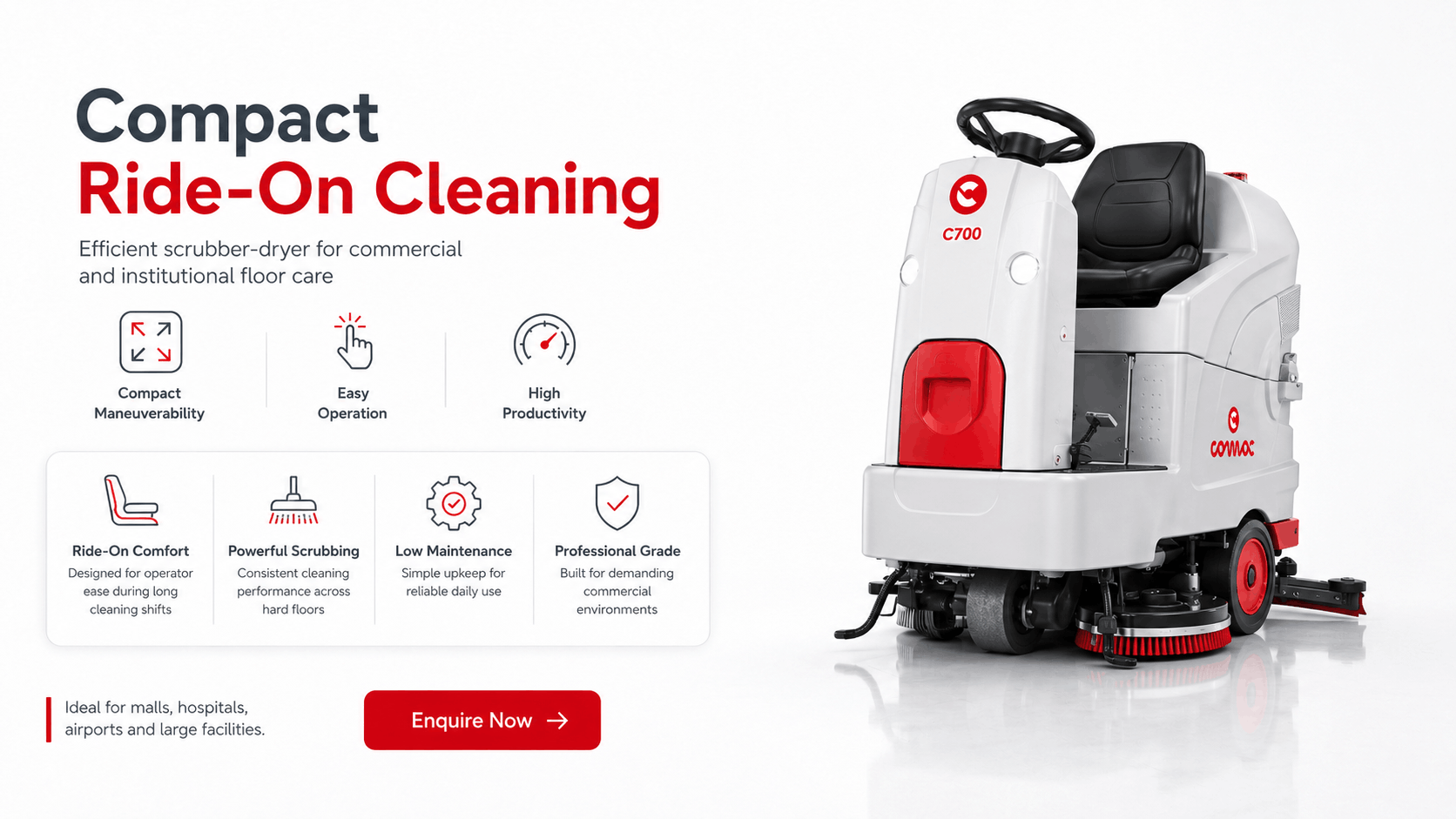
Ride-On Scrubber Dryer

Enquire now

Compact ride-on cleaning — an efficient scrubber-dryer for commercial and institutional floor care.

Efficient ride-on scrubber dryers designed for large commercial and institutional spaces. Compact manoeuvrability, operator comfort and powerful scrubbing performance make daily floor cleaning faster and easier — ideal for malls, hospitals, airports and large facilities. From Comac, one of Europe's pioneers in professional floor cleaning, with over 50 years of engineering heritage now brought to India and backed by nationwide after-sales service.

Why Choose a Comac Ride-On Scrubber Dryer?

Compact manoeuvrability

A ride-on platform is only useful if it reaches the floor that needs cleaning. Compact dimensions keep it workable in mall concourses, hospital corridors and around fixed plant.

Operator comfort over a full shift

Comfort is a productivity feature, not a luxury. A fatigued operator covers less ground and skips more of it — which is where the cost of a cheaper machine actually shows up.

Powerful scrubbing performance

Brush pressure and suction are what separate a floor that looks cleaned from one that is. Comac builds both around consistent results on hard commercial floors.

Product specifications
Product
Ride-On Scrubber Dryer
Type
Battery-powered ride-on scrubber dryer
Manufacturer
Comac — professional floor cleaning, 50+ years
Support
Nationwide after-sales service, equipment life-cycle support and technical assistance
Application areas
  • Malls
  • Hospitals
  • Airports
  • Large facilities
  • Institutional spaces
  • Warehouses

Comac's ride-on range spans several models with different working widths and tank capacities. Contact Comac India for the specification sheet matched to your floor area and duty cycle.

Comac C-range technology
Metering, monitoring and recovery — where running costs are actually decided

The purchase price of a scrubber dryer is the smallest number in its life. Water, detergent, labour hours and downtime are the rest, and they are decided by how precisely the machine meters what it uses and how little of it is wasted. Comac's C range is built around that idea — separate dosing of water and detergent, active monitoring of brush pressure, and systems that stop consumption the moment the machine stops working.

CDS — Comac Dosing System

Water and detergent are dosed separately rather than pre-mixed, so the solution matches the soiling in front of the machine instead of a setting chosen at the start of the shift.

PM — Pressure Monitoring, and Stop&Go

Brush pressure is monitored rather than assumed, and Stop&Go halts the brushes and solution flow during momentary stops — so nothing is dispensed onto a floor the machine is not moving across.

ECO Mode and Comac Fleet Care

ECO Mode cuts noise and energy consumption from a single button, while CFC allows machine status to be monitored remotely — useful once you are running more than one unit across a site.

Ask us anything
Questions about Comac ride-on scrubber dryers

Comac's ride-on range covers several working widths, so the answer depends on how much open floor you have and how much of it is congested.

As a rule, a wider machine covers ground faster but needs room to work. Share your area, layout and the hours you have available for cleaning, and Comac India can specify the model rather than you guessing from a brochure.

It comes down to area. A ride-on covers substantially more ground per hour, which means fewer machines and fewer operators for the same floor — but on a small or heavily obstructed site that advantage never materialises.

The crossover point is usually somewhere in the low thousands of square metres. Comac can run the comparison against your actual site rather than a generic example.

Through metering rather than restraint. The Comac Dosing System doses water and detergent separately, so the mix matches the soiling instead of running at one setting all shift, and Stop&Go halts brushes and solution flow during momentary stops.

Comac has also published work on reusing the water used by floor scrubbers — worth asking about if water consumption is a live issue on your site.

ECO Mode reduces both noise level and energy consumption from a single button, which is what makes daytime operation viable in a mall, hospital or airport concourse.

Confirm the actual dB(A) figure for the model you are considering if you have a specific noise limit to meet.

Comac India provides nationwide after-sales service, equipment life-cycle support and technical assistance. The company also opened an office in Pune to strengthen regional coverage.

For a machine that is central to a daily cleaning routine, service response matters as much as the specification. Ask what coverage looks like for your specific location before you buy.

Comac Fleet Care allows machine status to be monitored remotely across the C range. Once you are running more than one unit, that is what turns a fleet from something you chase into something you can see.

Availability depends on the model and configuration — confirm at the point of enquiry.

Use the Enquire now button. A site visit is worth more than a specification comparison for this category, because floor type, layout and obstruction density decide the outcome more than headline figures do.

Comac's range also covers sweepers, industrial and commercial vacuums, single disc machines and high pressure washers, so a site assessment can cover the whole cleaning requirement rather than one machine.

Inauguration of Comac's new office in Pune
News 1 min read

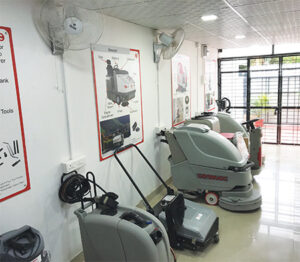
Comac Opens Office in Pune


Comac-Pune has shifted to a larger office space equipped with a training academy, demo point and stock point for machines and spares.

"India operation is very critical for the Comac group as it has been present in India for a decade now. Comac has always emphasised training and skill development as more and more technology and digitalisation are set to adorn the Indian cleaning industry," says Peter Van Den Boom, Comac SpA, who graced the inauguration of the office.

Raja Mukherjee, DGM – Service & Marketing, says: "Comac India had a challenging last year, which has made us stronger by will. The turnovers of the company have grown and so has its penetration in new domains of business. Our strength has been our intent to serve with passion, provide the best in the business and be manned with a dedicated team of professional people."

Comac floor scrubber with ReWater filtration technology
Technology 3 min read

Reuse Water Used by Floor Scrubbers


Comac floor scrubbers equipped with ReWater technology allow you to reuse the cleaning solution used for floor cleaning operations.

Comac floor scrubbers can support a two- or four-phase filtering system:

  • Two-phase system: consists of a mechanical filtration system that allows work with recycled water.
  • Four-phase system: a more advanced system that guarantees work with recycled water through a double action of mechanical filtration and a separation by decantation.

Two-phase ReWater system

  1. The solution used for cleaning the floor is collected in the recovery tank. On the Vega and C120, it is also passed through a filter basket in the inlet, in order to retain solid debris present in the dirty water.
  2. The water passes through a mesh filter placed inside the recovery tank, then with a pump is moved into the solution tank, from which it will be taken for subsequent cleaning operations.

Four-phase ReWater system

  1. The solution used for cleaning the floor is collected in the recovery tank, where it passes through the basket filter to retain solid debris. The first filtration phase also takes place here.
  2. Subsequently, the filtered solution passes through an oil separator filter and then arrives in the settling tank. By means of a separation process, and thanks to the action of gravity, the solution is separated from the substances made of different densities to begin the clarification process.
  3. At this point the solution passes through a second degree of filtration, which takes place in the third tank.
  4. Finally, the filtered and settled solution is collected in the last tank, where it is ready to reach the floor scrubber brushes and be reused for cleaning the surfaces.

Advantages

  • Less water: reduces waste, thus bringing benefits in environmental and economic terms. This also means lower costs for the disposal of the water used to clean floors.
  • More productivity: ReWater allows you to scrub more using the same cleaning solution. This leads to an increase in floor scrubber productivity, thus reducing consumption and the time dedicated to cleaning operations.
  • More safety: reducing pit stops also means reducing the possibility of contact with the solution, thus increasing the safety of the staff involved in cleaning operations.
  • Less cleaning solution: not only less water, but the cleaning solution consumption is also reduced, thus lowering costs and the introduction of contaminants into the natural environment.

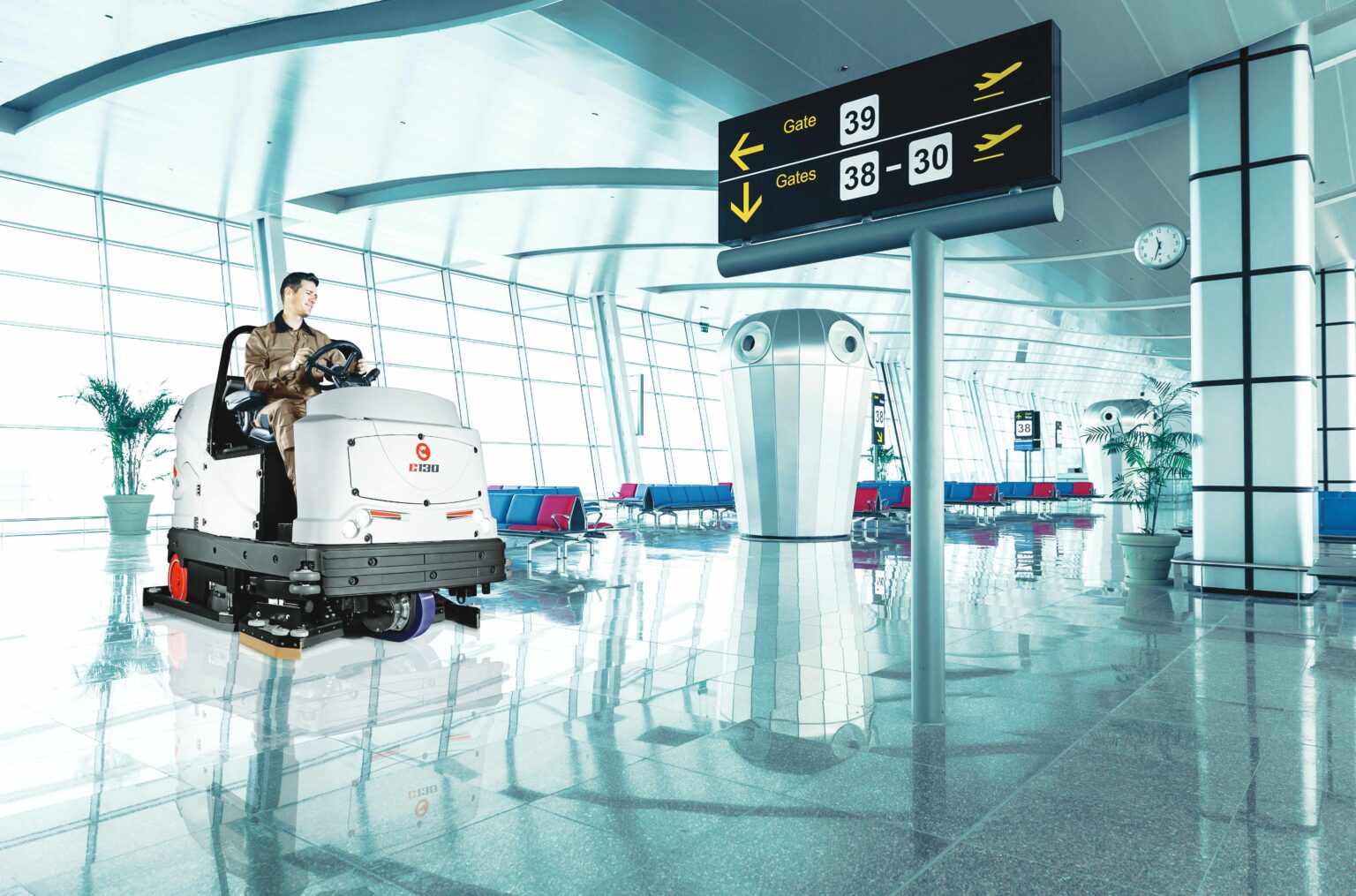
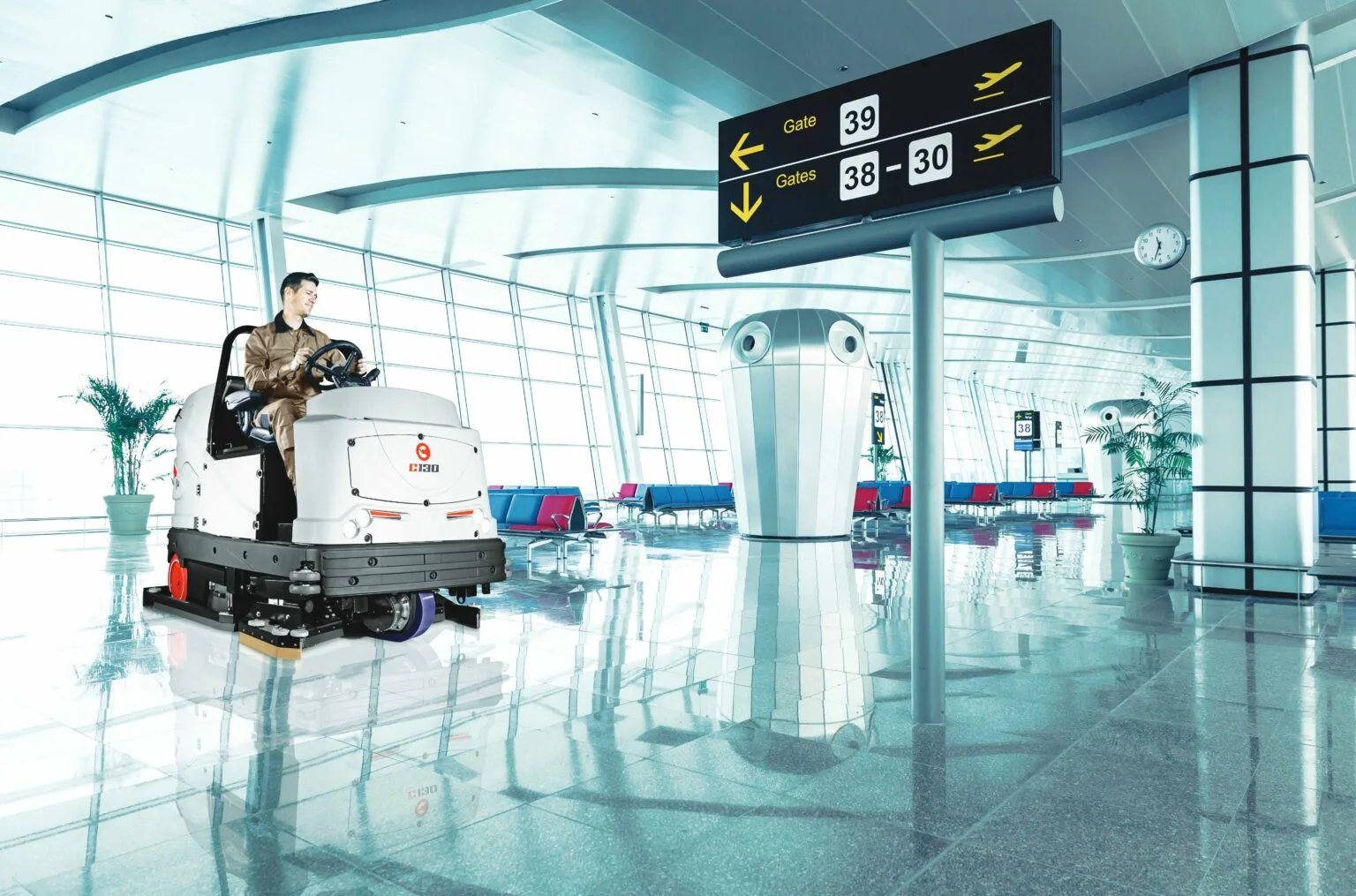
Comac scrubber-drier cleaning an airport terminal floor
Technology 3 min read

Technologies for Bacteria-Free & Non-Stop Cleaning


Where there is a large passage of people, the sources of proliferation of germs and bacteria increase, and so does the need for effective cleaning. Comac India Pvt Ltd introduces technologies that ensure hygienic, bacteria-free, water-saving and continued mechanised cleaning — highly suitable for areas with large traffic.

Comac's professional floor cleaning machines make it possible to clean at any time, increasing safety for both operators and travellers. Looking into the quantum of footfalls, washrooms become prone to being a source of bacteria and dirt, which are carried across the airports and the flights too.

  • Antibacterial tank and Easy Clean technology: an additive used in the moulding phase of tanks to significantly reduce the porosity of the plastic, thus making the walls of the structure smoother and easier to clean. The effectiveness of this treatment is measured by a lower sedimentation of dirt and, consequently, a reduction in the bad smells that are usually generated inside the tanks.
  • Comac NSC – Non-Stop Cleaning technology: this solution allows the water used for floor washing to be recycled, thus reducing the environmental impact of cleaning operations.
  • Comac ReWater technology in scrubbing machines: this allows the reuse of the water used during floor washing operations. The scrubbers can run uninterruptedly for the entire autonomy of the batteries, without wasting precious time in the pit stop phases, thus maximising productivity and optimising uptime.
  • Comac Fleet Care technology: this tool allows better management of the fleet of Comac machines. Thanks to digitalisation, it is in fact possible to communicate with machines, collect data and transform them into meaningful and useful information in the management of cleaning operations.

Comac offers a complete range of machines to solve the most diverse cleaning needs required by the environments of airports, which include not only pedestrian passages, where types of light dirt are concentrated, but also areas characterised by the presence of heavier dirt such as oily residues and grease. Just think of the dirt that can be found on the floors of airport maintenance hangars, which need specialised heavy-duty machines like Comac's C Series machine.

Cleaning machinery distribution and channel partner network in India
Distribution 9 min read

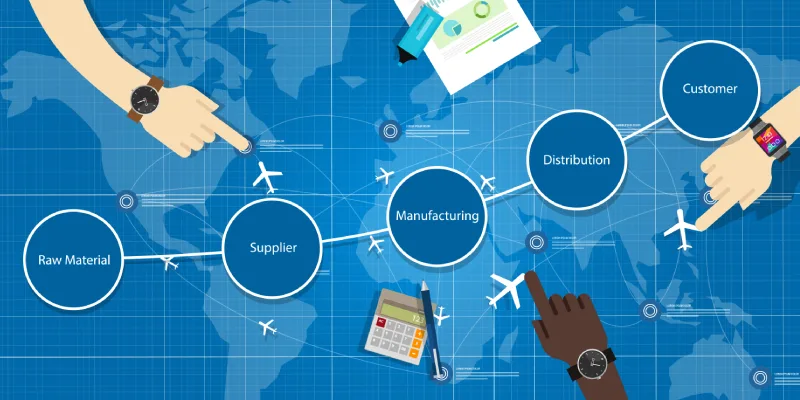
Elevate Dealers to Channel Partners for Sustainable Growth


Few manufacturers — either domestic or foreign — can hope to keep pace with the hunger of the facility management sector for cleaning products by establishing their own presence in every territory. Fortunately, there are many entrepreneurs who are eager to become their distributors and grow along with them. What qualities should such entrepreneurs develop to become distributors of choice? How do manufacturers help them sustain, financially and otherwise? How do they iron out kinks in the relationship? We have the answers.

Distribution versus manufacturing

For many new entrants to the cleaning sector, entry barriers for setting up a production facility may be high, which makes it challenging for them to achieve economies of scale. For them, distribution is an appealing gateway into the cleaning business.

Tony Chazhoor, MD, IP Cleaning India, explained: "For more players to be convinced to invest in production facilities, disposable incomes that can be spent on acquiring cleaning machinery need to rise. Until then, the dealer/channel partner network model will be the most appropriate choice."

Many global players already have an Indian presence in the form of 100% subsidiaries, which has helped them understand the Indian market and purchasing behaviour. While some are tentatively expanding the number of products they manufacture in India, their output is not yet sufficient to meet market demand. Besides, some bigger machines, which are unlikely to sell in large volumes initially, will have to be imported rather than manufactured domestically.

Satish Mahajan, National Sales Head, Comac India, weighed in: "We are still importing most of our machines to ensure consistent quality and value for our customers. We are working on a project to manufacture a few of our fast-moving machines in India and studying its feasibility from the standpoint of captive consumption and meeting other demands. But this is in a very early stage."

In terms of volume, the major cleaning machines being manufactured in India are single-disc scrubbers/polishers and walk-behind scrubber dryers, as well as some ride-on scrubber dryers. For at least some time more, most suppliers will depend on imports for high-end ride-on scrubber dryers, sweepers and pressure washers, ensuring the preponderance of the distribution model.

The ideal distributor

What do companies look for in a channel partner? "Years of experience in the industry, market presence and investment capability in terms of finance and team size," replied Indu Vijaykumar, Director, i-team India.

Rajiv Bhatia, Country Manager & Director, Nilfisk India Pvt Ltd, expanded on his criteria for assessing a potential partner as follows:

  • Financial capability to invest in manpower, machines and infrastructure, such that the distributor can take seasonal business cycles in his stride and not be cash-starved if sales happen to fall in one quarter. The ups and downs of the market should not cause the business to suffer due to a lack of working capital.
  • Motivation to promote the cleaning equipment business in terms of synergy with his existing lines of business, and how he wishes to maximise his wallet share with his existing customer base.
  • Concept selling capability, since the cleaning industry is mushrooming in India and a lot of concepts need to be explained to different industrial and institutional customers.
  • After-sales service capabilities in terms of process-oriented service call logging and assignment, service metrics measurement, spares management and, most importantly, his existing customer base's views about the firm.
  • A passion to grow his business.

Chazhoor is particular about nomenclature: "Actually, we do not look for distributors in capital equipment sales. Rather, we look for specialised dealers or channel partners for our ecosystem." For him, such a partner should be from the capital equipment business, with in-house sales and service infrastructure, an excellent history and reputation, and extensive knowledge of the local market, evolving industry trends and the demographics of the catchment area.

With this necessary level of scrutiny, it should come as no surprise that it takes an average of 8–9 months to develop a channel partner in a given area.

Every respondent agreed that the most basic quality for eligibility is that the partner understands the importance of keeping a ready stock of machinery, spares and consumables. Adequate sales and service staff must be available to take care of machines throughout their life cycle.

Mahajan makes a seemingly simple but crucial stipulation: "They should have experience in and domain knowledge of the cleaning industry. This industry is very unique and cannot work like other businesses. Partners who have worked within the cleaning industry have a brighter chance of becoming successful compared to those who haven't. Of course, it's not difficult for the latter, but their gestation periods may be prolonged."

A relatively recent criterion is a distributor's willingness to digitise all aspects of business management. Underlying all the above criteria is the readiness of the partner to adhere to the supplier's code of conduct and ethics; any violation will negatively impact the supplier's brand image.

How do suppliers support distributors?

While the above list of parameters may seem intimidating, potential distributors should rest assured that suppliers understand their responsibility to aid and equip their partners in every possible way. They have thought of everything that can ease the entry of the distributor into the cleaning market.

Vivek Mata, MD, Charnock Equipments Pvt Ltd, painted a picture: "Businesses flourish when the entire ecosystem works in sync towards the larger goals of customer satisfaction. Distributors are the most crucial part of the supply chain and have to be elevated to the level of channel partners. We empower distributor partners by involving them in everything, right from the client site due diligence to recommendations for the right fit of equipment and machinery. Specialised technical training is imparted to keep them informed about upcoming technology. They are the extended members of the Charnock family."

Once the partnership is sealed, the induction process for the partner typically begins with sales and service intellectual property transfer in a phased, planned manner. "A cleaning equipment manufacturer should handhold the dealer/channel partner by sharing in-depth product knowledge and providing frequent training. It is imperative that the dealer be given proper technical knowledge, and be made aware of proper segmentation and further sub-segmentation. This exercise will support the dealer in their understanding of the most productive product mix," offered Chazhoor.

The supplier may even help the partner hire the right people, and offer field marketing support to improve brand visibility through the partner in the specified territory. A realistic business plan is drawn up that is agreeable to both parties. The supplier's staff will regularly visit and interact with the partner to identify roadblocks, if any, in the action plan.

It is a mandate for the supplier to ensure the partnership is financially lucrative and appealing to the partner. This can be guaranteed in more than one way.

Said Mahajan: "The company needs to maintain territorial sanctity and integrity of dealers. The terms of territory and other activities need to be designed and specified in the agreement, to have a standard course of action when there are any deviations. Generally, when dealers don't meet the expected budgets, the supplier company hires its own staff in that particular territory or appoints another dealer. This becomes a big demotivation to dealers; they underperform or don't perform and leave. Training and retraining is a must for new dealers. Customer service feedback must be reviewed and evaluated at the end of every quarter."

While suppliers must plan for contingencies, success stories must also be shared with channel partners to keep up their enthusiasm and morale.

Partnership challenges

As in any business relationship, there are bound to be hiccups in the supplier-dealer partnership. As Vijaykumar put it, "Sometimes, our visions are not compatible, or the distributor team is more engaged in their parent business and not available."

The cleaning market is maturing at an exponential rate; new products do not remain new for longer and there is constant churn of innovative solutions. It can be a daunting task for dealers to stay up to date with the latest in the market.

The main challenge that suppliers face is hiring the right talent that can comprehend the technicalities of cleaning products that are vastly different from each other, and then retaining talent with special HR policies and programmes combined with attractive incentive plans.

If the channel partner is from a different sector, it becomes essential to provide a comprehensive understanding of the product line, help them suggest what product to suggest for what application, and even accompany the partner for regular customer visits in the area, to ease them into the cleaning market. This takes time, money and resources from both parties without much immediate ROI, but this initial period of intense engagement helps achieve goals in the long run.

Making dealers self-reliant

The ultimate goal of any supplier is to develop their dealer into a well-informed, adequately equipped entity that can function on its own, without repeatedly having to fall back on the supplier for help and guidance.

As Chazhoor put it, "Being an OEM and an expert in the domain, the principals must pass on their sales and service expertise to dealers/channel partners for them to become their extended arms in the marketplace. This is possible only when a level of trust and collaboration is fostered in the relationship."

Suppliers can support their dealer during the first year for most of their installation and customer complaint activities, and depute engineers and technicians to help them understand technicalities and SOPs. This embrace can extend to assimilating dealers in the supplier's CRM application so that they become a part of the organisation in every sense.

Bhatia offers two styles of continual development programmes: for dealers who are performing well, this includes expansion plans and cross-selling initiatives to boost revenues to the next level; for under-performers, it is all about addressing any roadblocks or clarifying any miscommunication, which is not uncommon with remote partners who meet the company staff just once or twice a month.

Product Enquire Form

Please enable JavaScript in your browser to complete this form.

Enquire Now

Please enable JavaScript in your browser to complete this form.