













‘India’s Robotics MarketDriven by Security, Not Labour Shortage’
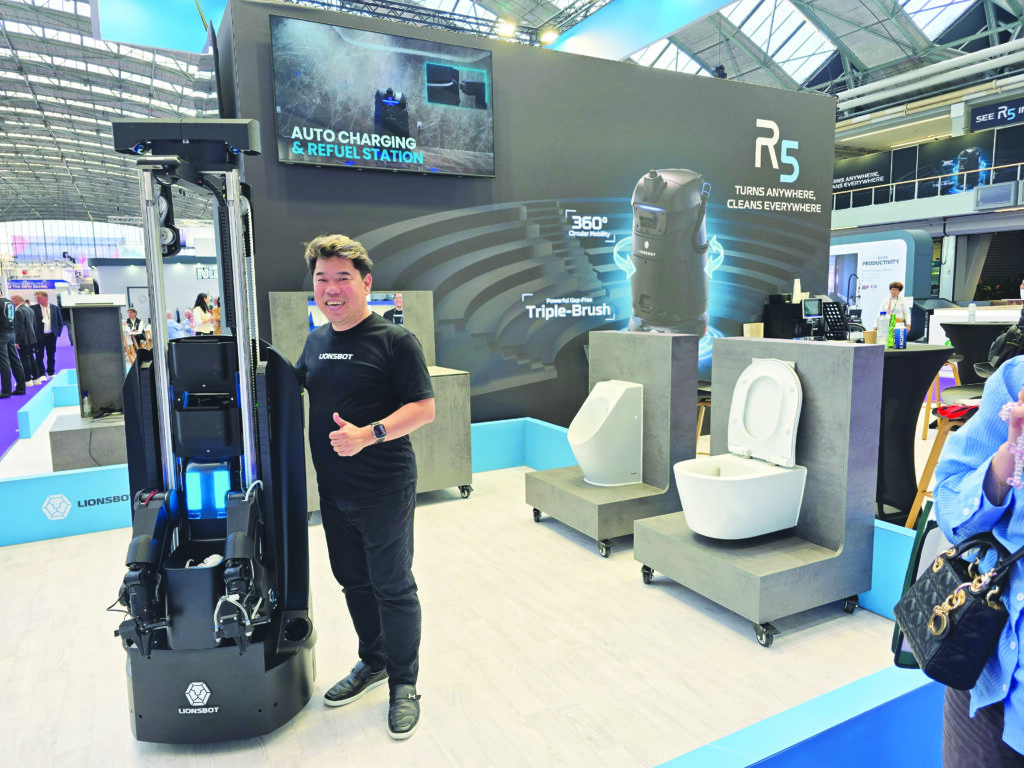
While Europe’s robotics boom is driven by labour shortages, India is influenced by rapid infrastructure growth and heightened security needs. In this conversation with Clean India Journal’s Editor Mohana M, Dylan NG Terntzer, Founder & CEO – LionsBot International explains how airports, semiconductor fabs and high-security facilities are emerging as the true catalysts for robotic adoption. Rather than replacing labour, robots in India are finding their place in large, sensitive environments where consistency, control, and restricted human access are paramount.
Q: At a time when we see Europe taking to robotics with open arms, how do you see India as a market for robotics today?

A: I see India growing as a market for robotics, though it will not be the same type of growth seen in Europe. Europe’s robotics growth is driven by a lack of manpower. India’s growth is driven by innovation and, I would say, security. Let me explain: in Western Europe, labour is very expensive and many governments do not allow for high levels of immigration. With fewer people entering the workforce, labour becomes very costly; hence, they want robots to help lower that price point. This is a normal trend in America and Western Europe.
In India, I see different trends. First and foremost, labour is still widely available today. However, there are massive infrastructure investments happening — new factories, semiconductor fabs, and new airports. Honestly, these sectors are looking to reduce unnecessary human access in sensitive environments while improving consistency and control. Why? Because certain parts of an airport are more security-conscious. In a new wafer fab, you really do not want too many people accessing the cleanroom environments. That is where robots come in. I think the robots suitable for India will be those designed to clean larger, high-importance areas rather than small vacuums. Those smaller machines are what I call “curiosities” — they are not truly ROI-driven.
Q: Understood. Given that, how do you then create the need for robotics in India?
A: I think the need for robotics will be created by working with the people who specifically require them — for example, those managing large infrastructure projects like airports where robots make perfect sense. In a large area, a well-sized robot like the LionsBot R5 can clean very efficiently. It can clean throughout the entire day, providing “tip-top” cleaning results. You do not have to worry about human schedules or finding staff willing to turn up at midnight. These sectors are already thinking about or are already open to technology. It wouldn’t be about converting the “unbelievers,” but rather reaching out to those who are already technology-forward.
Q: You spoke about security. Instead of having a large crew of men, you are deploying a machine to do the work. How secure is the machine itself within a property, given the Artificial Intelligence you mentioned?
A: There are several types of security to consider. There is the security of human life — for instance, in a factory where having too many people present could be dangerous. Then there is the security of intellectual property and restricted access; you simply do not want unauthorized people in certain areas. What robots do best is remain consistent and focused on a single task: floor cleaning.
For example, while LionsBot robots can be connected via 4G to the cloud, if a task is highly critical —in highly sensitive environments where offline operation is required— you can simply remove the SIM card. The robot will function perfectly offline. We hold many cyber security certifications, such as ISO 27001, SOC 2, and SOC 3, as well as CSA. We also host our data in secure locations. For example, customer data is hosted in secure regional environments, including Singapore, Europe, the USA, and Australia, based on customer and regulatory requirements. Data security is a major priority for us.
“Maybe India will adopt robotics where consistency, controlled access, and operational reliability are critical.”
Q: A quick follow-up question regarding data security: can these machines be hacked easily?
A: That is a very good point. First and foremost, the robots do not depend on the cloud for movement instructions; they navigate autonomously. Our robots are designed with layered security controls, encryption, restricted access and offline operating options for high-security environments. Furthermore, all our robots have an emergency stop button. If you see the robot behaving strangely, you can always hit the E-stop.
Q: Regarding the various kinds of robots present in India today, which type would you say is best suited for the market?
A: I would say a robot like the R5 is best for India, rather than the small robots you see around the show. I would recommend a good-sized robot like the R5 because it is nimble, reliable, and has good capacity. This is what is required for cleaning large areas like the new airports India is building — more than almost any other country in the world. You also have many new high-rise buildings and apartments. In India, the best-selling manual auto-scrubbers are mid-sized, not micro-scrubbers (which can’t clean much) or giant ones. That is the sweet spot. A 50-lt, 21-inch scrubber like the R5 is the ideal fit.
Q: Regarding this new machine you have launched, would you like to tell us more about it?
A: Certainly. At this show, we launched two machines. One is the R5, which is our circular scrubber that can turn on its own axis. This scrubber works wonders because it can turn anywhere and clean everywhere; it has the cleaning power of a single-disc machine with the nimbleness of a small scrubber. Choosing the R5 is definitely the right choice for standard industrial needs.
Our next innovation is the T1, an embodied physical AI robot. It is a wheeled platform with two arms designed specifically to clean toilets. It can spray ozone water, and the next version will even spray steam. It has another arm for blowing and drying. We can attach different end-effectors to perform various tasks, such as picking up litter from countertops or floors and cleaning mirrors. It replicates the full range of human actions required to clean toilets. This robot is ideal for large, standard toilet areas rather than tiny ones. It can go in, automate the entire area, move around and clean.
Ask the expert
Have a question about this article? Put it to the people in it. We pass your details on and they come back to you directly.