







 CIJConnect Bot-enabled WhatsApp today at 4:00 PM.
Efficient supply ordering
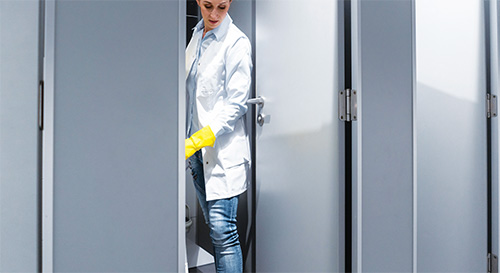 Battery-powered sensors can be used to track the consumption of toilet rolls, hand towels, air fresheners and liquid soap. This in itself reduces the need for the team to constantly and manually check their levels, thus freeing up their time for more important tasks.

In the case of the soap dispenser, an optical sensor keeps an eye on the fill level, and the sensor module gathers data from the meter in the soap dispenser that records every portion dispensed. Optical systems are also used for toilet paper, while a portion meter monitors the usage of the cotton towel dispenser. All these sensors are integrated on a common platform, which is open, flexible, and infinitely expandable – any sensor can be added at any time.
This data gives facility management teams, exact figures about product consumption patterns, which in turn dictates the bulk and frequency of placing new orders for these products. Since many facilities have limited space to store these products, being aware of the rate at which these products are consumed helps staff order only as much as their storage areas can accommodate.
Preventive maintenance
 Technology can predict and prevent issues before they arise. ‘Smart’ washrooms can also keep facility managers informed about unforeseen events in real time, down to the exact locations, and the time that has elapsed since they have occurred. For example, if the toilet roll runs out in the fourth toilet of the washroom on the fifth floor of a facility, the manager can immediately direct the nearest staff member to place a new roll in position, or ask him or her to barricade that particular toilet until the roll is replaced.
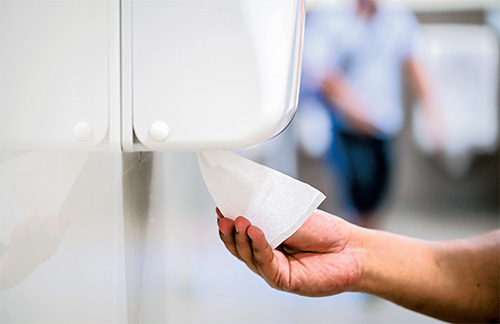
Similarly, the manager can ensure that soap dispensers are constantly topped up, and hand towel dispensers are always full. The machines that dispense these, need maintenance too. Presently, a paper log decides when this should be done; sometimes, it is only repaired after it breaks down completely. Sensors inside such machines can track wear and tear, and send messages to the appropriate person when it is time for maintenance.
Waste-bin sensors can detect when a bin is close to filling up, and summon someone to empty it, thus sparing customers the sight of an overflowing bin, which not only needs to be emptied, but the spillover cleaned to.
Customer experience
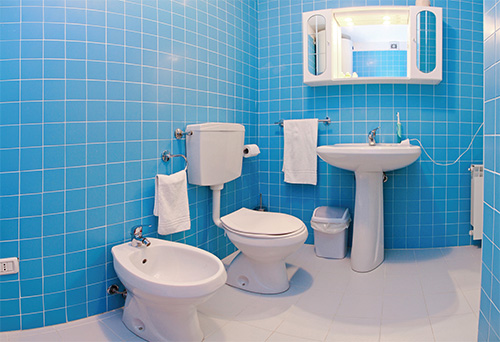 At the end of the day, facility management teams take all these pains not just to maintain cleanliness and hygiene, but also because patrons view washroom visits as an experience, which can be pleasurable or not, based on its level of maintenance. They expect a clean, well-stocked washroom that is spic and span at all times, regardless of user traffic. When this expectation is fulfilled, it reflects positively upon the entire facility, and hence also on its occupants.
Smell is perhaps the most deterrent factor for a person visiting a washroom. Ammonia filters can detect the level of this smelly gas in the air, and compare it to preset standards for acceptable levels. If the levels have been exceeded, a message is sent to the manager, who immediately deploys air fresheners to mask the odour, as well as investigates the cause of the stench.
Patrons themselves can become part of the washroom maintenance feedback process. They can use their smartphones to scan the relevant toilet, basin or washroom that needs maintenance. The manager can send someone to solve the problem to the patron’s satisfaction, document the process, and even thank the patron for his time and consideration in notifying the team.
When a US airport adopted all these strategies, it covered everything from preventive maintenance to customer feedback. An official said, “Now we can compare how long an employee was cleaning for, how many customers came in and used the toilets, and then on the way out, we have a happy face/ sad face tablet so that they’re able to say how their bathroom experience was.”
Technology can drive washroom maintenance to levels of excellence that we have so far only dreamed of. As customer expectations increase, sensor-based washroom cleaning is a future that is very much in sight.
Mrigank Warriar