





























Costly Mistakes of Purchasing Wrong

When it comes to procuring equipment or chemicals, what mistakes have proved costly? Akash Dharamsey, Managing Director, ADD Laundry Concepts, examines these questions in the healthcare and hospitality sectors, where the cost of buying wrong is felt the hardest.
Procurement teams in most organisations or owners are appraised on their ability to make capital purchases at the lowest cost. But it routinely misfires when applied to equipment that carries significant operating costs. Few asset classes are as operating-cost-intensive as commercial laundry equipment. A machine that runs 8-16 hours a day, every day, for 10-12 years, consumes water, energy, chemicals and manpower on a scale that dwarfs its purchase price.

Two machines that appear equivalent on a specification sheet — both approved by the engineering and user teams — can behave very differently once installed. Take a deep-dive into build quality, utility consumption per kilogram of linen, cycle times, longevity and after-sales support; a noticeable difference emerges. The cheaper-to-procure machine is very often the more expensive machine to own.
The Challenges
The first is comparability. Vendor brochures rarely state consumption figures on a common basis, and there is no widely enforced benchmark in India for water or energy use per kilogram of wash.
The second is fragmented decision-making: engineering evaluates the specification, operations evaluates convenience, and purchase evaluates price — but nobody owns the ten-year cost.
The third is budget-cycle pressure, which rewards closing the purchase within this year’s capital allocation rather than optimising the expense that will recur for the next decade.
In my experience, capital-intensive items bought cheap almost always turn out to be the most expensive over their lifecycle. Buyers must evaluate operating expenses over the lifecycle of the product’— Akash Dharamsey
Costly Mistakes
The most common and damaging mistake is straightforward L1 (lowest-bid) selection. In my opinion, a purchase should never be evaluated on the base price of the product alone.
The true landed cost must incorporate wooden crating, transport, lifting and shifting, installation, commissioning and utility hook-ups — costs which are incidental to every purchase but seldom compared across bids.
Buyers must evaluate operating expenses over the lifecycle of the product. A relatively cheaper machine that looks equivalent on the day of purchase can cost far more through its consumption of water, energy and manpower over its working life.
Productivity per hour and environmental sustainability are also routinely overlooked, yet both translate directly into money: a slower machine means more machines, more floor space, more manpower and more utilities for the same output.
Hard Lessons
Healthcare: Machines must hold validated thermal-disinfection profiles, support hygienic barrier washing where required, and above all, stay running. This is because linen availability directly affects patient care and bed turnaround.
A facility that saves 10 to 15% on capital cost but suffers repeated breakdowns, pays for that saving many times over in outsourced emergency washing, linen inventory inflation and compliance risk.
Hospitality: In hotels, linen is the brand. The finish, whiteness and hand-feel of bed and bath linen shape guest perception and linen life is a major recurring cost. Aggressive mechanical action and poor water extraction in a cheaper machine shorten linen life and lengthen drying time and energy use.
Hotels live with sharp occupancy peaks; cycle time and throughput per hour determine whether the laundry keeps up during a full house or the property quietly starts sending linen outside at premium rates.
Decision Making
The evaluation framework I recommend to purchasing heads is Total Cost of Ownership per kilogram of linen processed. It has six components:
1. True landed and installed capital cost;
2. Water, energy and chemical consumption per kilogram;
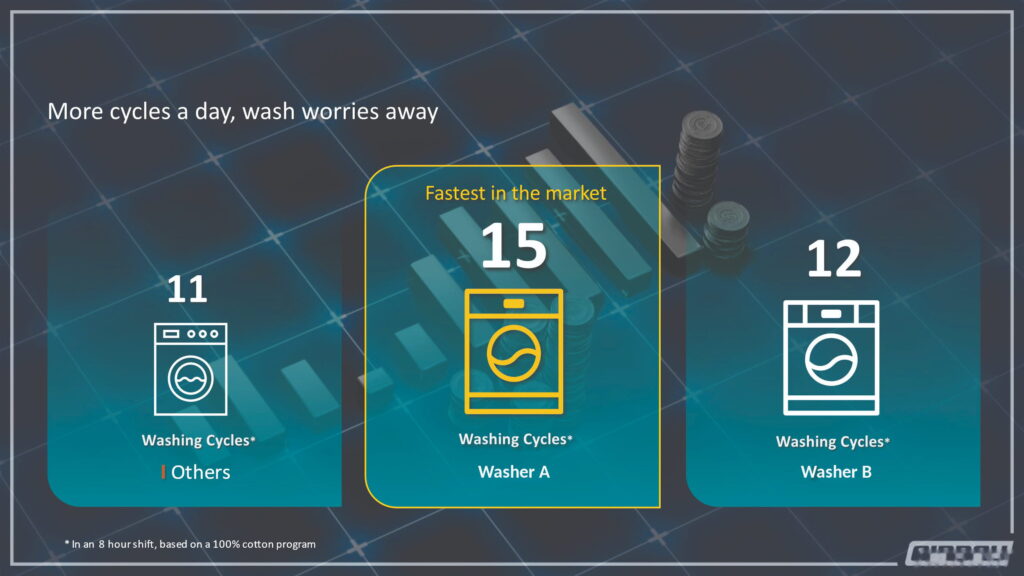
3. Productivity — kilograms processed per hour and cycles achievable per shift;
4. Manpower required per shift;
5. Reliability, spare-parts availability and the strength of the local service network; and
6. Linen life and environmental footprint.
Rank the bids on cost per kilogram over a 10-year horizon, and the ranking will frequently invert the
L1 order.
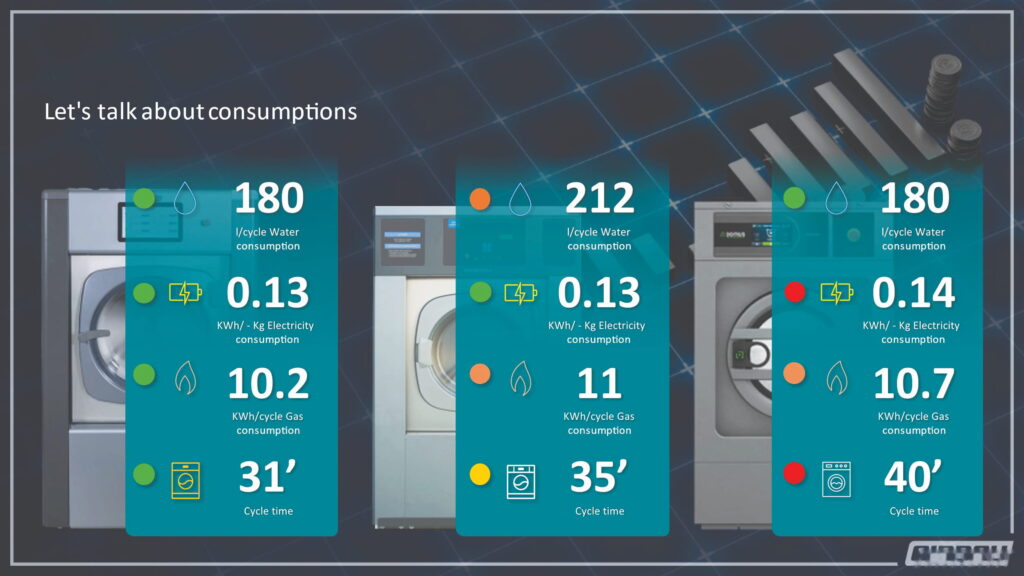
To make this tangible, I will share an illustration of seemingly comparable washer-extractors from the European laundry market. Note how machines that look interchangeable diverge on consumption, cycle time, daily throughput and, ultimately, the total renewal budget.
The cheapest machine to buy is rarely the cheapest machine to own. Over a typical 10-12-year lifecycle, operating costs will outweigh the purchase price several times over. This means every rupee shaved off the capital cost by compromising on consumption, productivity or reliability is borrowed at a very high rate of interest from the next decade of operations.