









 CIJConnect Bot-enabled WhatsApp today at 4:00 PM.
Public Health, Sanitation and the WASH Imperative
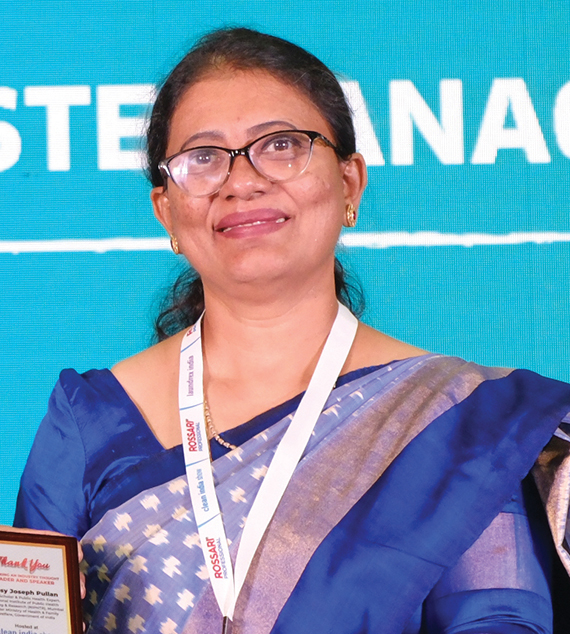
While conducting a session on Urban Sanitation and Public Health – Advancing Clean and Healthy Cities, Rosy Pullan, PhD Scholar and Public Health Expert at the National Institute of Public Health Training and Research, Mumbai, also underscored the critical link between waste management and health.

According to her, technological advancements alone cannot ensure a clean and healthy India unless behavioural change is achieved at the grassroots level.
Highlighting the core issue, Rosy said that while India has “very good technology, expert engineers and innovative people” capable of bringing change in waste management, the real challenge lies in transforming public behaviour. “Public health is about preventing disease before it reaches hospitals — along with promotion and prolonging a healthy life. With life expectancy now reaching the 70s and 80s, age is only a number if you are healthy,” she said.
Technology alone cannot create clean cities. Real transformation requires behavioural change at the grassroots, where households adopt responsible sanitation practices and communities become active participants in maintaining public health
Rosy Pullan
Explaining sanitation as the safe disposal of human waste, she warned that improper disposal leads to illness and remains a prime responsibility. She then elaborated on WASH — Water, Sanitation and Hygiene — calling it a comprehensive umbrella. “Simply constructing toilets is not enough. During rural visits, we often found that toilets were being used as store rooms while open defecation continues due to lack of water, which is an integral part of sanitation,” she said.
Drawing a direct link between WASH and public health, Pullan said more than one million deaths globally occur due to diarrhoea, primarily caused by inadequate WASH. “These are all preventable,” she added.
Urban Gaps, Inequality and Rapid Urbanisation
Turning to urban realities, the expert cited Mumbai where “40% of people lack proper toilets.” While some sections take sanitation for granted, the remaining population struggles for water and sanitation facilities.
Identifying rapid urbanisation as a major challenge, she described Mumbai as a “dreamland” attracting lakhs of migrants daily, many of whom end up in informal settlements without basic services. “These settlements lacking toilets, clean water and safe living conditions, along with polluted water bodies are adversely affecting nearby communities. Real change, must begin at this level and focus on the underserved majority,” she said.
Moving to strategies, Rosy stressed that change must involve top-level planners, mid-level administrators and ground staff working together.
Behavioural Change Beyond “Hammering”
The panel recalled that at the completion of the first phase of the Swachh Bharat Mission in 2019, Prime Minister Narendra Modi had emphasised that financial allocation alone would not achieve cleanliness — behavioural change was critical.
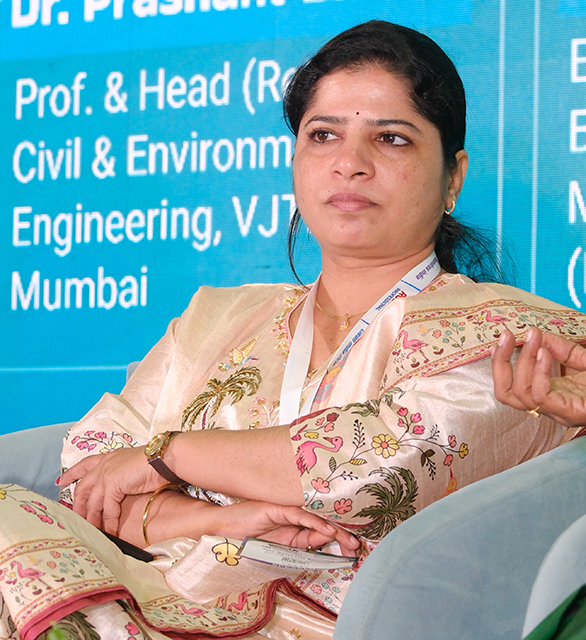
Adv Ashvini Borude, President of Shree Astha Mahila Federation, Mumbai, who works extensively at the community level,echoed this view. “Only repeated messaging does not change behaviour,” she said, arguing that awareness must be structured and practical. “Households must first understand basic segregation — wet waste, dry waste, domestic hazardous waste and e-waste — before moving towards micro-segregation at the society level.”
She explained that once societies segregate waste internally, only a small fraction — sometimes as little as 10%— remains as sanitary waste requiring municipal collection. Proper wrapping of sanitary waste, she stressed, protects sanitation workers from exposure.
Segregation must move beyond awareness campaigns to practical household implementation. When communities adopt systematic waste separation and composting, only a small fraction remains for municipal disposal.
Adv Ashvini Borude
On composting, Adv Ashwini said concerns about foul odour and insects usually arise due to improper carbon–nitrogen balance. With correct guidance, composting can be managed efficiently within societies. She suggested that every municipal ward establish at least one model composting plant so citizens can see the process firsthand. “Incentives may work better than penalties. Instead of relying solely on fines, municipal bodies could offer property tax rebates to societies that practise segregation and composting,” she added.
From Policy to Practice: The Ground Realities of Waste Segregation
While urban sanitation coverage has expanded significantly over the past decade, official Swachh Bharat Mission–Urban dashboards show that source segregation compliance remains uneven across cities, with many urban local bodies still struggling to achieve 100% household-level segregation. Municipal reports indicate that contamination of dry waste streams continues to reduce recycling efficiency and resale value, underscoring the gap between policy intent and ground-level implementation.
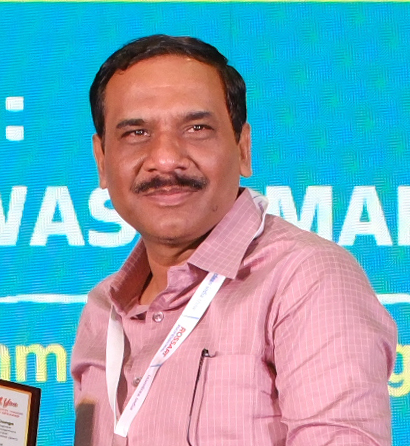
As an Executive Engineer at BMC, Pankaj Gonge highlighted that segregation at source cannot succeed without active community support. “Resistance from residents remains a primary hurdle,” he said.
The official stressed that while source segregation is essential, ensuring compliance at the society level is a major challenge. “Monitoring practices consistently across communities requires sustained effort,” he added.
Pankaj further pointed to structural issues, including limited capacity in the private sector. “The number of private operators and their processing capacities are often inadequate, and these need to be enhanced. Infrastructure design and operational systems must also be strengthened to support segregation efforts effectively,” he said.
Another concern, he noted, is the economic viability of sorted waste. “When waste is not properly segregated at the household level — such as separating paper or other dry waste — its resale value declines significantly. If materials are contaminated, there is no resale value,” said Pankaj.
Source segregation remains the weakest link in urban waste systems. Contaminated dry waste loses recycling value, exposing the economic consequences of poor household-level sorting practices.
Pankaj Gonge
He concluded that without household-level segregation, proper monitoring, stronger private-sector capacity and value retention in dry waste streams, achieving effective solid waste management at the community level remains difficult.
Technology Exists, Integration Is Missing
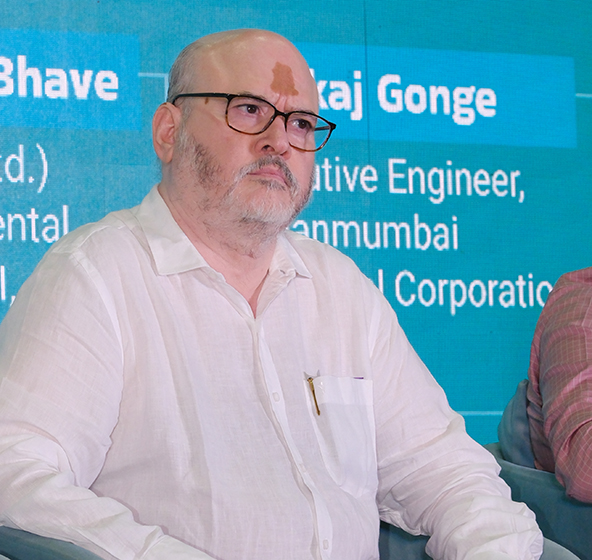
Dr Prashant Bhave, retired Professor and Head of Civil and Environmental Engineering at Veermata Jijabai Technological Institute (VJTI), stated that the nature of waste has not drastically changed — it remains broadly organic and inorganic, though new streams such as sanitary waste, diapers and e-waste have emerged.
The issue, he argued, is not the absence of technology but gaps in implementation and coordination. “New technologies are available through industry and research institutes, including IITs and universities. Students at the master’s and doctoral levels are already developing composting systems and sustainable waste solutions. However unless revenue models make waste processing financially attractive for ULBs, collectors and industries, adoption will remain limited,” the expert said.
He also advised that academic institutions must partner with urban local bodies more closely.
India already has access to advanced waste processing technologies and research innovations. The real challenge lies in creating viable revenue models and stronger collaboration between municipalities, industry and academic institutions.
Dr Prashant Bhave
Breaking Silos for Clean Cities
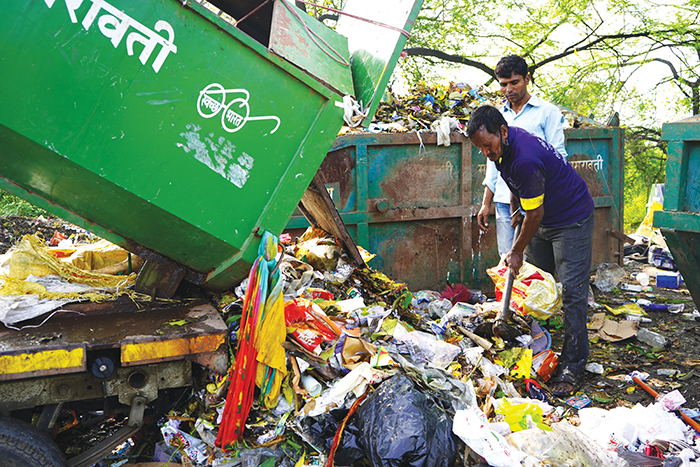
While the panellists agreed that segregation was the cornerstone of solid waste management, they cautioned that stakeholders often operate in silos — academic institutions, urban local bodies and industry working independently.
The panel’s consensus was clear: India’s waste challenge is not insurmountable. With maximum segregation, economic incentives, health integration and coordinated institutional action, the vision of garbage-free and healthier cities is within reach.