








 CIJConnect Bot-enabled WhatsApp today at 4:00 PM.
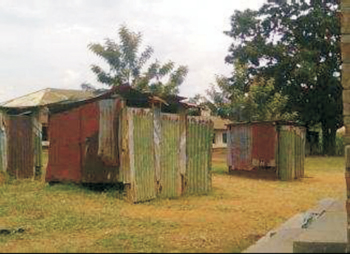 It is well-known that government schools of India do not even have proper classrooms; thus providing clean and hygienic toilets is a distant dream. In some places, girl students are forced to relieve themselves in the open leading to various social evils. In a recent survey, when children were asked to describe their school toilets, a clear picture emerged of poor standards of cleanliness, supervision and access. Children reported smelly, dirty, unpleasant toilets and inadequate supply of water at their schools. They also complained about lack of privacy. But that is just one of the sanitation issues that needs to be addressed urgently – the most basic one of course is building
 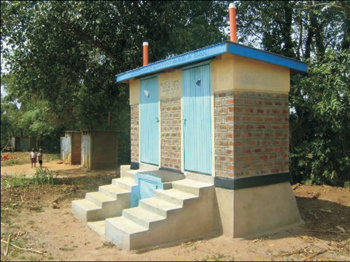 proper and separate toilets for girls and boys with adequate water supply.
While this is true in most developing countries, schools in Kenya too lack basic sanitation and hand-washing facilities. Some of the major causes are inappropriate, poorly managed and insufficient sanitation facilities; lack of financial resources for cleaning and maintaining toilet facilities; lack of proper hand washing facilities and lack or poor enforcement of regulations.

The Technology
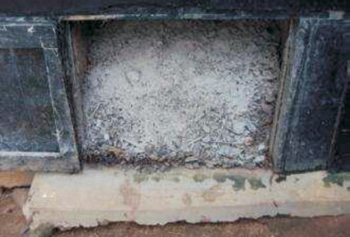 The EPP technology offers an alternative sanitation solution for many schools in Kenya and UDDT is one of the concepts. Urine Diversion Dehydration Toilets or the double vault system is a robust, safe and user friendly technology, compared to single vault urine diversion toilets which requires regular emptying of vaults. In UDDT, the plastic squatting pan separately collects and stores faeces and urine in separate collection chamber. The faecal matter drops straight into the vault, where it is stored for a period of approximately six months under conditions that are intended to promote drying and reduction of pathogens to a reasonable level for handling. When the first vault has been filled, the faecal waste is allowed to dry for the time which is required for the second vault to fill up (approximately six months). After each use, a scoop of ash is sprinkled over the faeces for improved drying, fly prevention and pH treatment.
The Design
Each school was provided with four cubicles of UDDTs – two for boys and two for girls. In some places, cubicles were also constructed for teachers. The cubicle was shared by 25 to 40 school children; therefore, about 100 to 160 pupils were served per school. Locally burnt bricks, concrete blocks or in some cases hydraform blocks were used to build the masonry of the toilet structure. The toilet slabs (floor) are made of cement, ballast, sand and twisted iron bars. For the storage of waste, every toilet has two vaults which are connected to one vent pipe.
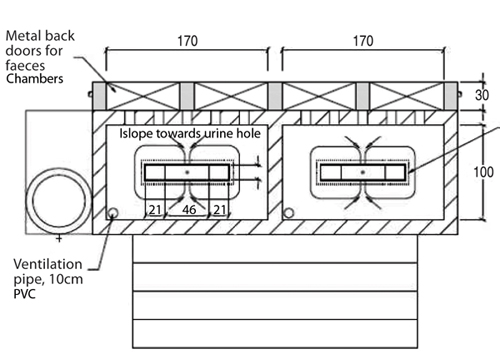 The vault door is made of metal sheets fixed on a wooden frame, painted in black and placed in a steep angle (inclined) in order to enhance solar heating. It was later realized that vertical vault doors are a better option. The squatting pan for urine diversion is made from plastic and has two faeces holes with a lid on each hole for a double vault system. While one lid has a handle for the vault which is in use, the other lid is without a handle and has a weight tied underneath to cover the hole of the inactive faeces vault. Each toilet cubicle has one ash container with a scoop and a laminated instruction poster.
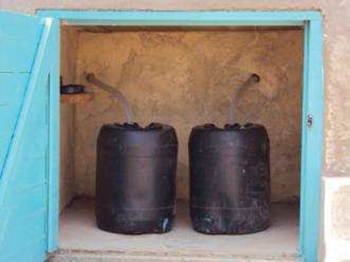
The diverted urine is collected in two 20 liters plastic containers which are filled alternately. A flexible hose pipe (size 1inch) connects the squatting pan’s urine outlet with the container. The containers are stored in an attached urine collection chamber on which a 100 litre plastic water tank with a tap is placed for the purpose of hand washing. Soap is provided by the school and placed next to the tank. The roof of the facility has a rainwater catchment system which directs rainwater into the water tank. In case there is not sufficient water available, the tank can be manually refilled with water from other water sources. Sanitary bins were provided in each cubicle for the girls block.
Type and level of reuse
 The urine in the containers is used as a fertiliser either on school gardens that are used for agricultural experiments of students or larger school farms if available. Not all schools did however venture into reuse and instead disposed off the urine on trees and bushes. For reuse, the urine is diluted at a rate of 1:1 up to 1:5 before use in the school gardens. The gardener digs a small shallow trench next to the plant, pours the urine into the trench and covers the trench immediately with soil, so that nitrogen evaporation is minimised. Additionally, the students and teachers were instructed that the last urine application should be at least four weeks before harvest. The crops which have been fertilised with the urine in school gardens include kales, spinach, maize, mangos and bananas.
The dried faeces are used directly on the school farms as soil conditioner after the second vault is full (approx. six months). No further treatment is applied but the users are advised to use the faecal matter for planting fruit trees like bananas and mangos. The school is strongly advised in trainings to apply health risk reduction measures like wearing gloves, rubber boots and washing hands with soap. The majority of the schools use the fertiliser for demonstration purposes and not for food production. Often the school farms are small and not well managed, and thus the urine is dumped on the ground or used for trees.
 Operation and maintenance
The maintenance activities of the UDDTs include cleaning, providing wood ash, checking for blockages of the urine pipes and emptying full urine containers (every day) and full faeces vaults (every six months). They also includes minor repairs of the water tap (hand washing unit), chamber doors (due to rusting, termites), roofing, rainwater harvesting and occasional repainting.
Laura Kraft Former Consultant for GIZ and Christian Rieck, GIZ