




























More Foam Doesn’t Mean Better Cleaning

Unlike many businesses born during the pandemic, this one began with a sink full of dishes. Ordinary household chores like washing utensils and doing laundry without a domestic help posed a question to Vedashree Nadendla that she could not shake off. Why were her hands turning rough after every wash? What started as a personal search for answers eventually led her to centuries-old Castile soap formulations and a belief that the future of sustainable home care might lie in revisiting ideas from the past. The result was ‘FromVedas’, a venture that has steadily carved a niche for itself in India’s growing sustainable market. In this conversation with Clean India Journal, the company’s founder Vedashree reflects on her early days of experimentation, changing consumer attitudes and challenges of building a sustainability-led business.
Why did you choose household cleaning products?

A. My grandmother and parents had always done these chores manually, but they never seemed to have skin problems or damaged hands. This curiosity led me into the subject.
How did your family react when you decided to pursue this idea?
A. When Covid happened, our family business was heavily affected. That was when I decided to explore something entirely different.
My mother loved it because she has a very sensitive skin. She was actually my guinea pig while I was testing products. She encouraged me to seriously think about pursuing this.
Castile soap and activated charcoal formulas
What is wrong with conventional cleaning products?
A. Quality of raw materials, excessive use of foaming boosters and other such practices led me to study how soaps were traditionally made. I went back centuries and came across Castile oil, which is made using coconut oil and olive oil. It is a very labour-intensive process because the oils need to be cooked for 10 to 12 hours to create the base. We make that base ourselves and do not outsource it. That gives us complete control over quality and so far, nobody has had any complaints.
Your dishwashing liquid contains activated charcoal?
A. Our grandparents often used ash for cleaning utensils. Our dishwashing liquid is black because it contains activated charcoal made from coconut shell powder which makes it quite unique. I enrolled in courses to understand how basic soaps are made. I developed my own formulations, experimented with traditional Castile-based ingredients and tested them on people with very sensitive skin. The results were extremely positive.
Which was the first product you developed?
A. Dishwashing liquid, followed by a bar for washing clothes. They remain our bestsellers. Many people wanted a liquid laundry detergent because they were moving away from washing powders. Now we have a loyal customer base and many repeat customers. We also get a lot of word-of-mouth recommendations. On Zepto alone, we have close to 200 ratings and strong customer feedback, which has helped build trust in the brand.
An all-women workforce and consumer doubts
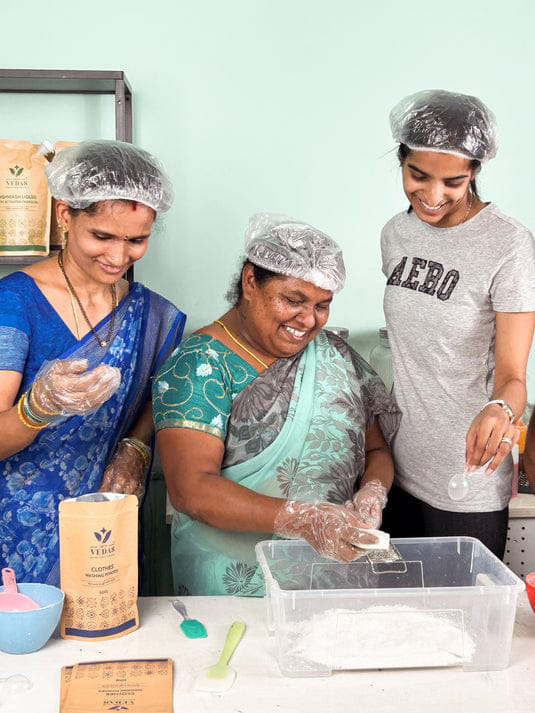
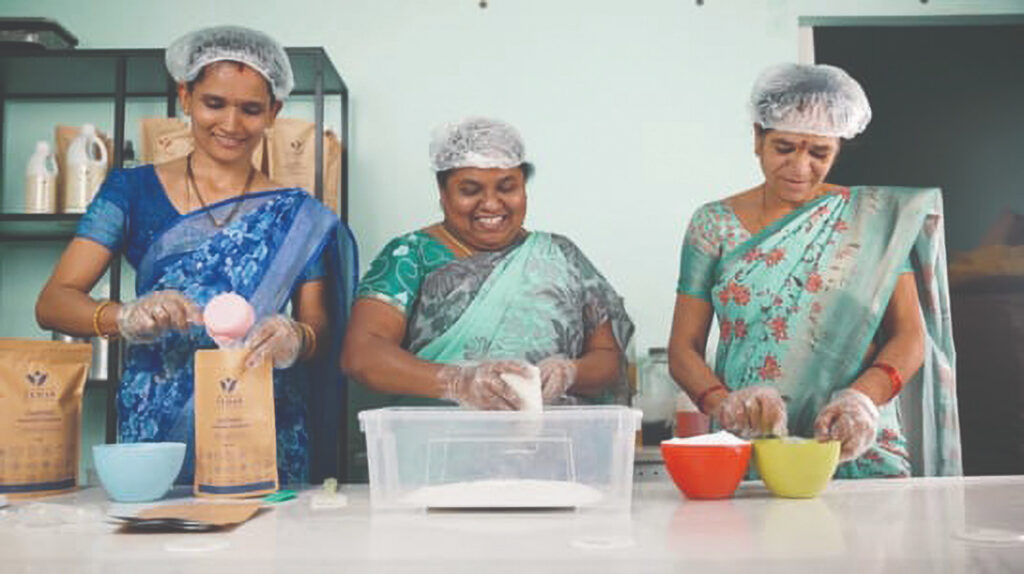
You manufacture in Hyderabad with an all-women workforce.
A. Yes, absolutely. I have always felt that women face multiple responsibilities, whether it is managing households, caring for parents or in-laws, or balancing other commitments. I also found that women were much more meticulous when it came to packaging and quality-related work, based on my observations.
Who are your major customers?
A. Our products are available across quick-commerce platforms and marketplaces such as Amazon and Flipkart. We supply across India, including regions as far as Jammu & Kashmir. On the B2B side, we currently cater to hospitals across Hyderabad and a few cafés as well. We are gradually expanding further.
Did you have consumers would understand your vision?
A. Even within my own family, people would ask why anyone would spend more on these products when cheaper alternatives were available.
One of the biggest challenges was overcoming the belief that more foam means better cleaning. It took time. Particularly the improvement in skin condition, brought than back for repurchase. It took roughly one to two years to build that level of trust.
Why are sustainable products costlier?
A. The manufacturing process itself is more intensive. The Castile base requires long cooking hours. We also use high-quality oils, and raw material costs have increased significantly over the years.
We use coconut oil extensively. That is one of the reasons sustainable products are priced differently. Consumers are increasingly seeing tangible benefits. For example fabrics do not fade quickly as we do not use harsh chemical boosters.
Sustainable cleaning products going mainstream
Do you think consumers fully understand the environmental impact of the cleaning products they use every day?
A. Consumers today know what sulphates and parabens are. They read labels. They ask questions. If I had started the same business ten years ago, I don’t think it would have worked. People were not looking for sustainable alternatives at that time.
Do you think India is approaching a tipping point where sustainable products can move from niche to mainstream?
A. Yes. Consumer behaviour is changing with every generation. People are more aware of environmental issues and the impact of global warming. They are becoming more willing to spend slightly more if it leads to healthier and more sustainable choices.
Covid accelerated that shift because it increased awareness around health, hygiene and overall wellbeing.
Many young people are rediscovering traditional practices. Whether it is using clay pots, moving away from certain modern materials, or seeking healthier alternatives, there is a noticeable shift. They are also far more health-conscious than previous generations and much more willing to experiment with
new products.