









 CIJConnect Bot-enabled WhatsApp today at 4:00 PM.
What are the various factors to be considered while manufacturing green tools?
- Avoiding dirt traps at the product development of plastics parts/tools
- Use of autoclavable plastic parts and recycled materials
- Use of latest technology microfibres to achieve highest bacterial removal with less chemical consumption.
The mistakes made by janitors…

- Not cleaning the tools properly
- Too less/seldom change of dirty water
- Not washing or improper washing and drying process of cloths and mops
- Over dosage of chemicals during washing process and/or cleaning process which may destroy the textile parts – fibres of mops/cloths
- Keeping brooms, sweepers, brushes in wrong positions which makes bristles lose shape.
- Wrong application of abrasive scourers, e.g. scratching of fittings in washrooms.
Brushes and hygiene
 Kalpesh Sheth, Director, Kitten Enterprises Pvt Ltd: “The quality of a brush depends on the material it is made of. Common brushes usually come with air holes that shorten the life and performance of a brush. Brushes made of Polypropylene are solid, sturdy and the bristles are intact giving them a longer life and better performance cycle. A general brush if used in the food or related areas gets contaminated with microbes. Special brushes involve a cost which does not suit general applications or day-to-day domestic use. For example, the handle of an applicator alone could cost around Rs1100, which may not be cost effective.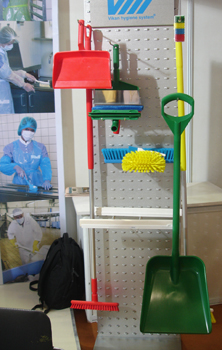
These brushes or applicators as they are called find its applications especially in the food area or the pharma industry where the level of hygiene is high. Though cleaning is mechanised, brushes play a major role in daily cleaning or in initial cleaning before using cleaning equipment. Brushes today come with advanced technology that can perform mechanical action along with chemical dispenser. Toilet brushes again made of PP bristles are ideal for scrubbing stains or scales. But, the general toilet brushes available in the market for domestic purpose are of low quality where the bristles wear out in a couple of washes. When you are using fantastic chemicals, the applicator should be good enough to perform. Poor quality bristles not only wear out but also damage the surface.”
Different brushes, different sizes, different applications
 Haug Bürsten, Germany, has been in the business of brushes and tools for the last 46 years and is exporting to over 52 countries across the world. It participated in the CIP show for the first time. Tools play a vital role, especially in the food industry, says Gigi Haug, Export Manager of the company. The hospitality industry is the major consumer of brushes and wipes, as it demands most hygienic surroundings. “The two ranges of brushes we deal in are hygienic assortment and domestic assortment. The hygienic range consists of highly professional tools that find their application in specific industries like food, hospitality and healthcare, where there is need for sophisticated, quality and healthy output.”
Major consumers of such brushes are companies in the food industry, especially those which have implemented HACCP. Brushes are made of different materials to suit the specific needs. “Stainless steel wires are used in brushes. The bristles are heat resistant up to 140oC. It can be autoclaved, sterilised or cleaned with acids and alkali.
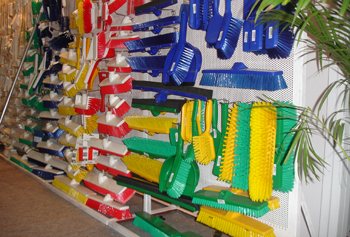 “We also have polypropylene brushes with polyester PPT bristles. Polypropylene can stand up to heat and chemicals. Polypropylene strands are abrasive and can do a great job in removing stains.”
There are many brushes available in the market which is made of wood. “Wood is not hygienic. In Europe, wooden brushes are prohibited for use in applications where hygiene is involved.”
Various brushes in varying sizes are necessary in different applications. “Brooms, for example, come in varying sizes from 22.5 to 60cm. There are brushes for hand and for floors in different colours. Colour coding of different brooms for different applications is essential. Like, red brooms are restricted for use in areas where acids are used.
“The CIP show has been an excellent platform for the launch of these products in India,” said Gigi Haug.







0 comment
Dusters, wipes, mops and brushes are the broad categories of cleaning tools used in housekeeping for optimum cleaning efficiency and effective day-to-day maintenance. Simple hand tools can reach critical places where machines cannot. That is why hand tools are important to do an effective cleaning job,he added.